
Cookeina
Cookeina
Description
Pathogen
The genus Cookeina consists of fungi belonging to the family Sarcoscyphaceae within the order Pezizales. These organisms are primarily saprotrophic, thriving on decaying organic matter.
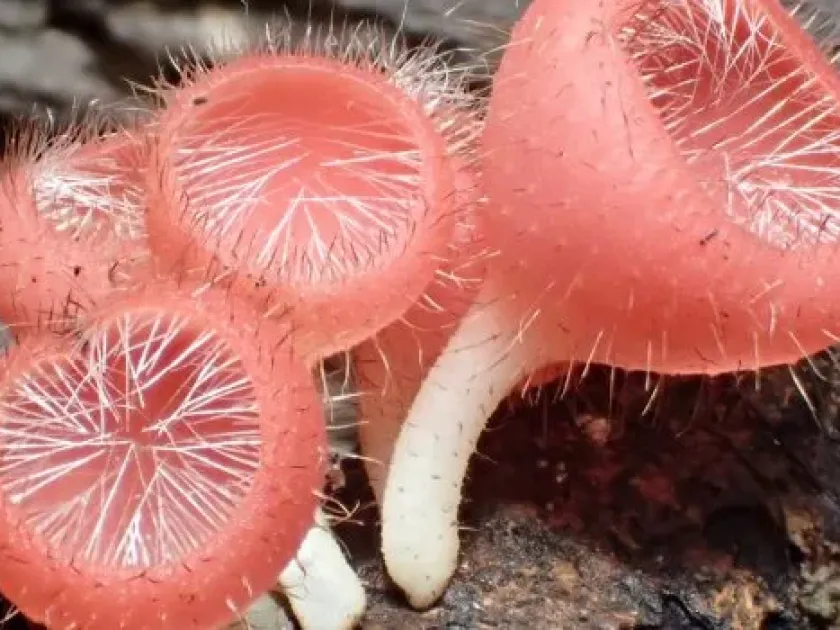
The most recognizable feature of these fungi is their brightly colored, cup-shaped apothecia, which appear on decaying wood or forest litter.
As ascomycetes, they reproduce through spores produced within the hymenium lining the interior of the cup-like fruiting bodies. These spores are dispersed by various environmental factors.
The fungus functions by deploying its mycelium into the woody substrate, where it secretes extracellular enzymes that break down complex materials like cellulose.
While they are not classified as agricultural pathogens, their presence serves as an indicator of advanced decomposition processes within forest ecosystems.
Conditions for development
Cookeina species are highly dependent on specific microclimatic conditions, predominantly found in humid, tropical, and subtropical regions worldwide.
High moisture levels in both the air and the organic substrate are essential for the survival and expansion of the fungal colony.
The development of these fungi requires warm, stable temperatures, typically staying within the range preferred by tropical forest vegetation.
Adequate shade is necessary to prevent the desiccation of the delicate fruiting bodies, which are prone to water loss if exposed to direct sunlight.
A continuous supply of lignin-rich decaying wood provides the necessary carbon source to support the life cycle of these fungi.
Why it matters
Cookeina is generally considered harmless to healthy living crops, as it does not possess the mechanisms required to infect active plant tissues.
It poses no threat to common agricultural practices and is not known to be a causative agent of any major plant diseases that impact food security.
The impact of this fungus is strictly limited to the role it plays in the carbon cycle, specifically in the recycling of nutrients from dead woody material back into the soil.
In managed agricultural environments, it is often simply observed as part of the natural fungal diversity rather than as a nuisance or an object of pest control.
No specific management or eradication strategies are required, as these fungi do not cause economic damage to farming operations.
Discussion
No discussions yet — be the first.