
Lavender Coniothyrium blight
Coniothyrium lavendulae
Description
Symptoms
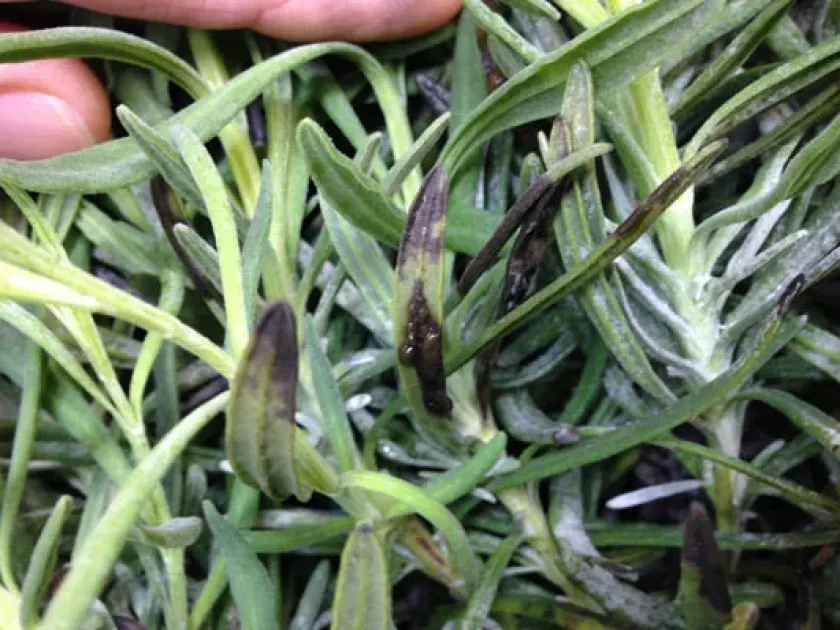
The first symptoms typically appear as gray-brown lesions on the stems, which gradually enlarge and eventually girdle the branch, cutting off all supply to the foliage above.
Infected branches begin to show signs of wilting, lose their characteristic aroma and green color, and eventually become brittle and dry as the tissue dies off completely.
Small, dark, pinhead-sized pycnidia can often be seen erupting through the epidermis of the dead bark, which serves as a definitive diagnostic feature of this fungal infection.
Foliage on the affected sections turns yellow and then brown, eventually abscising from the stem, which leaves the plant looking sparse and unattractive.
If the infection reaches the base or the root crown, the entire plant may collapse and die, as the fungus prevents the plant from maintaining its necessary internal water balance.
Pathogen
The causal agent of this disease is the fungus Coniothyrium lavendulae. It is a pathogenic fungus that specifically targets the woody tissues of perennial lavender plants, leading to systemic decline.
The pathogen survives within infected tissues by forming pycnidia, which are specialized fungal structures that protect the spores during cold winters or periods of environmental stress.
Spores (pycniospores) are primarily dispersed by splashing water, rain, and irrigation systems, as well as through mechanical tools used during pruning if they are not properly disinfected.
The fungus enters the plant through natural wounds, cracks in the bark, or sites damaged by pruning or insect activity, where the outer plant defenses have been compromised.
Once inside, the mycelium colonizes the vascular tissues, slowly inhibiting the transport of water and nutrients throughout the stem, which inevitably leads to the death of the infected branches.
Conditions for development
High humidity and poor air circulation are the primary drivers for the rapid development and spread of Coniothyrium lavendulae in lavender plantations.
Overcrowded plantings prevent the foliage from drying out quickly after rain, creating a moist microclimate that allows fungal spores to germinate and colonize the stems.
Poor soil drainage, which keeps the root zone consistently waterlogged, weakens the plant's overall immunity and makes it significantly more susceptible to opportunistic fungal pathogens.
Temperatures between 15°C and 25°C provide the optimal range for the fungus to complete its life cycle and produce new crops of spores that continue the infection cycle.
Mechanical damage caused by poorly executed pruning or frost cracks creates "entryways" for the fungus, especially in seasons with high rainfall and temperature fluctuations.
Why it matters
Coniothyrium blight causes substantial economic losses in commercial lavender fields by reducing the total biomass and the quality of essential oil produced by the plants.
The progressive nature of the disease means that without management, an entire hedge or field of lavender can be lost within a relatively short period, requiring full replanting.
Infected plants exhibit reduced vigor and cold hardiness, making them more likely to suffer further damage from winter freezes or summer drought stress compared to healthy specimens.
The presence of the fungus significantly lowers the aesthetic value of ornamental lavender, making it unusable for landscaping purposes where plant health and appearance are paramount.
Managing the disease is costly, involving significant labor for pruning, sanitation, and the application of chemical control agents to prevent the spread of spores to healthy sections.
Protection
Cultural control is the most effective approach, focusing on proper site selection with excellent drainage and planting at sufficient distances to ensure adequate airflow.
Sanitation is critical; all dead or visibly infected branches must be pruned back into healthy tissue and removed from the site to minimize the buildup of fungal inoculum.
Always sanitize pruning shears between every single bush using rubbing alcohol or a bleach solution to ensure that the fungus is not transferred from infected to healthy plants.
Preventative applications of copper-based fungicides during early spring or after major pruning events can provide a protective barrier against new spore infections.
- Ensure proper soil drainage and aeration.
- Avoid over-fertilizing with nitrogen to prevent succulent, vulnerable growth.
- Monitor the field regularly for early signs of lesions.
- Remove and destroy all infected plant debris immediately.
Discussion
No discussions yet — be the first.