
Coniella grape rot
Coniella vitis
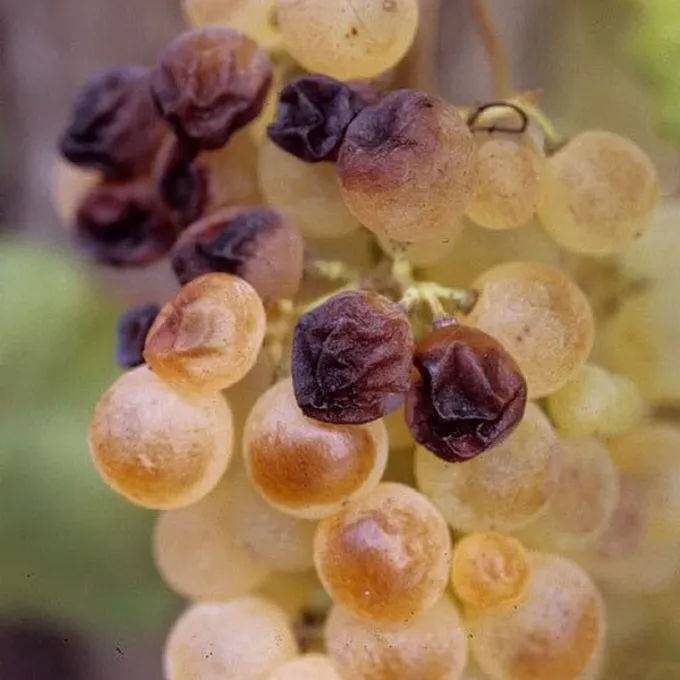
Description
Symptoms
Initial symptoms include the appearance of small, brown, or grayish circular spots on young leaves and succulent green shoots.
As the disease progresses, the most distinctive damage occurs on the grape clusters, where berries develop dark, sunken lesions that rapidly lead to shriveling and mummification.
Black, pimple-like structures, known as pycnidia, emerge on the surface of the rotted berries and necrotic vine tissues, serving as a key diagnostic indicator.
The infection can spread to the rachis (cluster stem), causing the entire cluster to dry out or drop prematurely, resulting in significant yield loss.
In advanced stages, canker-like lesions may develop on the dormant wood, particularly where mechanical damage has occurred, affecting the vine's structural integrity.
Pathogen
The disease is caused by the fungus Coniella vitis (synonym Pilidiella diplodiella), a member of the class Coelomycetes. This pathogen is known for its ability to survive in various environmental conditions, primarily persisting in plant debris.
The fungus acts as a facultative parasite, meaning it can survive on dead organic matter but aggressively attacks grapevines under favorable conditions or weakened plant health.
Its life cycle relies on the production of conidia within pycnidia, which are small, flask-shaped reproductive structures formed on the surface of infected tissues.
Transmission occurs primarily through water splash (rain or irrigation) and human activities, such as pruning or mechanical cultivation, which spread spores across the vineyard.
Research indicates that Coniella vitis can remain viable in the soil or dormant wood for multiple seasons, making long-term sanitation essential for effective management.
Conditions for development
Environmental conditions characterized by high humidity and frequent rainfall are the primary drivers for Coniella vitis outbreaks.
Temperatures ranging from 20°C to 28°C provide the optimal range for the germination and colonization of the fungus on host tissues.
Poor canopy management, such as lack of thinning or excessive vegetative growth, creates a microclimate with reduced airflow that keeps the vine surface wet for longer periods.
Mechanical injuries to the grapevine caused by hail, insects, or pruning tools provide entry points for the pathogen to establish infection.
Neglecting vineyard sanitation, specifically the failure to remove infected clusters or prunings, allows the fungus to build up an inoculum pressure that threatens subsequent harvests.
Why it matters
The economic impact of Coniella grape rot is primarily due to direct fruit loss, as infected berries become unmarketable for fresh fruit or winemaking.
When the infection reaches the cluster rachis, it disrupts the nutrient flow to the grapes, negatively impacting sugar accumulation and overall fruit quality.
Repeated infections weaken the grapevines, reducing their winter hardiness and causing long-term damage to the vine's overall productivity.
The disease increases management costs significantly, as it necessitates additional fungicide applications and more frequent manual labor for sanitation.
If left uncontrolled, the buildup of Coniella vitis can lead to the decline of entire vineyard blocks, potentially requiring costly replanting efforts.
Protection
Cultural practices, particularly the rigorous removal and destruction of all mummified berries and infected canes, are the first line of defense.
Improving air circulation through canopy management, thinning, and balanced fertilization helps to minimize the humidity levels favorable for fungal growth.
Prophylactic fungicide applications during vulnerable periods, such as the berry set and maturation stages, are highly effective in preventing primary infections.
Integrating mechanical damage prevention strategies, such as pest control and careful vineyard equipment handling, reduces the entry points for the pathogen.
Monitoring the vineyard for early symptoms and removing symptomatic material immediately can help suppress the spread of the disease within the block.
Discussion
No discussions yet — be the first.