
Coniella
Coniella
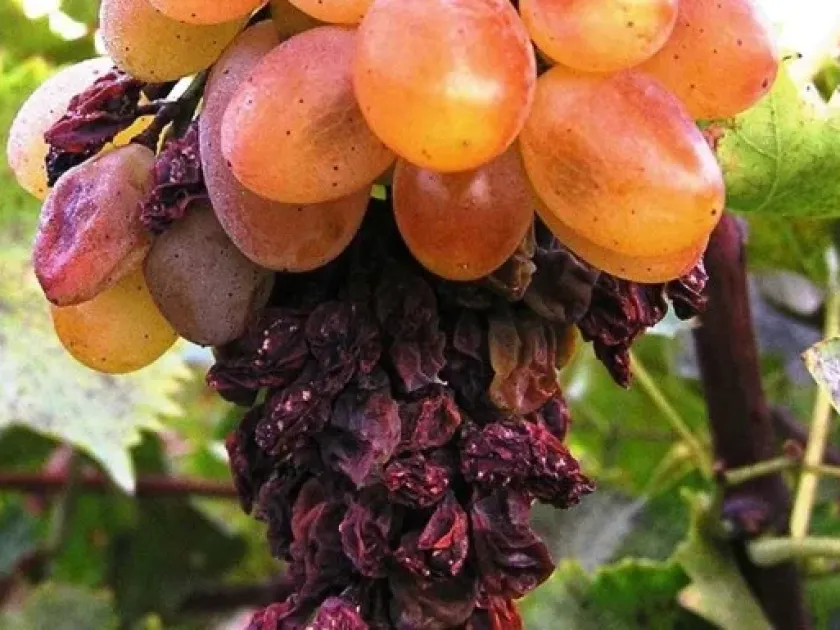
Description
Symptoms
Symptoms of Coniella infection primarily manifest as sudden wilting and necrosis of the plant's affected parts, such as fruits, berries, or stems.
In grapes, the disease appears as white rot, where berries turn ash-gray, shrivel, and eventually dry out, presenting a characteristic withered appearance.
A hallmark sign of the disease is the emergence of numerous tiny, black fruiting bodies (pycnidia) breaking through the epidermis of the affected fruit.
On stems and shoots, the infection forms necrotic lesions that can lead to girdling, resulting in the death of the distal parts of the plant.
High humidity conditions may reveal fungal sporulation on the surface of lesions, often appearing as off-white or cream-colored masses.
Pathogen
Coniella is a fungal plant disease caused by pathogens of the Coniella genus, with Coniella diplodiella being one of the most economically significant species.
The fungus is classified as a deuteromycete and persists in the soil and on infected plant debris through structures known as pycnidia.
The disease cycle is driven by pycnidiospores that are disseminated by rain, wind, and agricultural tools, infecting susceptible tissues through surface wounds.
This pathogen demonstrates high environmental adaptability, allowing it to thrive across various climatic zones where host crops are cultivated.
The biological nature of the fungus requires access to inner tissues, meaning that cuticle integrity is the primary defense against initial colonization.
Conditions for development
The development of the disease is highly dependent on periods of prolonged high humidity and rainfall, which facilitate spore germination.
Mechanical damage, especially caused by hail or insect feeding, is a critical trigger for widespread outbreaks as it provides immediate access to internal plant tissues.
The optimal temperature range for the rapid proliferation of the fungus is between +20°C and +28°C, which often coincides with peak vegetative growth.
Dense canopy structures, poor air circulation, and high weed pressure create a favorable microclimate that supports the buildup of inoculum.
Water stagnation around the base of the plant or on the surface of fruits accelerates the infection process during the active growing season.
Why it matters
Coniella causes significant economic losses by reducing fruit yield and quality, rendering the produce unsuitable for fresh markets or commercial processing.
The systemic weakening of perennial plants due to stem infections leads to long-term decline and potential mortality of individual branches or entire plants.
In vineyards, the disease ruins the sugar content and chemical balance of grapes, which negatively impacts the final quality of wine products.
Persistent infections reduce the plant's overall vigor, making it more susceptible to environmental stress, including winter cold and secondary pathogens.
Increased expenditure on chemical control and labor for sanitation significantly raises the cost of production for growers in affected areas.
Protection
Effective management begins with stringent sanitation practices, including the removal and destruction of all diseased plant material to minimize inoculum sources.
Proper canopy management, such as pruning and training, is essential to improve airflow and reduce the humidity levels that favor fungal growth.
Protecting plants from mechanical damage, including the use of hail netting, is a proactive measure to prevent infection pathways.
Chemical control programs involving the strategic application of fungicides are necessary to protect plants during high-risk environmental conditions.
- Sanitizing pruning tools between vines to prevent cross-contamination.
- Applying protective copper-based fungicides as a preventative measure.
- Integrated pest management (IPM) to control vectors of injury.
- Monitoring weather patterns to time fungicide applications before anticipated rain.
Discussion
No discussions yet — be the first.