
Conidiosporomycosis
Conidiosporomyces
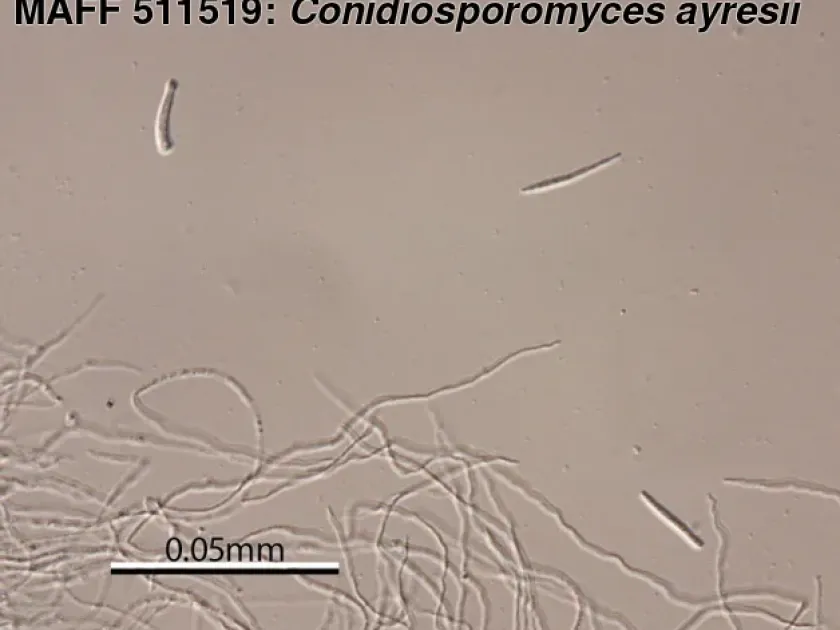
Description
Symptoms
The main sign of infection is the deformation of the generative organs of crops. Healthy tissues are replaced by a spore mass, which often has a characteristic color, ranging from light to dark, depending on the stage of fungal development.
In the early stages, the disease is practically invisible. However, as conidiosporomycosis progresses, the plant begins to lag in growth, and inflorescences become atypically dense, swollen, or take on a deformed shape.
The surface of the affected areas may be covered with a spore coating. When the membrane of these formations is damaged, a powdery mass consisting of millions of microscopic spores of the pathogen is released.
In the case of cereal crops, the ears often do not emerge from the leaf sheath or develop improperly. Kernels in such ears are completely destroyed, replaced by the mycelium and spores of the fungus, making the harvest unusable.
In the field, infection foci often appear as localized groups of stunted plants. In dry weather, the spore mass can crack, facilitating the rapid dispersal of the infection throughout the field.
Pathogen
The causative agent of this disease is a fungus from the genus Conidiosporomyces. It is a specific phytopathogen belonging to the group of smut fungi or closely related basidiomycetes that mainly affect the generative organs of plants.
The biology of the pathogen involves the formation of conidial sporulation, which replaces the normal tissues of the host plant, transforming them into a mass of spores. Unlike typical smut species, this genus has its own morphological features and life cycle characteristics.
The fungal mycelium develops inside plant tissues, gradually colonizing inflorescences or spikelets. As it matures, the mycelium produces a huge number of spores, which are spread by wind, water, or insects to healthy plants.
The fungus is capable of surviving in the soil or on plant debris in the form of resting structures. This makes the pathogen extremely resistant to unfavorable environmental conditions, including low temperatures and winter periods.
The genetic adaptability of the species allows it to quickly adjust to new hosts, which complicates the breeding of resistant crop varieties. Research into the pathogen continues within the framework of modern mycology.
Conditions for development
The development of the disease directly depends on meteorological factors, in particular humidity and air temperature during the flowering period of the crop. Optimal conditions promote rapid spore germination on the stigmas of the flowers.
Prolonged periods of heavy rain or abundant morning dew create an ideal environment for the spread of infection. Moisture is necessary for the spores to activate and penetrate the tissues of the susceptible plant.
The temperature regime plays a decisive role in the incubation period. Moderately warm weather combined with high humidity accelerates the process of spore formation, which leads to the epiphytotic development of the disease.
Violation of agricultural standards, such as high planting density, helps to create a microclimate with high humidity within the plant stand. This significantly facilitates the pathogen's ability to infect new areas.
The presence of an infectious background in the soil or the use of untreated seed material is a critical factor. The infection can be carried with seeds or remain in the form of spores in the upper soil layers.
Why it matters
Conidiosporomycosis causes serious economic damage to farms, reducing not only the total grain yield but also its commercial quality. Harvest from infected areas loses its seed and fodder properties.
Direct damage consists in the total loss of affected grains or inflorescences. In the case of widespread pathogen infection, yield losses can reach a significant percentage, making it economically unviable to harvest the field.
Produce obtained from infected fields may be toxic or contain impurities that are unacceptable according to quality standards. This creates additional problems when selling raw materials to processing plants.
In addition to quantitative losses, a decrease in the photosynthesis intensity of infected plants is noted. The disease drains the crop's resources, directing all nutrients to the development of the mycelium rather than the formation of high-quality grain.
The long-term presence of the pathogen in the same field leads to the accumulation of infectious potential in the soil. This makes it impossible to cultivate susceptible crops for several years without radical measures.
Protection
The basis of protection is the use of certified, treated seed material. Applying high-quality fungicides for seed treatment allows for the elimination of primary infection located on the surface of the grain shell.
Adherence to scientifically based crop rotation is a mandatory requirement. Alternating crops helps break the fungal life cycle, depriving it of a necessary host for a certain period of time.
Agricultural practices aimed at the timely removal of plant debris and deep plowing help reduce the supply of spores in the soil. A healthy field background is key to minimizing the risk of conidiosporomycosis.
- Use of varieties resistant to smut diseases.
- Application of balanced doses of mineral fertilizers.
- Timely removal of infected plants from the crops.
- Application of fungicides during developmental phases critical for infection.
Monitoring the phytosanitary status of crops during critical growth phases allows for prompt action to contain disease foci. Effective protection requires a systematic approach and the combination of various control methods.
Discussion
No discussions yet — be the first.