
Clustered collybia
Collybia acervata
Description
Symptoms
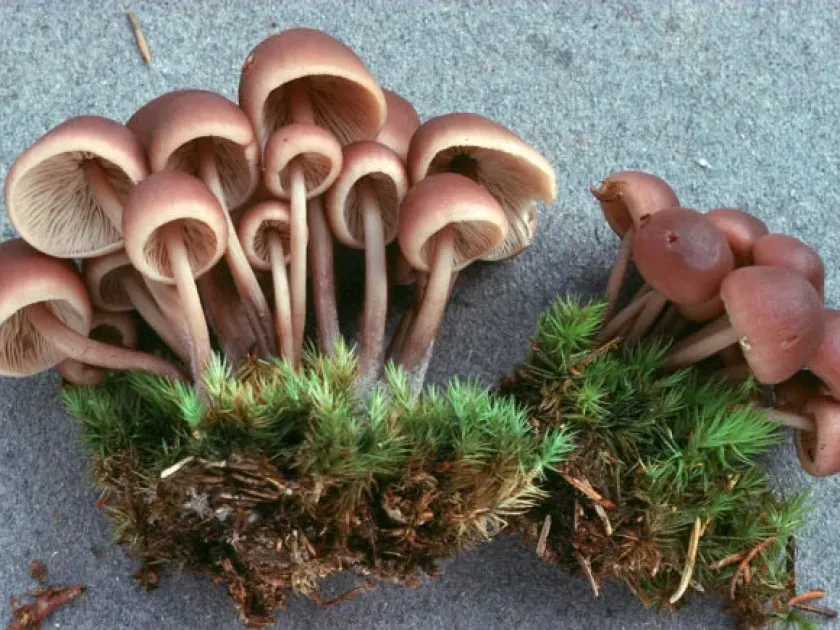
The most distinctive sign of this fungus is the formation of dense, clustered groups of mushrooms that grow together, often sharing a common base.
The caps of the mushrooms range from reddish-brown to tawny, often fading to a lighter tan color as the specimen matures or dries out.
Gills are typically white or pale cream, crowded, and narrow, providing a clear visual contrast against the darker cap color.
The stipe (stem) is characteristically long, slender, and hollow, often displaying a fine white powdery coating or mycelial threads at the base.
These clusters are frequently found on decaying conifer wood or highly organic soil, appearing in large groups rather than as isolated individuals.
Pathogen
Clustered collybia, currently known by the scientific name Gymnopus acervatus, is a common saprotrophic fungus found in forest environments.
It is crucial to clarify that this fungus is not a plant pathogen. It does not cause diseases in crops or garden plants as it lacks the biological mechanisms to infect living tissues.
The fungus acts as a decomposer, breaking down complex organic compounds found in dead wood, pine needles, and forest floor litter.
Because its ecological niche is restricted to non-living organic matter, it poses zero threat to agricultural productivity or plant health.
This organism plays a beneficial role in natural nutrient cycling by converting forest waste into accessible mineral components for the soil ecosystem.
Conditions for development
The growth of the fungal colony is primarily driven by high moisture levels and a steady supply of woody organic matter, particularly conifer debris.
It thrives in acidic soil conditions common to coniferous forests, where the accumulation of needles creates an ideal substrate for saprotrophs.
Temperature ranges of 10 to 20 degrees Celsius are optimal for the development of the fruiting bodies, typically occurring during autumn months.
It requires an environment with minimal soil disturbance, allowing the mycelium to establish itself deeply within the layer of organic humus.
High humidity and shaded areas provide the necessary microclimate to prevent the rapid desiccation of the delicate gills and caps.
Why it matters
The clustered collybia causes no economic harm to crops, trees, or ornamentals. It is strictly a decomposer of dead plant material.
No studies or field observations suggest that this species interferes with the growth, nutrient uptake, or development of agricultural plants.
It does not produce toxins that inhibit plant growth, nor does it form parasitic relationships with root systems, making it entirely harmless to agriculture.
In fact, its presence indicates a healthy process of organic decomposition rather than a breakdown of biological integrity in the surrounding vegetation.
Farmers and gardeners should not be concerned about this fungus appearing in their plots, as it is a natural component of soil ecology.
Protection
No control measures, chemical fungicides, or preventative actions are needed as the clustered collybia does not cause any plant diseases.
If the appearance of the mushrooms is aesthetically undesirable, one may simply remove the woody debris or mulch that serves as the food source.
Improving soil aeration and reducing excessive moisture in garden beds will naturally discourage the fungus from producing fruiting bodies.
Standard horticultural practices, such as maintaining well-drained soil and ensuring proper plant spacing, will naturally keep the surface free of such fungi.
Manual removal of the fruiting bodies is sufficient for those who prefer to keep their landscaping strictly free of mushroom growth.
Discussion
No discussions yet — be the first.