
Tobacco anthracnose
Colletotrichum tabacum
Description
Symptoms
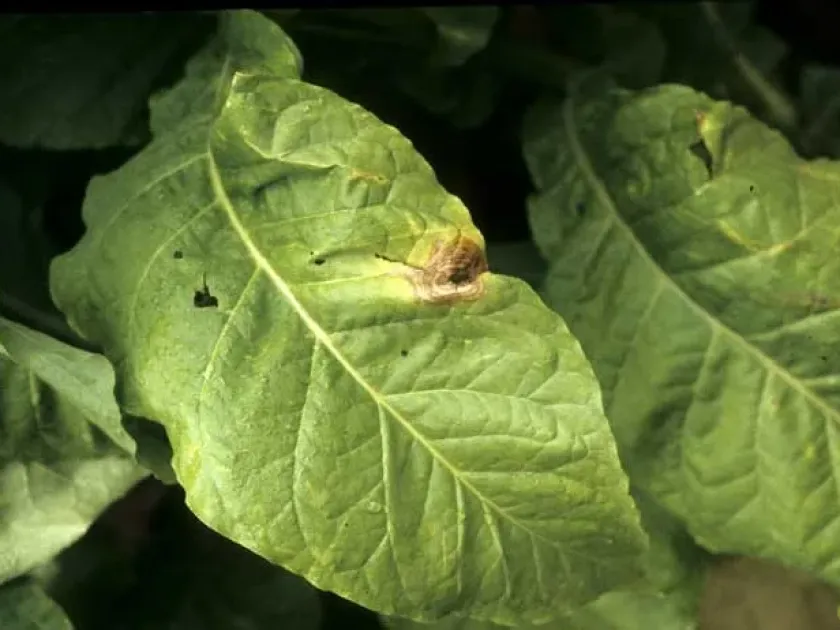
Initial symptoms typically appear as small, water-soaked, light brown spots on leaves, which may be mistaken for other leaf-spotting diseases in the early stages.
As the infection progresses, these spots expand, becoming round or angular with distinct dark borders and light-colored centers where the fungus sporulates.
When the stem is infected, the fungus causes sunken, necrotic lesions or cankers that can girdle the stem, leading to stunting, wilting, or lodging of the plants.
In seedlings, the disease can cause damping-off symptoms, resulting in rapid collapse and death of young tissues under high humidity conditions.
Severe infestations cause massive leaf distortion and premature leaf fall, significantly reducing the harvestable leaf area and overall crop vigor.
Pathogen
The causal agent of tobacco anthracnose is the imperfect fungus Colletotrichum tabacum, a highly destructive pathogen known to affect tobacco plants at all growth stages.
The pathogen overwinters as mycelium or spores in crop debris, infested soil, and can also be seed-borne, serving as a primary inoculum source for the following season.
Spores (conidia) are dispersed primarily by water splashes during rain or overhead irrigation, as well as by wind, insects, and contaminated farm equipment.
The fungus penetrates the plant tissues, colonizing them with mycelia that eventually form fruiting bodies (acervuli) on the surface of lesions to facilitate secondary infections.
This fungus is a hemibiotroph, initially colonizing living tissue and later transitioning to saprophytic survival on dead organic matter, making it a persistent threat in tobacco fields.
Conditions for development
Tobacco anthracnose thrives under warm and humid conditions, with optimal temperatures for fungal development typically ranging between 20°C and 25°C.
High relative humidity (above 85%) and frequent rainfall are critical environmental drivers that promote spore germination and rapid disease spread.
Poor ventilation in transplant beds or greenhouses creates a stagnant microclimate that encourages fungal buildup and secondary infections.
Overcrowded planting densities hinder airflow around the plant canopy, maintaining prolonged leaf wetness that is highly conducive to Colletotrichum infection.
High soil nitrogen levels can lead to rapid, succulent plant growth, making tissues more susceptible to fungal penetration and colonization compared to hardened, well-fertilized plants.
Why it matters
Tobacco anthracnose causes significant economic loss by reducing both yield quantity and leaf quality, making the tobacco unsuitable for premium markets.
Necrotic lesions persist throughout the curing process, resulting in poor-quality leaves that have decreased combustibility and impaired chemical properties.
The disease can cause total failure of transplant beds, forcing growers to discard entire batches of seedlings and incur additional costs for replanting.
Reduced photosynthetic efficiency in infected plants leads to smaller, stunted growth, preventing the plant from reaching its full physiological potential.
If not managed early, the pathogen can quickly spread throughout a field, resulting in widespread crop destruction during periods of sustained wet weather.
Protection
The first line of defense is the use of certified, disease-free seed and treating seeds with appropriate fungicides before sowing to eliminate initial inoculum.
Cultural practices such as crop rotation, avoiding tobacco for 3-4 years in infested fields, are essential for reducing the soilborne pathogen population.
- Improving ventilation and lowering humidity in greenhouses.
- Sanitation, including removing and burning infected crop residues.
- Applying preventive copper-based fungicides or systemic chemical treatments.
- Ensuring adequate spacing to allow for proper airflow.
- Using balanced fertilization to avoid excess nitrogen stimulation.
Regular field scouting is vital during favorable weather conditions to detect localized outbreaks and apply targeted fungicide sprays before widespread infection occurs.
Integrated Pest Management (IPM) strategies, combining chemical control with sound sanitation and resistant variety selection, are the most effective ways to mitigate the risk of anthracnose.
Discussion
No discussions yet — be the first.