
Spinach anthracnose
Colletotrichum spinaciae
Description
Symptoms
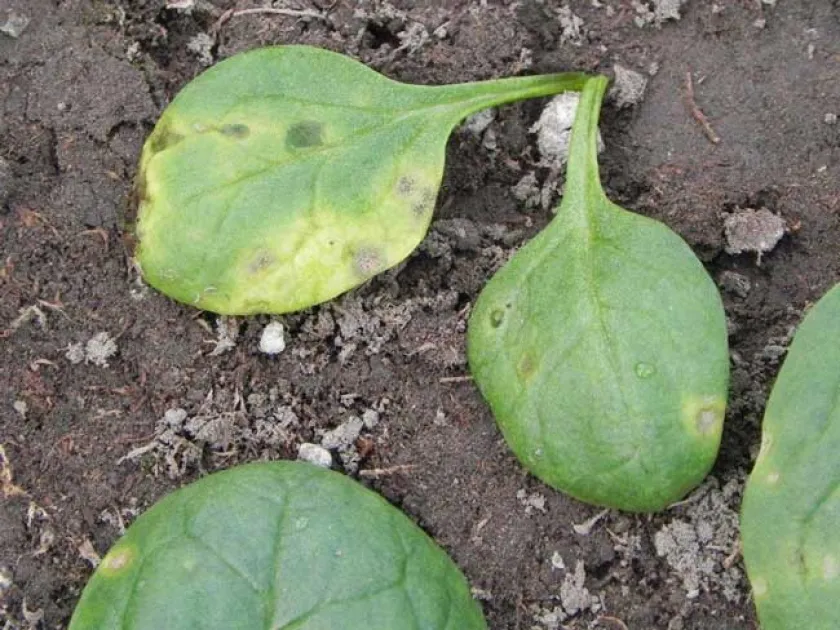
Initial symptoms include small, water-soaked spots on the leaves, which eventually turn brown or light gray. As the infection progresses, these spots expand in size and may coalesce to form large necrotic lesions.
Small dark specks, known as acervuli, become visible on the surface of the lesions. These are often arranged in concentric circles, serving as a distinct diagnostic feature of this anthracnose species.
Infection of the petioles and stems leads to softening and wilting of the plant. The leaves yellow rapidly, dry out, and lose their marketability, making the crop unfit for consumption.
High moisture levels may lead to the appearance of a faint grayish-pink spore mass on the lesions. Under severe pressure, the pathogen may also infect the cotyledons of emerging spinach seedlings.
Differential diagnosis helps distinguish anthracnose from other leaf spot diseases by the characteristic cracking of the necrotic tissue. Early stages of the infection are often subtle, necessitating regular field scouting.
Pathogen
The disease is caused by the fungus Colletotrichum spinaciae, a member of the Deuteromycetes group. This pathogen survives in the soil on crop residues and can also be transmitted through infected seeds.
The fungus produces conidia within structures called acervuli, which rupture the leaf epidermis to release spores. These spores are primary vehicles for spreading the disease across the field during the growing season.
The pathogen thrives by infecting weakened plants, but it can aggressively colonize healthy tissues if conditions are suitable. The mycelium grows intercellularly, progressively degrading the leaf structure.
Biology of the fungus involves overwintering as mycelium or chlamydospores in the soil. Its high adaptability allows the pathogen to establish itself rapidly as soon as temperatures and moisture levels align.
Infection occurs via natural openings like stomata or through existing wounds on the plant tissue. Massive spore production is triggered by high relative humidity, making the disease highly infectious during rainy periods.
Conditions for development
The primary driver for the spread of spinach anthracnose is high relative humidity (above 80%) coupled with free moisture on leaf surfaces. Frequent rain or heavy dew facilitates rapid spore germination.
The optimal temperature range for the pathogen is 20°C to 25°C. In such conditions, the incubation period is significantly shortened, which can lead to a sudden disease outbreak in a short time frame.
Overcrowded plantings create a poor microclimate that restricts airflow, keeping humidity high around the foliage. This creates a perfect breeding ground for fungal pathogens to thrive.
Poor ventilation in greenhouses or failure to adhere to recommended plant spacing in the field promotes disease buildup. Additionally, excessive nitrogen fertilization can produce soft, succulent tissues that are highly susceptible to infection.
Failure to implement a proper crop rotation, specifically planting spinach on the same plot too frequently, leads to an accumulation of fungal spores in the soil, increasing the risk for future seasons.
Why it matters
Spinach anthracnose causes significant economic loss, as infected greens are considered unsalable. Damage to the leaf area reduces the photosynthetic capacity of the plants, stunting their overall growth.
Rapid spread of spores across the field can lead to the total loss of the harvest if not addressed early. The economic impact is compounded by the speed at which the disease progresses through a field.
The pathogen is seed-borne, meaning that infected seeds can carry the disease to new, previously uncontaminated areas. Seedlings may die shortly after emergence, leading to poor plant stand and uneven crop development.
Infection at the end of the season can contaminate the seeds, reducing their germination rates and vigor. This creates a persistent reservoir of inoculum that is difficult to manage without rigorous seed treatment.
Consumption of infected spinach is unsafe due to potential mycotoxin accumulation. Besides direct loss, the disease negatively affects the taste, appearance, and shelf life of the harvested greens.
Protection
The primary control measure is the use of high-quality, disease-free seed. Treating seeds with authorized fungicides is recommended to eliminate any internal or external fungal contamination.
Implementing a strict crop rotation schedule is essential; spinach should not be planted on the same ground more than once every three years. Rotation with non-host crops helps reduce soil-borne inoculum levels.
Deep plowing after harvest helps bury infected plant debris, which accelerates the degradation of the fungus. Additionally, controlling weeds that may act as alternative hosts is vital for disease management.
Fungicide application should be done in compliance with label regulations for leafy vegetables. It is crucial to respect the pre-harvest interval to ensure the product is safe for human consumption.
- Choosing resistant or tolerant spinach varieties.
- Maintaining optimal plant spacing to promote airflow.
- Removing and destroying infected plant debris after harvest.
- Managing humidity in greenhouse environments through proper ventilation.
Discussion
No discussions yet — be the first.