
Pea anthracnose
Colletotrichum pisicola
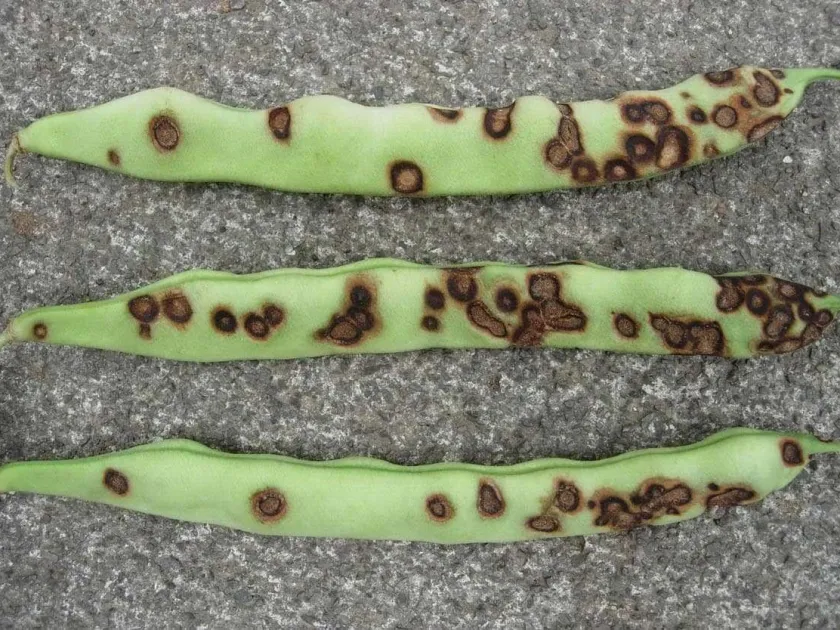
Description
Symptoms
Initial symptoms are characterized by small, round to irregular dark-brown spots. These lesions often develop a distinct dark border with a lighter-colored necrotic center.
On stems and leaf stalks, the fungus causes sunken, elongated lesions that can eventually girdle the stem, causing the plant to wither and collapse prematurely.
Under humid conditions, the centers of the lesions develop a characteristic pinkish or yellowish mass, which represents the fungal conidiomata (spore-producing structures).
Foliar symptoms include yellowing and premature leaf senescence. As the infection progresses, the leaves curl, dry out, and drop off, severely limiting the plant's capacity for photosynthesis.
Pods show small, depressed dark spots. Severe pod infection often results in shriveled seeds that are covered in fungal mycelium, rendering them non-viable for future sowing.
Pathogen
The causal agent of pea anthracnose is the fungal pathogen Colletotrichum pisicola. This fungus is a member of the deuteromycetes and is known for its ability to persist in debris and seed tissues.
The primary inoculum for the infection typically consists of contaminated seeds, where the fungus remains in a dormant mycelial state. Additionally, soil-borne spores from previous crop residues serve as a persistent threat.
During the growing season, the fungus produces conidia, which are disseminated by rain splashes or wind, leading to secondary infection cycles that can spread across the entire pea field.
The pathogen is capable of invading plant tissues by producing specialized infection structures, which allow it to penetrate the epidermis and spread through the plant's parenchymal cells.
Although it primarily targets peas, the fungus exhibits a certain level of adaptation to other legume species, making it a significant concern for diversified pulse farming operations.
Conditions for development
The development of pea anthracnose is highly dependent on high moisture levels. Relative humidity above 80% combined with frequent rainfall creates an optimal environment for infection.
Moderate temperatures ranging from 18°C to 25°C are ideal for the rapid germination of conidia and the subsequent colonization of host plant tissues.
Dense crop stands inhibit airflow, leading to higher humidity levels within the crop canopy. This environment facilitates the rapid spread of spores from the lower leaves to the upper parts of the plant.
Inadequate soil drainage or prolonged wet spells during the flowering and pod-filling stages significantly increase the risk of a widespread anthracnose outbreak.
Mechanical damage caused by pests or machinery during cultivation provides convenient entry points for the fungal pathogen, accelerating the infection process in vulnerable fields.
Why it matters
The impact of pea anthracnose on yield is severe, as it directly affects the quantity and quality of the seeds. Infected seeds are typically small, discolored, and exhibit poor germination rates.
Early plant death due to stem girdling results in significant plant population losses. This leads to uneven maturation and reduced biomass production across the entire field.
Economic losses are compounded by the high costs of sorting and cleaning contaminated harvests, and the potential rejection of crops due to strict seed quality standards.
Photosynthetic capacity is drastically reduced by foliar damage, which negatively influences the plant's ability to fill pods, leading to lower yields and inferior seed quality.
Furthermore, the persistent nature of the pathogen in soil and crop debris forces farmers to incur additional costs for fungicide applications and extended crop rotation intervals.
Protection
The use of certified, disease-free seed is the primary strategy for preventing the introduction of anthracnose into new fields. Chemical seed treatment is highly recommended as a standard precaution.
Adhering to a robust crop rotation schedule, avoiding legumes for at least 3–4 years on the same plot, helps reduce the concentration of fungal spores in the soil.
Effective management of crop residues, including deep tillage after harvest, is crucial for burying infected material and promoting its breakdown by soil microorganisms.
Foliar fungicide applications during critical growth stages, such as the onset of flowering, can effectively manage the disease and prevent significant yield losses during wet seasons.
- Removal of wild legume weeds from field margins.
- Planting at optimal densities to improve airflow.
- Selection of resistant or tolerant pea varieties where available.
Discussion
No discussions yet — be the first.