
Coffee anthracnose
Colletotrichum paranaense
Description
Symptoms
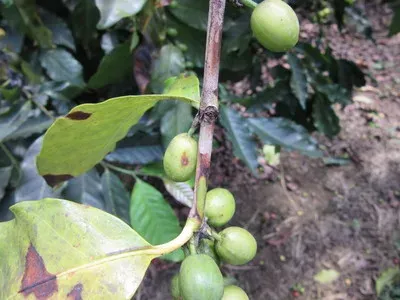
Symptoms initially appear as small, light-colored spots on the leaves. These spots soon turn dark brown or black, often with a defined margin, and may expand significantly under favorable conditions.
Infection of the berries is the most severe symptom. Dark, sunken lesions develop on the fruit surface, often leading to premature berry drop or the mummification of the fruit on the branch.
Branch dieback is another critical sign. The fungus moves from the twigs into larger branches, causing the bark to turn grey or black and leading to the eventual death of the affected branch segment.
In humid conditions, the pathogen produces characteristic salmon-colored or orange spore masses on the surface of necrotic tissues, which are diagnostic indicators of Colletotrichum infection.
Severe infestation results in heavy defoliation and flower drop. This reduces the photosynthetic area of the tree and prevents the plant from setting a healthy yield for the subsequent season.
Pathogen
The causative agent of coffee anthracnose is the fungus Colletotrichum paranaense. This pathogen is a member of the complex group of Colletotrichum species that cause significant damage to coffee crops globally.
It is classified as an ascomycete fungus. The disease it causes, anthracnose, is characterized by its ability to cause localized tissue necrosis in both vegetative and reproductive parts of the coffee plant.
The fungus produces spores (conidia) that serve as the primary inoculum. These spores are dispersed by splashing water, wind, and even through contaminated pruning tools, facilitating the spread of the disease.
Colletotrichum paranaense is capable of surviving in dead plant tissues, twigs, and fallen berries. This survival strategy ensures that the fungus remains present in the field even during the off-season.
The pathogen utilizes specialized enzymes to break down plant cell walls. This enzymatic activity allows it to colonize healthy tissue rapidly, particularly when the plant's defense mechanisms are compromised.
Conditions for development
High relative humidity is the most critical environmental factor for the development of coffee anthracnose. Persistent rain and mist create the moisture needed for spore germination and infection.
Temperature plays a vital role, with an optimal range between 20 °C and 28 °C being highly conducive to rapid fungal growth and tissue colonization.
Poor airflow within the coffee canopy is a significant risk factor. Dense planting increases the humidity around the leaves and branches, significantly lowering the barrier to infection.
Any physiological stress on the coffee tree, such as nutrient deficiencies, drought, or excessive pest infestation, predisposes the plants to infection by Colletotrichum paranaense.
Agricultural practices that leave organic debris under the trees create a persistent reservoir of inoculum, allowing the pathogen to thrive throughout the year.
Why it matters
The economic impact of coffee anthracnose is profound, primarily due to the direct loss of harvestable berries. Infected coffee cherries have reduced quality and are often rejected by processing facilities.
Reduced photosynthetic capacity caused by leaf lesions leads to a general decline in tree vigor. This forces the plant to divert energy toward survival rather than fruit production.
The necessity for aggressive pruning to remove infected branches leads to a permanent reduction in the structural development of the tree and can delay future fruit production cycles.
Export markets have stringent quality standards; contaminated or damaged coffee beans lower the overall market value of the harvest, impacting the grower's profitability.
In extreme cases, the disease can lead to the death of entire trees if not properly managed, necessitating costly replanting programs for the plantation owner.
Protection
Sanitation is the cornerstone of anthracnose management. Regularly removing and burning infected twigs and berries is essential to decrease the primary inoculum level in the plantation.
Improving canopy architecture through strategic pruning ensures better light penetration and airflow, which naturally suppresses fungal growth and humidity accumulation.
Preventive application of copper-based fungicides is a common and effective control strategy. Treatments must be applied during high-risk periods to protect the developing fruit and foliage.
Maintaining optimal soil fertility, especially adequate levels of potassium and micronutrients, improves the tree's natural defense systems and reduces susceptibility to fungal pathogens.
- Monitor the plantation weekly for early symptoms.
- Disinfect pruning equipment between trees to avoid cross-contamination.
- Select resistant coffee cultivars appropriate for the specific climate.
Discussion
No discussions yet — be the first.