
Lemon anthracnose
Colletotrichum limonicola
Description
Symptoms
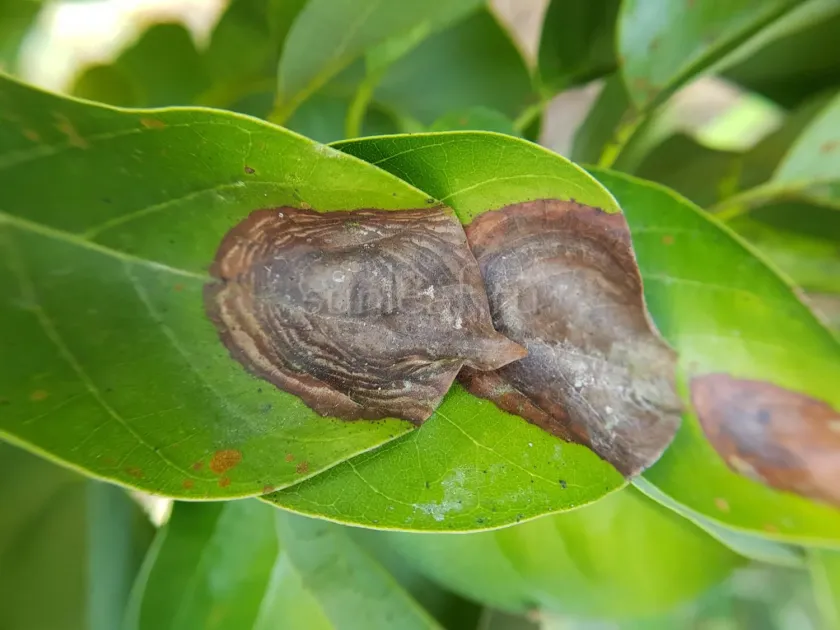
The initial symptoms include small, light-brown or gray spots on young leaves, which gradually enlarge and darken, often developing a distinct necrotic center.
A hallmark of this disease is the presence of concentric ring patterns within the lesions, which are often visible on the fruit and foliage.
On ripening fruit, the pathogen causes soft, brown, circular spots that eventually expand, leading to complete decay and the potential for secondary rot infections.
Twigs often display symptoms of dieback, where bark lesions encircle the branch, leading to sudden wilting and death of the distal part of the limb.
Under conditions of high moisture, pinkish or orange slimy spore masses are often visible on the surface of infected lesions, signaling active sporulation.
Pathogen
The disease is caused by the fungus Colletotrichum limonicola, which is a specialized pathogen that primarily targets various citrus species, including lemons.
The fungus survives during the dormant season in the form of mycelium and spores within infected twigs, fruit mummies, and leaf debris beneath the tree canopy.
Primary infection occurs when spores are dispersed by splashing rain, high humidity winds, or insect activity, landing on susceptible young plant tissues.
The pathogen utilizes mechanical wounds, natural openings such as stomata, or cracks in the bark to penetrate the epidermis and colonize host cells.
Once established, the fungus develops rapidly, producing a second generation of spores in acervuli, which appear as small black lesions on the surface of infected parts.
Conditions for development
High relative humidity levels, generally exceeding 75%, are the most critical environmental factor required for the germination and spread of Colletotrichum limonicola.
The optimum temperature range for fungal development is between 22 and 26 degrees Celsius, coinciding with periods of mild spring and autumn weather.
Dense canopy growth that limits air circulation promotes local microclimates that retain moisture, significantly increasing the probability of severe infection.
Plants under physiological stress due to poor soil nutrient management, drought, or waterlogging are substantially more susceptible to fungal attack.
Rain events during the critical stages of flowering and early fruit development are often responsible for the rapid spread of the pathogen across the entire orchard.
Why it matters
Lemon anthracnose causes significant yield losses by inducing heavy abscission of flowers and young fruit, which reduces the total marketable production.
Severe infestations lead to defoliation, which hampers the photosynthetic capacity of the tree, resulting in smaller, poorer quality fruit.
The decay of harvested fruit during storage and transit represents a direct economic loss for citrus growers and distributors.
Persistent branch dieback weakens the structural integrity of the tree, potentially leading to long-term decline and reduced tree longevity.
Increased operational costs related to intensive fungicide programs and the labor required for sanitation negatively impact the profitability of lemon farming.
Protection
Effective management begins with strict orchard sanitation, which involves the removal and destruction of all deadwood and fallen leaves to lower inoculum pressure.
Protective fungicides, particularly copper-based formulations, should be applied strategically during periods of rapid growth and high risk of wet weather.
Good horticultural practices, such as proper pruning for improved canopy aeration and balanced fertilization, are essential for maintaining plant vigor.
Selecting and planting resistant cultivars is the most sustainable approach to long-term disease management in areas prone to high moisture.
- Regular pruning to remove symptomatic branches.
- Application of fungicides at the first sign of bloom infection.
- Sanitization of pruning equipment between trees to avoid mechanical spread.
Discussion
No discussions yet — be the first.