
Lentil anthracnose
Colletotrichum lentis
Description
Symptoms
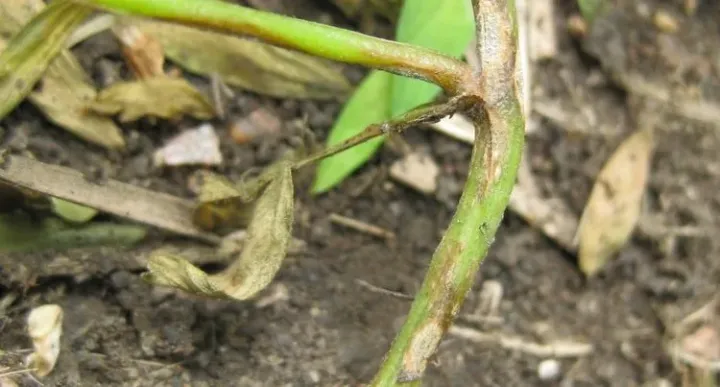
The disease first manifests as pale or grey-green circular spots on the stems, leaves, and pods, which gradually enlarge and darken to brown or black.
As the disease progresses, necrotic tissues may develop cracks, revealing small black acervuli within the lesions, which are characteristic of the fungal reproductive stage.
Severe infections lead to the wilting and eventual collapse of stems, while leaves may wither and drop prematurely, causing significant defoliation.
When pods are affected, the lesions can extend to the seeds inside, causing them to become discolored, shriveled, or in some cases, completely aborted.
Seedling blight is a common symptom in early stages, where stems are girdled at the base, leading to the rapid death of young plants and patchy field stands.
Pathogen
Lentil anthracnose is caused by the fungus Colletotrichum lentis. It is a highly specialized pathogen that primarily targets species within the Lens genus.
The fungus survives between cropping seasons as mycelium in infested crop debris or as dormant spores, including sclerotia-like structures, on or within the seed coat.
Infection begins when primary inoculum, consisting of spores produced on old crop residue, is splashed by rain or wind-blown onto emerging healthy plant tissue.
The fungus progresses through the production of conidia within acervuli, which appear as small dark structures on the lesions of infected plants, facilitating rapid secondary spread.
The pathogen thrives by colonizing the cortical tissues of stems and leaves, eventually producing specialized structures for survival and dispersal under varying environmental conditions.
Conditions for development
The development of Colletotrichum lentis is strongly favored by periods of high humidity, frequent rainfall, and moderate temperatures between 15°C and 25°C.
Extended leaf wetness, such as dew or prolonged fog, provides the necessary moisture for spores to germinate and penetrate the host tissue effectively.
Dense plant canopies that lack proper ventilation trap moisture, creating an ideal microclimate for the fungus to multiply and spread throughout the crop.
Plants under nutrient stress or those experiencing mechanical damage from insects are significantly more prone to rapid colonization by the pathogen.
The spread is often most aggressive during the flowering and pod-filling stages, especially if weather conditions remain cool and wet during these critical periods.
Why it matters
Lentil anthracnose causes major economic losses through both reduced seed yield and compromised grain quality, often exceeding 40% in vulnerable varieties.
Infected seeds have lower germination rates and vigor, serving as a primary source of infection if used for planting in subsequent growing seasons.
Structural weakness in the stems due to fungal lesions leads to severe lodging, which makes mechanical harvesting difficult and increases harvest losses.
Photosynthetic efficiency is drastically reduced due to lesion formation on foliage, resulting in stunted plant growth and overall lower biomass production.
The disease also increases costs for farmers, who must invest in regular fungicide applications and higher seed input standards to maintain production levels.
Protection
The most effective strategy is the use of high-quality, disease-free seed certified to be free from Colletotrichum lentis infection.
Seed treatment with systemic fungicides is essential to protect young seedlings from early-season infections originating from the seed coat.
A multi-year crop rotation is highly recommended, with at least a 3–4 year break between lentil or other pulse crops in the same field.
Foliar application of fungicides during the growing season, particularly before canopy closure or during wet weather, is critical for controlling spread.
Implementing deep tillage practices helps bury infected crop debris, reducing the initial pathogen load present on the soil surface for the next season.
Discussion
No discussions yet — be the first.