
Persimmon anthracnose
Colletotrichum kakiivorum
Description
Symptoms
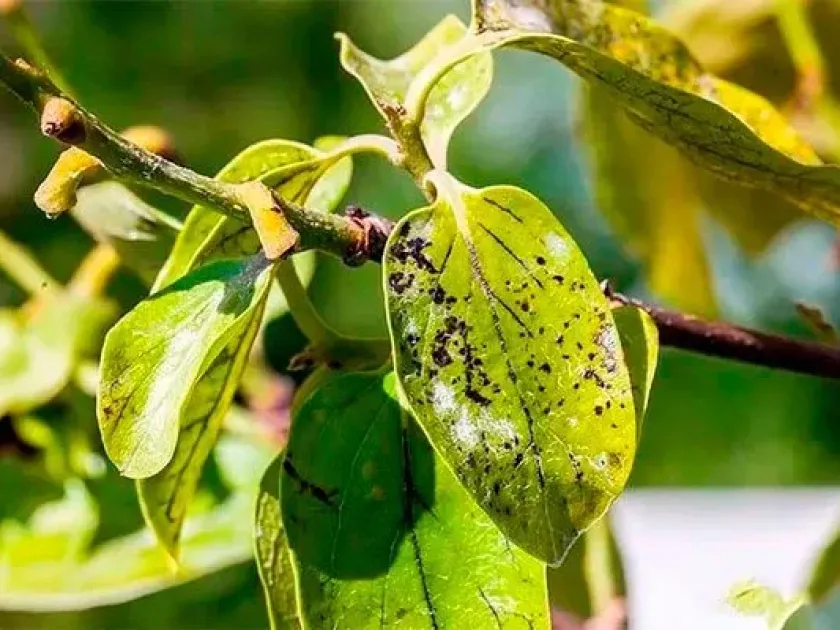
The first symptoms appear as small brown or black spots on young leaves, which gradually expand and lead to leaf distortion and localized necrosis.
Sunken dark lesions develop on shoots and branches, causing significant damage that disrupts nutrient flow and often results in the dieback of affected branches.
The most visible and damaging symptoms occur on the fruits: dark, circular spots with well-defined borders appear, which eventually penetrate deep into the flesh.
Under conditions of high humidity, the spots develop characteristic pink or orange spore-bearing pustules, which facilitate the further spread of the infection throughout the orchard.
Infected fruits lose their marketability, become soft, develop a bitter taste, and often drop from the tree before they reach full maturity.
Pathogen
The disease is caused by the pathogenic fungus Colletotrichum kakiivorum. This fungus is highly specialized and is a major threat to various persimmon species, including the oriental persimmon.
The pathogen survives the winter in the form of mycelium within infected twigs, mummified fruits remaining on the trees, and fallen leaves that were not cleaned up.
When spring arrives with humid conditions, the fungus begins to produce conidia, which are easily disseminated by wind, rain splashes, and insect vectors to healthy tree parts.
The fungus is characterized by its high virulence and the ability to infect both vegetative shoots and developing fruits at different stages of maturity.
The biological cycle of Colletotrichum kakiivorum is strictly dependent on moisture levels, enabling rapid colonization of plant tissues during periods of heavy rain.
Conditions for development
The development of persimmon anthracnose is promoted by prolonged wet weather, high humidity levels (above 80%), and mild temperatures during the flowering and fruit-set stages.
Poor orchard sanitation and lack of proper pruning result in dense, poorly ventilated canopies, creating an ideal microclimate for fungal spore germination.
Physical injuries caused by hail, insects, or harvesting tools provide entry points for the fungal spores, allowing them to bypass the protective outer layer of the fruit.
High-density planting prevents air circulation, meaning that dew and rain stay on the leaves for longer periods, which dramatically increases the risk of infection.
Excessive application of nitrogen fertilizers encourages rapid, soft succulent growth, which is significantly more susceptible to Colletotrichum kakiivorum attacks.
Why it matters
Persimmon anthracnose is a destructive disease that can cause significant yield loss, posing a serious threat to both commercial orchards and backyard gardens.
Premature leaf drop weakens the trees, making them less capable of accumulating energy reserves, which reduces their overall cold tolerance during the winter months.
Persistent infections can lead to the systemic dieback of main scaffold branches, which can ultimately kill the tree if the disease is not managed effectively.
Harvested fruits affected by the disease are unsuitable for long-term storage or shipment, as they succumb to rapid decay, which also spreads to healthy fruits in containers.
The cost of intensive fungicide programs required to keep the disease under control can place a heavy financial burden on fruit growers throughout the season.
Protection
The primary control strategy involves strict sanitary practices: regularly removing and burning all infected pruning material, mummified fruits, and fallen debris from the orchard floor.
Early spring applications of copper-based fungicides are highly recommended to protect the trees during the dormant period and reduce the initial spore load.
During the growing season, systemic fungicides should be applied preventatively or at the first sign of symptoms, alternating between different classes to avoid resistance buildup.
Proper canopy management, including regular pruning and thinning, is essential to improve airflow, reduce leaf wetness, and minimize the risk of fungal establishment.
- Monitor the orchard regularly, especially after periods of rainfall.
- Control insects that damage fruit skin to prevent secondary infections.
- Select resistant cultivars to minimize the risk of severe disease outbreaks.
- Disinfect all pruning tools between trees to prevent mechanical disease spread.
Discussion
No discussions yet — be the first.