
Anthracnose caused by Colletotrichum incanum
Colletotrichum incanum
Description
Symptoms
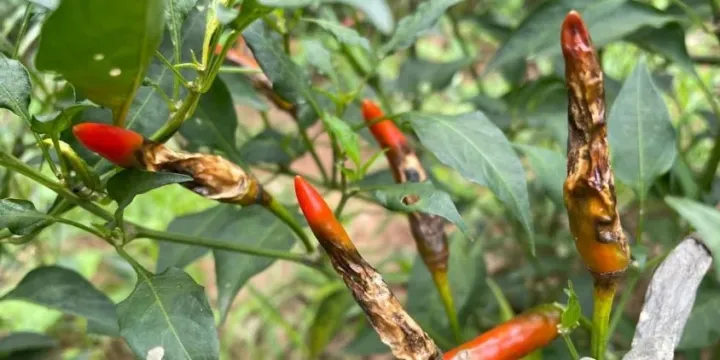
The most common symptoms appear as localized necrotic spots on leaves, stems, and fruits, which are usually dark, brown, or black, often with a well-defined border.
In humid conditions, the centers of these lesions develop small, black, cushion-like structures known as acervuli, which may release a pinkish or greyish slimy mass of spores.
On stems and petioles, the disease manifests as elongated, sunken lesions (cankers), which can lead to wilting or breaking of the plant parts due to the disruption of vascular tissues.
Infected fruits often display water-soaked spots that eventually darken and become sunken, making the fruit susceptible to further decay and rot.
In severe cases, entire leaves may curl and drop off prematurely, leading to severe defoliation and a significant reduction in the plant's overall vigor.
Pathogen
The disease is caused by the fungus Colletotrichum incanum, which is a member of the order Melanconiales. It is known for producing acervuli, which are specialized structures that contain conidia for asexual reproduction.
The pathogen is highly persistent, capable of surviving in plant debris, soil, or on infected seed surfaces as mycelium or sclerotia, allowing it to remain dormant until favorable conditions return.
Infection is primarily spread by conidia, which are dispersed by splashing rain, wind, or contact with agricultural machinery and insects during the growing season.
Upon reaching a host, the fungus penetrates the cuticle and epidermis, colonizing the tissues by secreting enzymes that break down plant cell walls to facilitate nutrient absorption.
The biological cycle is relatively fast, allowing the fungus to produce multiple generations of spores within a single season, significantly increasing the inoculum pressure in a field.
Conditions for development
Colletotrichum incanum thrives in warm and humid environments, with high relative humidity (above 80%) being the most critical factor for spore germination.
The fungus is most active at temperatures ranging from +22°C to +28°C. During these conditions, the infection process can be completed in a very short period of time.
Poor aeration in dense crop canopies and greenhouse settings creates micro-climates that are perfectly suited for the rapid spread of the disease.
Plants subjected to environmental stress, such as mechanical damage, excessive nitrogen fertilization, or drought, are generally more susceptible to successful colonization by the fungus.
Rainy weather throughout the flowering and fruit-setting stages is particularly dangerous, as it facilitates the wide dispersal of spores across the plantation.
Why it matters
The primary economic impact is the reduction of total yield due to the destruction of both foliage and reproductive structures, which limits the plant's photosynthetic capacity.
Lesions on stems and stalks often weaken the plant structure, causing lodging, which makes mechanical harvesting difficult and leads to further loss of produce.
Infected produce loses its commercial value due to unsightly blemishes and increased susceptibility to secondary infections, making it unsuitable for market or storage.
The pathogen produces toxins that can systemically affect the plant, leading to stunted growth and reduced seed quality in various crop species.
Without proper management, an outbreak of Colletotrichum incanum can lead to crop losses ranging from moderate to severe, depending on the host's growth stage.
Protection
Integrated management is essential, beginning with crop rotation using non-host species for at least two to three years to reduce the population of inoculum in the soil.
Deep plowing after harvest is a vital cultural practice that buries crop debris, accelerating decomposition and destroying the survival structures of the fungus.
The use of certified, pathogen-free seeds is the first line of defense; if the history of the field is unknown, seed treatment with appropriate fungicides is strongly recommended.
During the growing season, timely applications of systemic and contact fungicides are necessary to protect emerging tissues and halt the spread of existing lesions.
- Removal and destruction of infected plant debris.
- Effective weed control to eliminate alternative hosts.
- Balanced fertilization to promote strong plant immunity.
- Maintaining proper plant spacing to improve airflow.
Discussion
No discussions yet — be the first.