
Anthracnose caused by Colletotrichum hystricis
Colletotrichum hystricis
Description
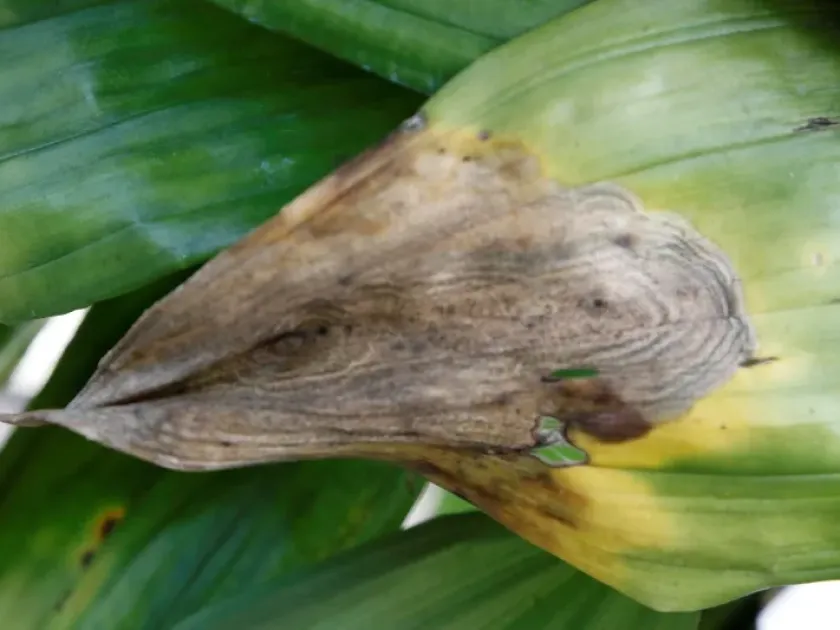
Symptoms
The primary symptom is the appearance of sunken, brown, or black lesions on leaves, stems, and fruits. Over time, these spots expand and may coalesce, leading to severe tissue death and wilting.
In the center of the lesions, small black acervuli often develop, sometimes accompanied by a pink or whitish spore mass during periods of high humidity. These structures are diagnostic of anthracnose infection.
Stem infections can cause girdling, leading to tissue collapse or breakage, which halts the transport of nutrients and water. This often results in the premature death of branches or the entire plant.
Fruit symptoms typically start as water-soaked spots that enlarge and become dark, often leading to total fruit rot. Eventually, the fruit may shrivel and become mummified, serving as an overwintering site for the fungus.
Root system involvement can occur under favorable conditions, manifesting as root rot or vascular browning. Visible necrosis on any part of the plant should be treated as a priority to prevent secondary spread.
Pathogen
The disease is caused by the fungus Colletotrichum hystricis, classified as a deuteromycete. This pathogen is characterized by its ability to form specialized fruiting bodies known as acervuli, which appear as small black dots on host tissues.
The fungus survives primarily in infected plant debris, soil, and seeds in the form of mycelium and dormant conidia. It is a parasitic organism that thrives in warm and humid environments, though it can persist in greenhouses year-round.
Reproduction occurs mainly through conidia, which are easily dispersed by rain splashes, wind, insects, and agricultural tools. This rapid mode of dissemination makes it a highly contagious disease in dense plantings.
Colletotrichum hystricis possesses a sophisticated array of enzymes that degrade plant cell walls, allowing the fungus to penetrate deeply into the plant tissue. This enzymatic activity is a key factor in the development of necrosis.
The biological cycle is closely tied to environmental triggers. When moisture levels rise, the fungus resumes activity, producing masses of new spores that restart the infection cycle, making early intervention essential for management.
Conditions for development
Development is most intense in high humidity (above 85%) and moderate to warm temperatures, typically ranging from +22 to +28 degrees Celsius. Water film on the plant surface is critical for spore germination.
Poor ventilation, especially in overcrowded greenhouse environments, facilitates the accumulation of moisture and accelerates disease spread. Rain splashing is the most frequent natural method for pathogen transmission.
Imbalanced fertilization, particularly high nitrogen application, promotes lush, succulent growth that is more susceptible to fungal penetration. Conversely, proper potassium levels help strengthen cell walls against infection.
Mechanical injuries from insect feeding or improper pruning create entry points for the pathogen. Once the physical barrier of the cuticle is breached, the fungus rapidly colonizes the inner tissues.
Continuous cropping of susceptible species leads to a high inoculum load in the soil. Failure to remove infected debris ensures that the pathogen remains present for future seasons, increasing the severity of annual outbreaks.
Why it matters
The economic impact of anthracnose is significant due to reduced yield and poor product quality. Infected fruit becomes unmarketable, and rapid rot during storage can lead to total loss of entire batches.
In cases of severe infestation, crop losses can reach 80% or more. The destruction of leaf area compromises the photosynthetic capacity of the plants, resulting in stunted growth and drastically reduced harvest volumes.
The disease also complicates international trade, as symptomatic produce is often rejected at borders. This forces producers to invest heavily in post-harvest treatments and preventive measures.
The persistence of Colletotrichum hystricis in seeds creates long-term management challenges. Once an area is infested, controlling the disease requires a multi-year commitment to sanitation and crop rotation.
Stressed plants are more vulnerable to secondary infections from other pathogens. This cumulative damage weakens the plantation, often leading to the need for early replacement of crops and increased pesticide usage.
Protection
Effective management requires an integrated approach starting with clean, certified seeds. Crop rotation is essential to prevent the buildup of soil-borne inoculum, and strict sanitation of debris is mandatory.
Prevention strategies include selecting resistant cultivars and maintaining optimal plant spacing to promote airflow. In controlled environments, managing humidity levels is the most effective way to inhibit spore germination.
Chemical control involves the timely application of fungicides, such as copper-based, strobilurin, or triazole compounds. Rotating chemical classes is crucial to avoid the development of fungicide resistance in the fungal population.
Biological control agents, such as Bacillus subtilis or Trichoderma species, can be used to suppress the pathogen in the soil and on leaf surfaces, providing a sustainable layer of protection.
- Pruning and destroying infected plant parts;
- Disinfecting all tools and machinery between tasks;
- Providing balanced mineral nutrition;
- Harvesting under dry conditions to minimize rot;
- Implementing regular scouting to identify early hotspots.
Discussion
No discussions yet — be the first.