
Persimmon anthracnose
Colletotrichum horii
Description
Symptoms
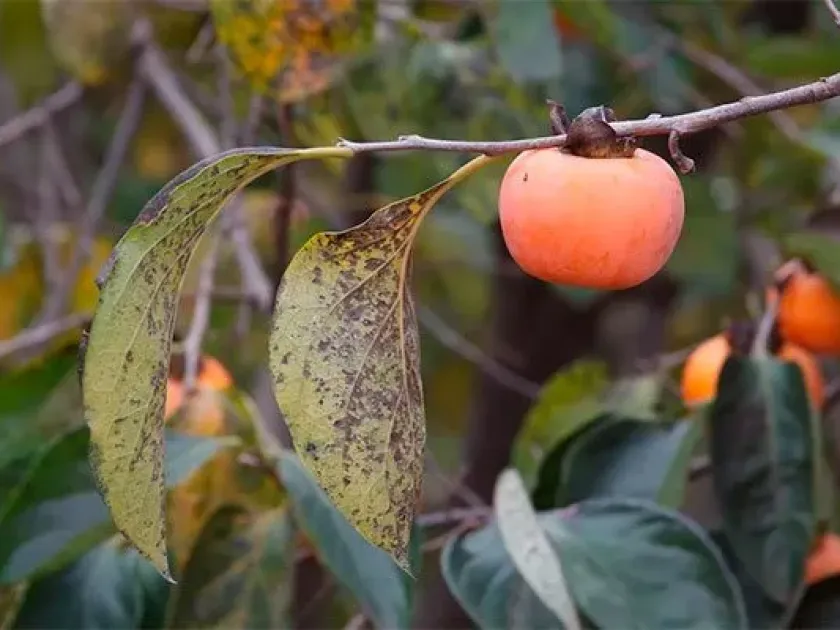
Initial symptoms include small, dark, circular spots appearing on young leaves, flower stalks, and tender shoots during early spring.
As the disease progresses, the central parts of the spots on leaves may become necrotic and fall out, creating a characteristic shot-hole appearance.
Fruit infections appear as depressed, dark-colored lesions that rapidly expand, often resulting in complete decay of the affected fruit.
Under humid conditions, the surface of the lesions develops sticky, salmon-colored spore masses, which are a primary diagnostic sign of the pathogen.
Severe infestations cause cankers on branches, leading to cracks, sap leakage, and eventual dieback of entire twigs and smaller limbs.
Pathogen
The causative agent of this disease is the fungus Colletotrichum horii, a specialized pathogen affecting various persimmon varieties worldwide.
This fungus survives unfavorable winter periods as mycelium within infected shoots, mummified fruits, and fallen leaves in the orchard environment.
During the growing season, the pathogen produces conidia in structures called acervuli, which break through the surface of the infected plant tissue.
Spread of the infection is primarily facilitated by splashing rain, irrigation water, wind, and contaminated tools used for pruning or harvesting.
Colletotrichum horii is highly aggressive, capable of infecting both young tissues and developing fruits, making it a persistent challenge for growers.
Conditions for development
High relative humidity and frequent rainfall are the most critical environmental factors that trigger the development and spread of anthracnose.
The optimal temperature range for fungal growth and spore germination is between +22 and +28 degrees Celsius, typical for summer climates.
Dense tree canopies that lack proper air circulation create stagnant, humid pockets that provide ideal conditions for fungal proliferation.
Prolonged morning dew and fog ensure the presence of moisture on plant surfaces, which is essential for the germination of fungal spores.
Trees that are weakened by poor nutrient availability or pest damage are significantly more susceptible to successful infection by the fungus.
Why it matters
Anthracnose can cause severe yield losses, rendering fruits unmarketable due to the rapid development of rot both on the tree and during storage.
Premature defoliation caused by severe leaf infection weakens the tree, reducing its ability to photosynthesize and prepare for dormancy.
The reduction in vigor leads to a decrease in overall tree health, making it more vulnerable to extreme cold temperatures and winter injury.
Economic damage is twofold: direct loss of harvest volume and increased costs associated with repeated fungicide applications to manage the disease.
Long-term infection can kill major scaffold branches, significantly shortening the productive lifespan of the persimmon tree.
Protection
Strict sanitation practices, such as pruning out infected wood and removing all mummified fruits from the orchard, are vital for reducing inoculum.
Maintaining an open canopy through proper pruning helps maximize airflow and sunlight penetration, which discourages fungal growth.
Preventative application of copper-based fungicides during the dormant season helps neutralize overwintering spores before the growing season starts.
During the vegetative phase, applying systemic fungicides is recommended to protect emerging foliage and developing fruits from infection.
Implementing a balanced fertilization program helps strengthen tree cell walls, improving the natural resistance of the persimmon against fungal attacks.
Discussion
No discussions yet — be the first.