
Guava anthracnose
Colletotrichum guajavae
Description
Symptoms
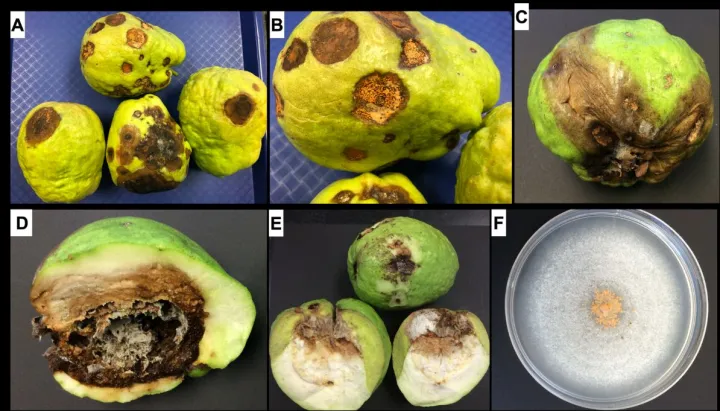
The primary symptoms on fruits are circular, dark-colored lesions with distinct margins that gradually become sunken. As the disease progresses, these spots may coalesce, covering a significant portion of the fruit surface.
In high-humidity conditions, pink or orange spore masses appear in the center of the necrotic spots. This significantly reduces the marketability of the fruit, making it unappealing and prone to rapid decay.
On leaves, the infection manifests as dark brown spots surrounded by a chlorotic halo. Heavy infections lead to premature leaf drop, which weakens the tree and reduces its overall photosynthetic capacity and fruit-bearing potential.
Young shoots are also highly susceptible, developing elongated brown lesions. If the terminal buds are infected, they may wither and die, causing structural deformation and stunted growth of the branches.
Infection of inflorescences results in flower blight, characterized by blackening and drying of buds, which leads to mass abortion of blossoms and fruit set, directly impacting total yield.
Pathogen
The causal agent of this disease is the ascomycete fungus Colletotrichum guajavae. This pathogen is a hemibiotroph, initially colonizing living tissues before switching to a necrotrophic phase that leads to cell death and tissue necrosis.
The fungus survives in plant debris, on tree branches, and within the soil as mycelium or conidia. The disease is widely distributed across tropical and subtropical regions where guava is grown commercially.
Dissemination of the pathogen primarily occurs through conidia, which are spread by wind, splashing rain, and insect vectors. Agricultural tools and contaminated nursery stock also play significant roles in the long-distance spread of the disease.
The life cycle of the pathogen is closely tied to environmental humidity. Under favorable conditions, the fungus rapidly colonizes fruits, leaves, and young shoots, producing characteristic spore-bearing structures known as acervuli.
Identification of the pathogen often requires microscopic analysis of infected tissues, where typical Colletotrichum-type conidia can be observed embedded in a gelatinous matrix that protects them from desiccation.
Conditions for development
Disease development is most intense under high relative humidity, typically exceeding 80–90%. Heavy rainfall and prolonged fog are critical environmental drivers that facilitate spore germination on plant surfaces.
The temperature optimum for the pathogen ranges from +25°C to +30°C. Within this range, the incubation period is significantly shortened, potentially leading to rapid epidemics in commercial orchards.
Poor agricultural practices, such as high-density planting that restricts airflow, create a microclimate favorable for fungal colonization. Excessive moisture retention on foliage and fruit is a major risk factor.
Stressed or nutrient-deficient plants are more susceptible to infection. Mechanical injuries on the skin of the fruit provide entry points for the fungal mycelium, making fruit wounds primary infection sites.
The presence of primary inoculum in the orchard, such as mummified fruits and dead twigs hanging in the canopy, serves as a reservoir for the fungus to initiate new infection cycles in the upcoming season.
Why it matters
The primary economic impact of anthracnose is the severe loss of fruit quality. Infected produce decays rapidly during transit and storage, leading to significant financial losses for growers and exporters.
The disease reduces overall tree vigor by impairing the photosynthetic apparatus through leaf infection. This weakens the tree, making it less resilient to environmental stressors and secondary pest attacks.
In commercial settings, uncontrolled anthracnose can decimate a large portion of the crop, necessitating heavy investment in chemical control measures to maintain acceptable harvest levels.
Chronic accumulation of the pathogen in the orchard environment makes management a recurring burden. Without consistent intervention, the cumulative effect can lead to the long-term degradation of plantation health.
The disease also affects the nursery sector, as infected cuttings can lead to the widespread dissemination of the pathogen into new, previously unaffected cultivation areas.
Protection
Effective management relies on integrated sanitary practices: collecting and removing fallen leaves and mummified fruits, and performing regular pruning of dead or infected branches to improve canopy aeration.
Maintaining optimal planting densities is essential to ensure adequate airflow between trees, which helps keep humidity levels in the canopy low enough to inhibit spore germination.
During active growth and fruit maturation, fungicide applications (such as copper-based products or systemic fungicides) are necessary to protect sensitive tissues from infection.
It is vital to rotate fungicides with different modes of action to prevent the development of resistance in Colletotrichum guajavae populations. Spray schedules must strictly adhere to pre-harvest intervals.
- Preventive spray programs at the start of the season.
- Regular monitoring of tree health and sanitation.
- Improved soil drainage to lower ambient orchard humidity.
- Use of disease-free, certified nursery stock for new plantings.
Discussion
No discussions yet — be the first.