
Strawberry anthracnose
Colletotrichum fragariae
Description
Symptoms
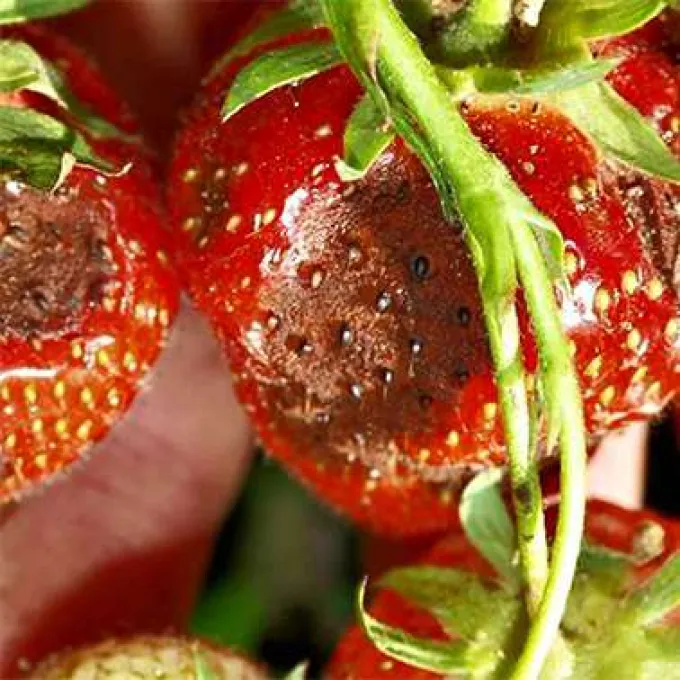
The primary symptom is the appearance of dark, sunken lesions on the fruits. These spots eventually enlarge and become covered with pink or orange spore masses.
On runners and petioles, the fungus causes elongated, brown, necrotic lesions that can lead to wilting and collapse of the plant parts.
Green berries are frequently infected, becoming hard, deformed, and eventually mummified. Such fruits stop developing and remain on the plant.
Severe infections can lead to the rot of the crown, causing the entire plant to wilt and die rapidly during the growing season.
- Sunken dark lesions on mature and green fruits.
- Pink or orange spore masses appearing on fruit surfaces.
- Elongated brown lesions on runners and petioles.
- Premature wilting and death of affected plants.
- Mummification of developing berries.
Pathogen
Strawberry anthracnose is caused by the fungal pathogen Colletotrichum fragariae, which can infect all aerial parts of the strawberry plant. The fungus survives in soil, plant debris, and infected propagation material.
This disease is considered one of the most devastating threats to strawberry production worldwide. Spores are dispersed through rain splashes, irrigation water, and insects.
The mycelium penetrates plant tissues, leading to necrosis and cellular collapse. Its high virulence allows the pathogen to rapidly colonize entire fields under favorable conditions.
The life cycle of the pathogen is closely tied to humidity levels. In the absence of a host, the fungus can persist as a saprophyte on various weeds.
Identification of the pathogen often requires laboratory confirmation, as symptoms can be confused with other fungal rots affecting strawberry fruits.
Conditions for development
High temperatures combined with prolonged periods of moisture, such as rain or overhead irrigation, are ideal for disease development.
The pathogen is most active at temperatures ranging from 25 to 30 degrees Celsius, which often coincide with the fruiting period.
Poor air circulation within dense strawberry canopies creates a humid microclimate that promotes the germination and spread of fungal spores.
Water films on leaf and fruit surfaces are necessary for spore germination, meaning frequent irrigation significantly increases infection risks.
The introduction of the disease through infected nursery transplants is the most common way for the pathogen to establish itself in new fields.
Why it matters
Strawberry anthracnose causes severe economic damage, with potential yield losses ranging from 50% to over 80% during heavy outbreaks.
Infected fruits are unmarketable, as they rot rapidly and exhibit poor post-harvest shelf life, making them unsuitable for fresh consumption.
The disease weakens the host plant, significantly reducing its vigor and fruit-bearing potential in subsequent seasons.
Nursery operations face massive losses if the pathogen is present, as they cannot sell infected plants to strawberry growers.
In cases of systemic crown infection, the entire plant dies, necessitating the removal of the affected area from production.
Protection
The primary defense is the use of disease-free, certified nursery stock to prevent the introduction of Colletotrichum fragariae.
Sanitation practices, including the removal and destruction of infected plant material and debris, are crucial for lowering the pathogen load.
Mulching the soil with plastic or straw prevents fruits from touching the soil, reducing the risk of spores splashing onto the berries during rain.
A well-timed fungicide program, rotating different modes of action, is essential for controlling the disease during the bloom and harvest period.
Optimizing plant spacing and row configuration improves air circulation, which helps keep the foliage dry and suppresses fungal growth.
Discussion
No discussions yet — be the first.