
Strawberry Anthracnose
Colletotrichum dacrycarpi
Description
Symptoms
The most visible symptoms include sunken, dark brown to black lesions on petioles, runners, and crowns. These lesions often expand, leading to the collapse of the plant part.
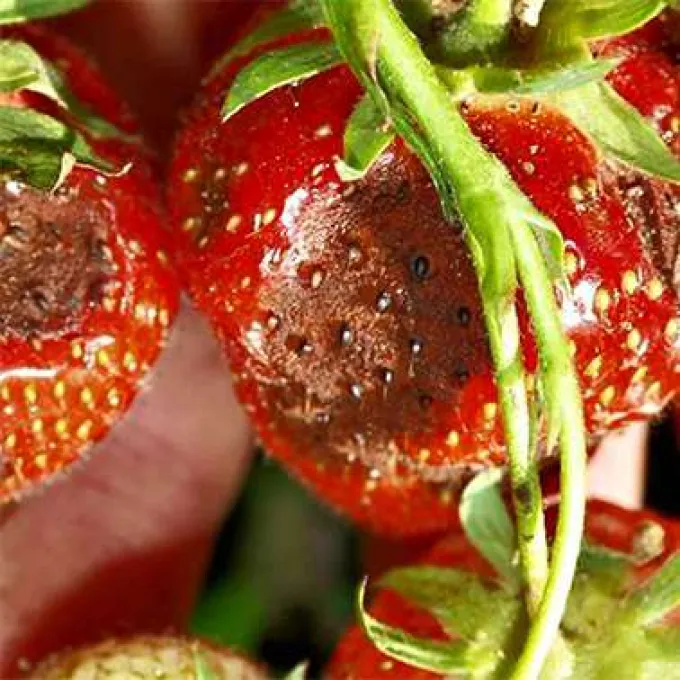
Fruit symptoms typically appear as firm, dark, sunken lesions that enlarge rapidly. Under high humidity, these spots develop a characteristic mass of salmon-colored or orange fungal spores.
Infected blossoms and green fruit often wither and die, which is frequently mistaken for other physiological problems or lack of water.
The crowns of infected plants may show internal browning, which eventually leads to the wilting and sudden death of the entire plant.
- Sunken lesions on runners and petioles.
- Salmon-colored spore masses on fruit.
- Premature death of blossoms.
- Browning of the crown tissue.
Pathogen
Strawberry anthracnose is caused by the fungal pathogen Colletotrichum dacrycarpi (often identified within the Colletotrichum acutatum species complex). It is a highly aggressive fungus that targets various parts of the strawberry plant.
The fungus overwinters in plant debris, soil, or on asymptomatic nursery stock, making it a persistent threat in strawberry production systems.
Spread occurs primarily through conidia, which are easily disseminated by splashing water, rain, irrigation systems, and human activity within the field.
The pathogen is known for its ability to remain latent in plant tissues, meaning symptoms may not appear until conditions become favorable or the fruit begins to ripen.
Due to its high reproductive rate, the fungus can cause devastating losses in a short period, especially in commercial strawberry production fields.
Conditions for development
Anthracnose development is heavily favored by warm temperatures (above 20°C / 68°F) and high relative humidity.
Frequent rainfall during the bloom and fruiting stages provides the perfect environment for the germination of fungal spores on plant surfaces.
Poor ventilation within the strawberry rows, often caused by excessive planting density, keeps the foliage wet for longer periods, facilitating infection.
Overhead irrigation acts as a major driver for the spread of conidia, effectively moving the pathogen from one plant to the next throughout the field.
Plants under nutrient stress or those experiencing rapid, succulent growth due to high nitrogen application are often more susceptible to colonization by the fungus.
Why it matters
Anthracnose is a severe economic threat, capable of causing 50% to 80% loss of yield in susceptible varieties during favorable weather conditions.
The disease significantly degrades fruit quality, making berries unmarketable due to the presence of lesions and poor shelf life.
Loss of nursery plants due to crown infection forces growers to discard entire batches of stock, resulting in significant financial losses.
The persistence of the fungus in the soil makes long-term site management difficult and requires rigorous crop rotation practices.
Increased costs associated with repeated fungicide applications and intensive labor for removal of infected debris impact the overall farm profitability.
Protection
The first line of defense is the use of disease-free, certified strawberry transplants sourced from reputable nurseries.
Implement a preventative fungicide spray program, focusing on the critical phases of flowering and fruit development to inhibit initial infections.
Improve field hygiene by immediately removing and destroying any infected plant material to reduce the local inoculum density.
Switching from overhead to drip irrigation minimizes moisture on the fruit and foliage, significantly reducing the chances of spore germination and spread.
Select resistant or less susceptible cultivars if available, and manage nitrogen levels to avoid overly succulent plant growth that may attract the pathogen.
Discussion
No discussions yet — be the first.