
Coffee Anthracnose
Colletotrichum colombiense
Description
Symptoms
Initial symptoms are characterized by small, dark, water-soaked spots on the leaves, which eventually enlarge and turn into necrotic brown or black lesions.
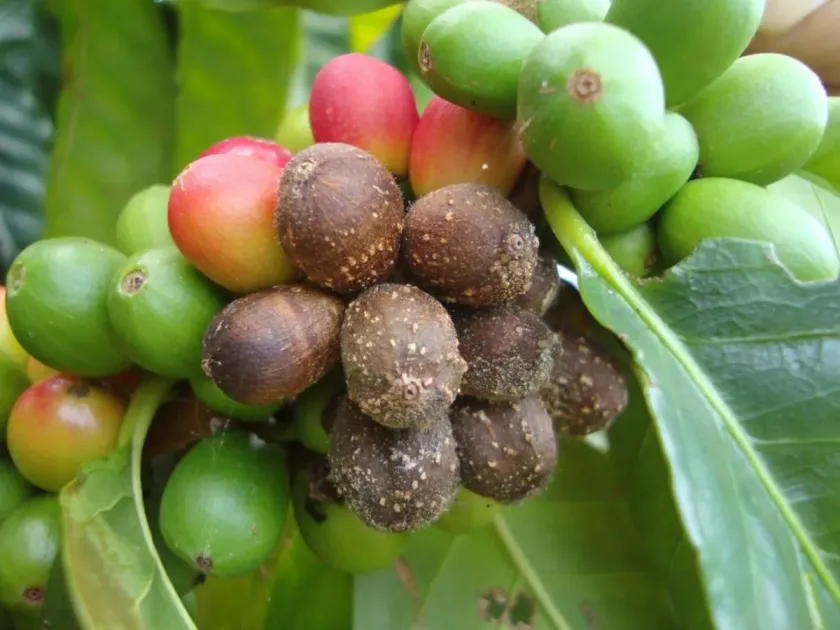
Berries show sunken, dark spots that expand rapidly; in advanced stages, these berries become mummified and may remain attached to the branch.
Under humid conditions, the pathogen produces characteristic salmon-colored or gray masses of spores on the surface of the infected areas.
Dieback of young twigs is frequently observed, where the infection progresses from the tip downwards, leading to tissue necrosis and leaf loss.
The presence of acervuli (small black fungal fruiting bodies) within the lesions is a distinct diagnostic feature visible to the naked eye or with a hand lens.
Pathogen
The causative agent of this disease is the fungus Colletotrichum colombiense, which is classified as a member of the imperfect fungi group (Deuteromycetes). It acts as a specialized pathogen targeting both vegetative and reproductive tissues.
The fungus survives primarily in crop debris, dead leaves, and mummified berries left on the ground, serving as an inoculum reservoir for the next growing season.
Transmission occurs through conidia, which are efficiently dispersed by rain splash, wind currents, and mechanical contact from infested equipment.
The pathogen utilizes enzymes to penetrate the cuticle and cell walls, subsequently colonizing the tissue and inducing necrotic lesions on the host plant.
Given the biological adaptability of C. colombiense, it can thrive in diverse agro-ecological zones, especially where tropical humidity patterns prevail.
Conditions for development
Coffee anthracnose development is heavily dependent on high relative humidity, typically requiring levels above 80% to sustain fungal growth and sporulation.
The optimal temperature range for the infection process of C. colombiense is between +22°C and +28°C, which perfectly aligns with major coffee-growing climates.
Prolonged rainfall periods provide the necessary moisture film on plant surfaces, facilitating the germination of spores and their penetration into host cells.
Poor plantation management, such as a lack of shade regulation or pruning, leads to stagnant air and high humidity inside the canopy, exacerbating the disease spread.
Stress factors, including nutrient deficiencies or damage from pests like the coffee berry borer, make the plants more susceptible to fungal colonization.
Why it matters
The economic impact of coffee anthracnose is substantial, as it leads to both significant yield losses and a decrease in the quality of the coffee harvest.
Infested berries lose their market value, and the infection can negatively influence the cup profile of the coffee during the post-harvest processing stages.
Defoliation caused by the fungus reduces the overall vigor of the plant, potentially leading to long-term productivity decline and increased tree mortality.
Farmers face increased operational costs due to the necessity of applying regular fungicide sprays to protect the crop during vulnerable phenological stages.
- Reduced quality of coffee beans.
- Significant percentage of pre-harvest fruit drop.
- Increased expenditure on crop protection inputs.
Protection
Integrated management begins with rigorous sanitary practices, such as pruning infected branches and removing diseased berries to lower the inoculum pressure.
Chemical control usually involves the application of copper-based fungicides, which remain a standard effective measure for managing Colletotrichum species.
Optimizing plantation density and tree architecture improves airflow, thereby creating an environment less favorable for fungal development and spore dispersal.
Regular monitoring during rainy seasons allows for early detection of hotspots, enabling localized control measures before the disease reaches an epidemic scale.
Cultivation of resistant coffee cultivars and maintaining high plant nutrition are essential components for ensuring sustainable and healthy coffee production.
Discussion
No discussions yet — be the first.