
Coffee berry disease
Colletotrichum coffeanum
Description
Symptoms
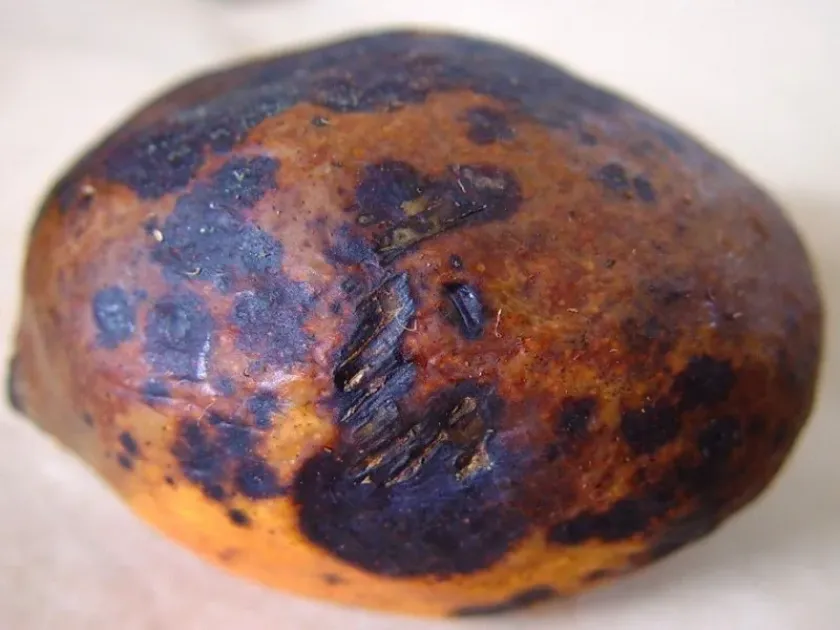
The primary symptom of coffee berry disease is the appearance of dark, sunken lesions on the green berries. These spots gradually expand until the entire berry is covered.
On the surface of the lesions, small, pink or cream-colored masses of conidia appear, which are highly visible under humid conditions and serve as a diagnostic feature.
Infected berries often become mummified, black, and remain attached to the branches, or they may drop prematurely, resulting in significant yield reduction.
Necrotic lesions can also appear on young shoots and floral stalks, leading to flower abortion and dieback of the fruit-bearing branches.
- Sunken dark spots on green berries.
- Pink conidial masses on lesion surfaces.
- Premature berry drop and mummification.
- Necrosis and dieback of young shoots.
Pathogen
The causative agent of coffee berry disease (CBD) is the pathogenic fungus Colletotrichum coffeanum, currently more precisely referred to as Colletotrichum kahawae. It is a highly specialized fungus that attacks the coffee plant.
The pathogen propagates through conidia, which are produced in acervuli on the surface of infected tissues. These spores are disseminated by rain splash, wind, and agricultural tools across the plantation.
The fungus penetrates the cuticle of the host plant, establishing itself within the plant tissues and causing cell wall degradation. This leads to the characteristic symptoms of the disease.
Genetic diversity of the fungus allows it to adapt to various environmental conditions and coffee genotypes, making it a persistent threat to coffee production worldwide.
The pathogen remains viable in mummified berries and bark lesions, ensuring survival between coffee-growing seasons.
Conditions for development
Coffee berry disease thrives in cool, humid conditions. High levels of precipitation and frequent mist or dew are critical for the spore germination process.
Temperature plays a crucial role; the disease development is most aggressive at temperatures between 18°C and 23°C, which are common in high-altitude coffee zones.
Densely planted orchards with poor airflow provide an ideal microclimate for the pathogen to flourish, as the berries remain wet for longer periods.
Periods of prolonged cloudy weather accompanied by rain allow the fungus to spread rapidly from a single source to the entire plantation.
Excessive shading and lack of proper pruning prevent sunlight from drying the plant surface, significantly increasing the risk of infection.
Why it matters
Coffee berry disease is considered one of the most economically damaging threats to the coffee industry, capable of destroying 50% to 80% of the crop if left unmanaged.
The disease causes direct loss of harvest by destroying berries, and it also stresses the plant, leading to lower yields in subsequent seasons.
In addition to quantitative losses, the quality of the harvested coffee is severely compromised, affecting the flavor profile and market value of the beans.
The operational costs for plantations increase due to the frequent necessity for fungicide applications and rigorous orchard sanitation programs.
Severe infections can weaken the structural integrity of the bushes, leading to dieback and, in extreme cases, the total loss of the coffee farm's productivity.
Protection
The primary defense against coffee berry disease is the planting of resistant or tolerant coffee cultivars, which is the most sustainable long-term strategy.
Regular pruning is essential to improve airflow within the canopy, reduce humidity levels around the berries, and allow for better penetration of protective sprays.
Sanitation practices, including the removal of infected berries and crop residues, help to minimize the inoculum level in the plantation during the off-season.
Preventive application of copper-based fungicides during the critical stages of berry development is the standard chemical control method.
Effective plantation management, including balanced fertilization and weed control, enhances the plant's natural resistance and overall health.
Discussion
No discussions yet — be the first.