
Coffee anthracnose
Colletotrichum cigarro
Description
Symptoms
Symptoms typically begin as small, circular or irregular spots on leaves, which gradually turn brown or black. These lesions can merge, leading to extensive tissue necrosis and premature leaf drop.
On young shoots, the infection causes depressed, dark lesions that may girdle the stem. This condition, often referred to as «die-back,» results in the death of the twig tips and severely affects the plant's structural health.
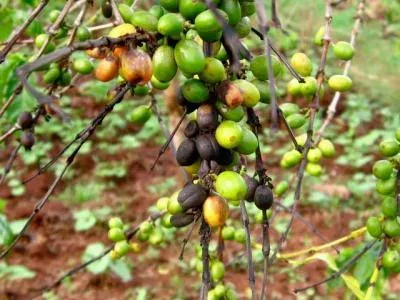
The most economically damaging symptoms appear on the berries. Dark, sunken lesions develop on the surface of green or ripening cherries, which eventually become covered with pinkish or greyish spore masses.
Flowers and young fruit sets are also highly susceptible. Infection at these stages causes the blossoms to blacken and wither, leading to significant yield loss before the berries can even develop properly.
- Dark necrotic spots on leaf blades.
- Sunken stem lesions leading to twig die-back.
- Pinkish/grey spore masses on the berry surface.
- Premature fruit and flower drop.
- Overall tree thinning due to heavy defoliation.
Pathogen
The causal agent of coffee anthracnose is the fungus Colletotrichum gloeosporioides (often associated with Colletotrichum kahawae in the context of berry disease). It is a highly destructive ascomycete fungus that targets almost all aerial parts of the coffee plant.
The fungus survives within infected plant tissues, including dead twigs, branches, and mummified berries left on the trees after harvesting. These tissues serve as the primary reservoir for inoculum during the following season.
The infection is primarily spread through water-borne conidia. Rain splashes or water droplets landing on sporulating lesions disperse the spores to healthy leaves, flowers, and berries, initiating new cycles of infection.
The pathogen employs specialized attachment structures known as appressoria. These structures generate significant mechanical force, allowing the fungus to penetrate the plant cuticle and cell walls without needing pre-existing wounds.
The life cycle of the pathogen is closely synchronized with the coffee tree's phenological stages, with infection risk peaking during rainy periods, particularly during flowering and fruit setting.
Conditions for development
High humidity levels exceeding 80-90% are the primary environmental drivers for anthracnose development. Constant moisture on plant surfaces is required for spore germination and colonization.
Optimal temperatures for the growth of the pathogen range from +20°C to +28°C. These temperatures are characteristic of many tropical coffee-growing regions, facilitating rapid disease progression during rainy seasons.
Poor airflow within the canopy, often due to inadequate pruning or excessive planting density, creates a humid microclimate that prevents rapid drying of the foliage, thereby increasing susceptibility.
Plants suffering from nutrient deficiencies or stressed by insect pests show reduced immunity, making them significantly more prone to secondary infections like anthracnose.
The accumulation of dead plant debris around the base of the trees provides a constant source of inoculum, allowing the disease to persist year after year in the plantation.
Why it matters
Anthracnose is a major threat to global coffee production, with the potential to reduce yields by 50% or more in susceptible varieties under favorable weather conditions.
Beyond quantity, the disease significantly impairs the quality of the coffee bean. Infected berries often produce beans with poor cup quality, affecting the flavor profile and market value of the harvest.
Severe defoliation weakens the coffee trees, depleting their carbohydrate reserves. This stress hinders the tree's ability to produce robust growth and fruit in subsequent seasons, leading to long-term decline.
The cumulative effect of branch die-back and loss of bearing wood forces growers to perform drastic pruning, which delays productivity and requires costly recovery management.
In high-pressure areas, recurring outbreaks of anthracnose can lead to the total economic abandonment of coffee plots, causing significant financial losses to farmers and local economies.
Protection
Cultural management is the first line of defense. Regular pruning is essential to remove infected twigs, improve canopy aeration, and facilitate better penetration of sunlight, which inhibits fungal growth.
Sanitation practices, such as removing and destroying fallen berries and dead plant material from the orchard floor, are crucial to reducing the primary inoculum load.
Maintaining optimal spacing between trees promotes better drying of the foliage after rain, which is a key factor in limiting the successful establishment of the pathogen.
Fungicidal applications, particularly copper-based sprays or systemic fungicides like triazoles, are recommended during critical phenological stages, such as flowering and fruit development, to protect the crop.
Implementing integrated pest management (IPM) strategies, including the use of disease-resistant cultivars, remains the most effective long-term solution for sustaining coffee yields against anthracnose.
Discussion
No discussions yet — be the first.