
Coffee anthracnose
Colletotrichum cariniferi
Description
Symptoms
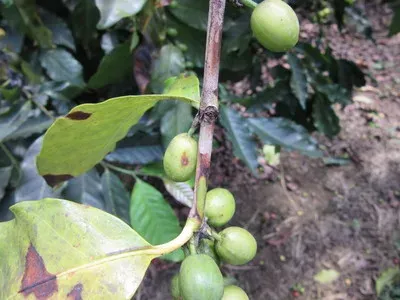
The primary symptom of coffee anthracnose is the appearance of dark, sunken lesions on leaves, which gradually expand and form irregular necrotic patches. Eventually, these lesions cause the leaf to wither and detach prematurely, leading to defoliation.
Young branches are often affected by elongated, brown lesions that girdle the stem, leading to dieback and structural damage. In severe cases, the tips of the branches dry out completely, giving the canopy a scorched appearance.
Coffee cherries are particularly vulnerable; they develop dark, circular, sunken spots that rapidly consume the fruit. Under high humidity, salmon-colored spore masses (acervuli) become visible on the surface of these lesions, indicating heavy fungal activity.
Flower buds are also prone to infection, turning black and falling off before blooming, which directly reduces the fruit set. This symptom is often associated with unfavorable weather conditions during the flowering stage.
Visible signs of the disease are typically localized, but as the infection progresses, the entire plant can become stunted, showing significant loss of vitality and biomass.
Pathogen
The causative agent of this disease is the fungus Colletotrichum cariniferi, a highly specialized pathogen that belongs to the group of Ascomycetes. It survives in infected plant debris, twigs, and even dormant structures on the bark.
The fungus reproduces via asexual conidia, which are efficiently dispersed by rain splash, wind currents, and mechanical contact. Once landed on the plant surface, spores germinate and penetrate the host tissue using specialized structures called appressoria.
Once inside the host, the pathogen produces mycelia that spread through the intercellular spaces, secreting enzymes that degrade plant tissues and cells. This process provides the fungus with nutrients while causing necrotic lesions in the plant.
Colletotrichum cariniferi has high environmental adaptability, allowing it to remain dormant in the plant canopy during dry periods and resume infection as soon as moisture levels rise.
Research indicates that specific strains of this pathogen may exhibit varying degrees of virulence, making disease management challenging in diverse coffee-growing regions.
Conditions for development
Anthracnose development is strongly favored by periods of high relative humidity and frequent rainfall. Free water on the surface of plant parts is a mandatory prerequisite for spore germination and infection establishment.
Temperatures ranging from 20°C to 28°C create the optimal environment for the rapid colonization of host tissues by the fungus. Fluctuating weather patterns that maintain moisture in the canopy are particularly conducive to outbreaks.
Poor orchard management, such as overcrowding or improper pruning, prevents adequate air circulation, which maintains the moisture levels needed for fungal growth. Dense canopies also act as reservoirs for the pathogen.
Weakened trees, whether due to nutrient deficiencies, pest pressure, or improper watering, are significantly more susceptible to infection. The presence of weeds under the trees can also contribute to higher localized humidity levels.
The transition between seasons, particularly the start of rainy periods, represents a high-risk window for the initial infection of newly developed fruits and young leaves.
Why it matters
The direct impact of anthracnose on coffee production is substantial, as infected cherries are often rejected during processing due to poor quality. This leads to a measurable decrease in overall yield and lower market prices.
Chronic infection weakens the overall vigor of coffee trees, leading to poor canopy maintenance and reduced photosynthetic efficiency. This exhaustion often impacts the tree's potential for the following season's harvest.
High levels of infection require additional expenditure on fungicides and increased labor for sanitary pruning, which lowers the overall profitability of the coffee farm.
If not managed, the disease can spread throughout a plantation, severely compromising the economic stability of the farm. In some cases, persistent infections lead to the need for replacing entire blocks of trees.
Beyond yield loss, the disease quality degradation can damage the reputation of the coffee estate, as contaminated batches affect the flavor profile of the roasted product.
Protection
Cultural management is the first line of defense, involving the removal of all infected twigs and debris from the orchard to reduce the source of inoculum. Consistent pruning ensures better light penetration and canopy aeration.
Chemical control focuses on the preventative application of copper-based fungicides. Timing is critical, with applications recommended before the onset of the rainy season or at the very first signs of symptom appearance.
- Selection of resistant or tolerant coffee varieties for new plantings.
- Maintaining proper tree spacing to optimize environmental conditions.
- Balanced fertilization to ensure tree vigor and natural resilience.
- Implementation of pest control programs to reduce injury pathways.
- Regular monitoring of weather patterns to time fungicide applications.
Integrating biological controls or using targeted, systemic fungicides can be part of a comprehensive disease management strategy, especially in regions with high disease pressure.
Effective management requires a long-term approach that balances chemical intervention with sustainable horticultural practices, ensuring the long-term health and productivity of the coffee plantation.
Discussion
No discussions yet — be the first.