
Coffee anthracnose
Colletotrichum annellatum
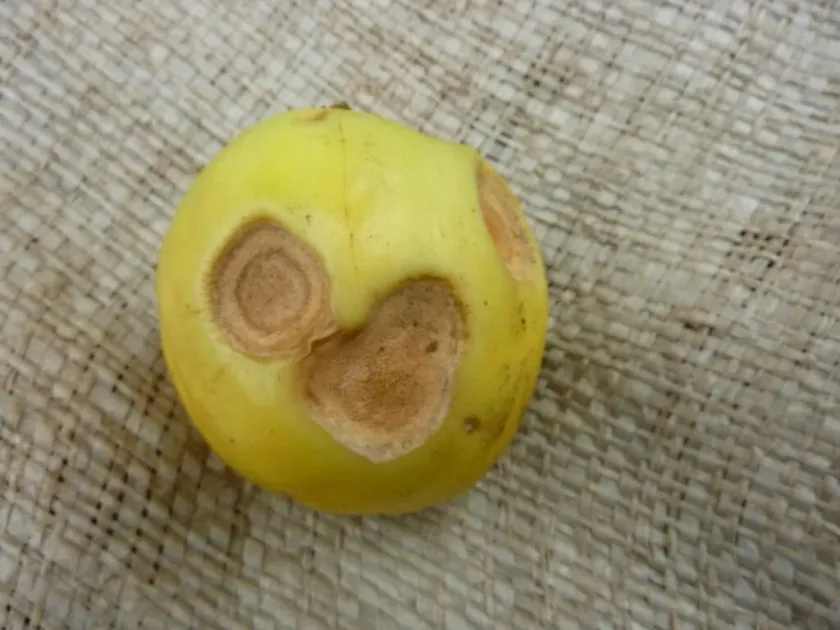
Description
Symptoms
The primary symptom of anthracnose is the emergence of dark, almost black, sunken spots of rounded or irregular shape on young leaves and stems.
Over time, these spots expand, their center becomes gray or brown, and a yellow halo often appears around the lesion, indicating the presence of fungal toxins.
When coffee berries are infected, they exhibit blackening, deformation, and subsequent drop, which critically impacts the overall yield.
On stems, the infection manifests as necrotic lesions that can girdle branches, leading to dieback of the upper parts of the shoots.
- Development of necrotic spots on leaf blades.
- Blackening of berries and fruit set.
- Dieback of twigs and branches.
- Formation of pink or orange spore cushions during humid weather.
Pathogen
The causative agent of this disease is the phytopathogenic fungus Colletotrichum annellatum. It belongs to the class of Ascomycetes and specifically targets tropical crops, including those of the genus Coffea.
This parasitic fungus can persist in plant debris, tree bark, and even seeds, making it highly resilient in plantation environments.
The pathogen's life cycle includes the formation of conidial spores, which are disseminated by rain splash, wind, or agricultural equipment.
The fungus penetrates plant tissues through micro-cracks, stomata, or wounds caused by insect feeding, initiating rapid development within the intercellular spaces.
Unlike other species within this genus, Colletotrichum annellatum exhibits unique sporulation cycles, requiring precise diagnostic attention during the early stages of infection.
Conditions for development
Disease development is directly dependent on hydrothermal conditions. The most favorable environment includes high humidity (above 85%) and moderate temperatures (20°C to 28°C).
Frequent rainfall, mist, and dew facilitate the rapid germination of fungal spores on leaf surfaces and their subsequent penetration into host tissues.
Overcrowded plantings, where air circulation is restricted, create a microclimate that is ideal for the rapid spread of Colletotrichum spores.
Deficiencies in mineral nutrition and weakened plant condition due to poor maintenance significantly increase the susceptibility of the crop to infection.
Improper horticultural practices, such as overhead irrigation in the evening, can also trigger disease outbreaks in greenhouses and nurseries.
Why it matters
The primary economic damage results from the massive loss of reproductive organs, leading to a direct reduction in the quantity and quality of coffee beans.
Infection of the vegetative mass reduces photosynthetic efficiency, causing the tree to weaken and lose its ability to withstand stressful periods.
Chronic progression of the disease causes premature leaf drop, leading to sparse foliage and the failure to form new flower buds for the next season.
In cases of severe infestation without intervention, systemic dieback of primary branches and the ultimate death of the coffee tree may occur.
Economic losses are compounded not only by harvest failure but also by the recurring costs of fungicide applications and plantation rehabilitation.
Protection
The cornerstone of protection is timely sanitary pruning and the removal of infected branches and fallen fruits, which serve as reservoirs for the infection.
Maintaining optimal plant density is essential to ensure adequate crown aeration and rapid leaf drying following rainfall.
The application of copper-based fungicides serves as an effective prophylactic measure to prevent primary infection cycles.
For treating established infection sites, systemic fungicides that can penetrate plant tissues and suppress mycelial activity are recommended.
The use of resistant cultivars and balanced potassium-phosphorus fertilization enhances the natural immunity of coffee trees against the pathogen.
Discussion
No discussions yet — be the first.