
Collema
Collema
Description
Symptoms
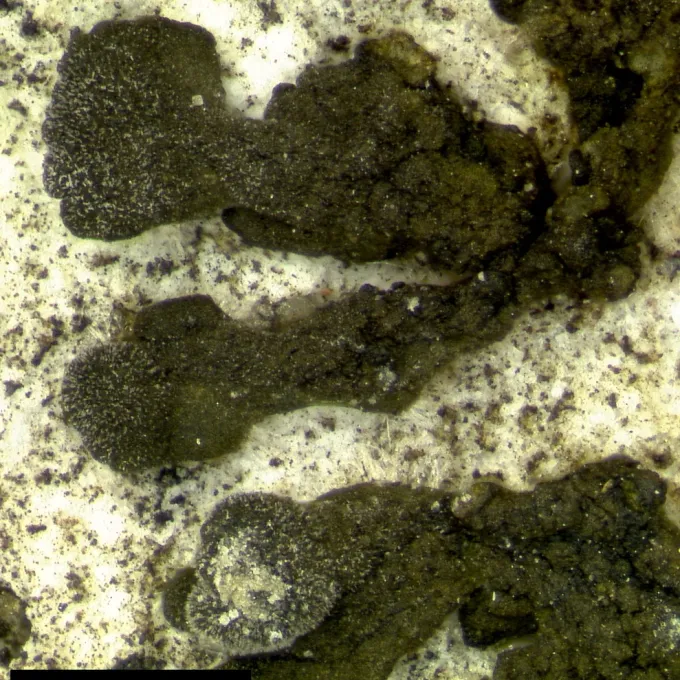
Collema is a genus of gelatinous lichens that frequently colonize tree bark, rocks, and soil. They are characterized by a dark green or brownish, folded, and rubbery appearance that swells significantly when wet.
When dry, Collema specimens become brittle and may look like small, inconspicuous crusts, making them difficult to notice on the tree bark during dry spells.
These lichens often grow in rosette forms on rough, mature bark where moisture tends to accumulate, such as on the lower parts of tree trunks.
Unlike some other lichen types, Collema lacks a rigid structure, giving it a soft, jelly-like texture that distinguishes it from common crustose lichens.
Visual identification is easiest after rain when the lichen rehydrates and expands into its distinct, prominent shape on the host surface.
Pathogen
Collema is a symbiotic association between a fungus and a Nostoc cyanobacterium. It is not a parasitic pathogen that attacks the tree's vascular system.
The lichen does not feed on tree sap; it uses the bark merely as a physical anchor and derives its nutrients from atmospheric moisture, dust, and rain.
Thanks to the Nostoc partner, these lichens can fix nitrogen from the atmosphere, allowing them to thrive in nutrient-poor environments where other organisms struggle.
In agronomy, Collema is classified as an epiphyte. While it does not kill the tree, its presence is often mistaken for a disease due to its colonizing nature.
The biological success of Collema lies in its ability to withstand extreme cycles of dehydration and rehydration, which makes it a persistent resident of woody plants.
Conditions for development
High levels of atmospheric humidity are the primary requirement for the colonization and expansion of Collema on tree surfaces.
Gardens with poor airflow, dense foliage, or high tree planting density provide a microclimate that is conducive to the growth of various lichen species.
Mature trees with thick, deeply fissured bark are the preferred hosts for Collema because the crevices trap moisture and provide a steady supply of substrate.
Shaded areas within an orchard remain damp for longer periods, which significantly accelerates the growth rate of lichen colonies on the trunks.
Since Collema is highly sensitive to air pollution, its presence often serves as a bioindicator of good local air quality rather than poor garden health.
Why it matters
Collema does not cause direct pathological damage to the tree, but it can interfere with the bark’s natural gas exchange processes if the coverage is excessive.
Lichen colonies provide a sheltered environment and hiding spots for common orchard pests, including scale insects, mites, and their eggs.
The persistent moisture trapped by thick lichen layers can occasionally create conditions suitable for the germination of harmful fungal spores.
On young, rapidly growing trees, a dense layer of lichen can mechanically restrict the natural expansion and thickening of the bark.
The presence of large colonies can lead to a neglected appearance, which may lower the visual value of ornamental trees in the landscape.
Protection
Mechanical removal is the most effective control measure. Use a soft-bristled brush or a blunt scraper to gently clear the lichen from the bark without causing physical damage.
Applying a lime wash to the trunks is a classic and effective preventive measure that alters the surface pH and prevents lichen spores from establishing.
- Prune branches regularly to increase sunlight penetration and improve airflow through the canopy.
- Treat heavily affected trunks with a 3-5% iron sulfate solution to desiccate the lichen colonies.
- Avoid overhead irrigation that keeps trunks constantly wet.
After mechanical cleaning, it is recommended to apply a disinfectant or horticultural wound sealant to ensure no secondary infections occur at the site of cleaning.
Maintaining overall tree vitality through proper fertilization and watering is the best long-term strategy for preventing excessive epiphytic colonization.
Discussion
No discussions yet — be the first.