
Pampas coccomycosis
Coccomyces pampeanus
Description
Symptoms
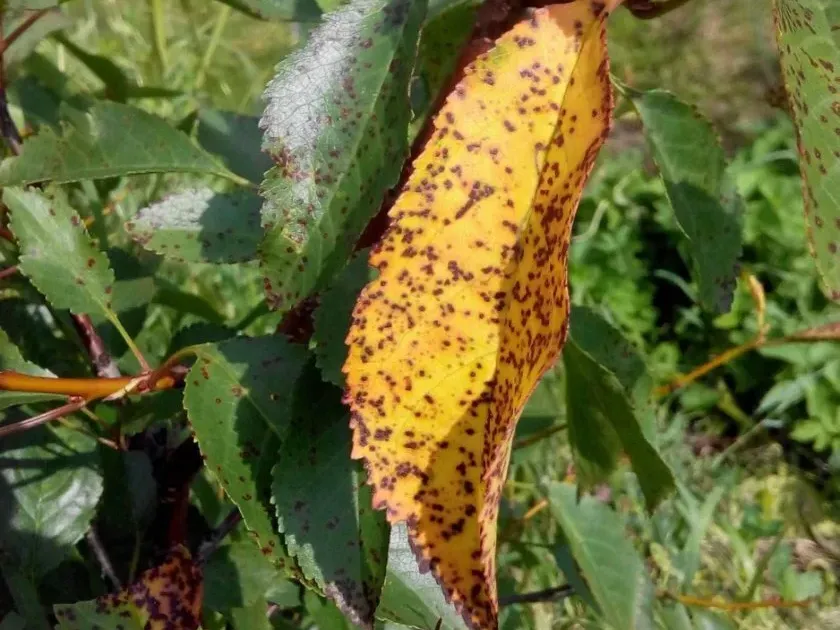
The primary symptom is the emergence of small, circular spots on the upper side of the leaf blade. Initially, these are reddish-brown or purple, eventually merging into larger necrotic patches.
On the underside of the leaves, white or greyish spore masses often develop. This is a key diagnostic feature used to differentiate this disease from other types of leaf spots.
As the disease progresses, leaves turn yellow or brown, losing their photosynthetic capacity. The plant sheds its leaves prematurely, which leads to severe weakening of the tree structure.
Infection may also affect fruit stems, causing the fruit to drop prematurely. The overall health of the tree declines, and new growth becomes stunted or thin.
In severe cases, cracking of the bark on young branches may occur, providing additional sites for spore survival. Early leaf drop is the most consistent indicator of a major outbreak.
Pathogen
The causal agent of this disease is the fungus Coccomyces pampeanus, which belongs to the class of ascomycetes. This pathogen specifically targets the foliage of various woody plant species.
The fungal life cycle involves the formation of apothecia, which contain spores that are dispersed by wind and rain droplets. The pathogen overwinters primarily in fallen, infected leaves where it persists as mycelium or reproductive bodies.
The mycelium enters plant tissues through stomata or mechanical wounds. Once inside, the parasite actively expands in the intercellular spaces, interfering with the plant's essential physiological functions.
Development is strongly correlated with environmental factors, and the fungus shows significant resilience in moderately humid conditions. It can rapidly increase its infection density in orchards lacking proper management.
Spore dissemination occurs throughout the growing season, making integrated pest management essential. Studying the pathogen's morphology assists in selecting targeted fungicides to curb its spread.
Conditions for development
High humidity and moderate temperatures are the most critical factors for disease development. Frequent rainfall facilitates the rapid spread of spores throughout the tree canopy.
Densely planted orchards create a microclimate with poor aeration, which is a major risk factor. Under these conditions, moisture remains on leaf surfaces for extended periods, promoting fungal spore germination.
A temperature range between 15 and 22 degrees Celsius is optimal for the active reproduction of Coccomyces pampeanus. In hot, dry weather, fungal activity decreases, although the pathogen remains dormant.
Insufficient sunlight within the dense canopy also favors mycelium development. Neglected orchards that lack regular pruning are highly susceptible to the accumulation of this pathogen.
Early morning dew and fog that linger on foliage create the perfect microenvironment for spore activity. Overhead irrigation that wets the leaves significantly increases the risk of an epidemic.
Why it matters
The primary damage is premature defoliation, which deprives the tree of nutrient reserves required for winter survival. This significantly reduces cold hardiness and increases the risk of winter kill.
Reduced photosynthesis negatively impacts the yield and quality of the fruit. Fruits often develop into smaller, deformed sizes with poor flavor profiles.
Chronic infection drains the tree's energy reserves over time, often leading to premature death after several years of consistent outbreaks. Weakened trees also become more susceptible to secondary pests.
Economic losses include both lower crop yields and the increased costs associated with repeated fungicide treatments. Affected orchards lose their overall profitability and require extensive rehabilitation.
Failure to mature wood correctly makes branches brittle and prone to damage. Continued infection turns productive orchards into liability zones if not addressed correctly.
Protection
The most important control measure is the removal and destruction of fallen leaves, as they serve as the primary reservoir for the pathogen. Autumn tillage of soil under the trees helps bury the inoculum.
Conducting regular sanitary and structural pruning of the canopy is essential. This improves airflow and light penetration, preventing the microclimatic conditions favored by the fungus.
Copper-based fungicides are effective in early spring to suppress initial infections. Systemic fungicides are also used during peak growing periods to prevent widespread outbreaks.
Maintain proper application frequency and rotate fungicides from different chemical groups to prevent the development of pathogen resistance. Consistent management is key to long-term success.
- Maintain proper planting distances between trees.
- Apply balanced phosphorus and potassium fertilizers to boost immunity.
- Use mulch to prevent soil-borne spores from splashing onto leaves during rain.
- Select resistant or tolerant varieties whenever possible.
Discussion
No discussions yet — be the first.