
Scale insects and soft scales
Coccidea
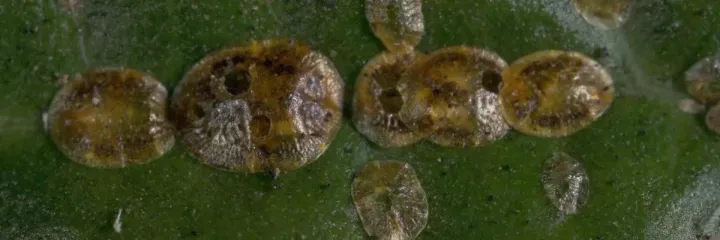
Description
Symptoms
The first sign of infestation is the presence of characteristic convex spots or plaques that can be easily scraped off the bark or leaves.
A sticky substance called honeydew is often observed; this is a byproduct excreted by the insects during their feeding process.
Sooty mold fungi eventually grow on these sticky secretions, covering the leaves with a black layer that inhibits photosynthesis.
When heavily infested, plants begin to yellow, drop leaves, and stems become deformed and gradually dry out due to nutrient depletion.
Upon visual inspection, the insects themselves can be seen, usually localized on the underside of leaves, along veins, or in branch forks.
Pathogen
Pests belonging to the superfamily Coccoidea are a specialized group of insects. It is important to note that this is not a disease, but a severe plant infestation by parasitic insects.
This group includes armored scales, which have a dense waxy shield, and soft scales, which lack a separate shield, as the hardened skin of the female serves this protective role.
Adult females are often sedentary, attaching themselves firmly to plant tissues. Males have wings and are designed solely for fertilization, after which they die quickly.
Reproduction of coccids occurs through egg-laying or live birth; larvae, known as crawlers, are the only mobile stage capable of actively dispersing across the plant.
The life cycle of these insects is closely tied to the phenology of the host plant, allowing them to synchronize feeding with active sap flow.
Conditions for development
Dry and warm air promotes the development of coccids, which is particularly relevant for plants in greenhouses, conservatories, and indoor environments.
Lack of proper ventilation and high planting density create an ideal microclimate for the rapid multiplication of these pests.
Weakened plants, suffering from nutrient deficiencies or stress due to improper watering, become significantly more vulnerable to attacks.
In garden settings, mild winters allow a larger number of larvae and females to survive the unfavorable season.
Introduction of pests often occurs through new nursery stock, which is why quarantine measures for young saplings are essential.
Why it matters
The primary damage is caused by the mass extraction of cell sap, leading to a critical depletion of the plant's resources.
Injecting toxic saliva into plant tissues during feeding causes metabolic disorders, organ deformation, and stunted growth.
Damaged bark areas become entry points for secondary infections, including various fungal and bacterial pathogens.
Crop yields for fruit trees drop sharply, and fruits lose their visual appeal, resulting in reduced market value.
In severe cases, without timely intervention, the entire tree or ornamental shrub may wither and die.
Protection
Mechanical removal of the pests from the bark followed by treatment with tar or potassium soap solutions can help reduce the population.
Systemic insecticides are the most effective method of control, as the active ingredients penetrate the plant tissues and make the sap toxic to the pests.
It is crucial to time applications with the crawler stage, as this is the most sensitive period for contact pesticide action.
Biological control methods include the use of natural enemies, such as ladybird beetles, which actively prey on coccid colonies.
- Maintain quarantine for newly acquired plants.
- Perform regular sanitary pruning of damaged branches.
- Ensure optimal humidity levels for indoor plants.
- Use high-quality fertilizers to boost plant immunity.
Discussion
No discussions yet — be the first.