
Clavulinopsis corniculata
Clavulinopsis corniculata
Description
Symptoms
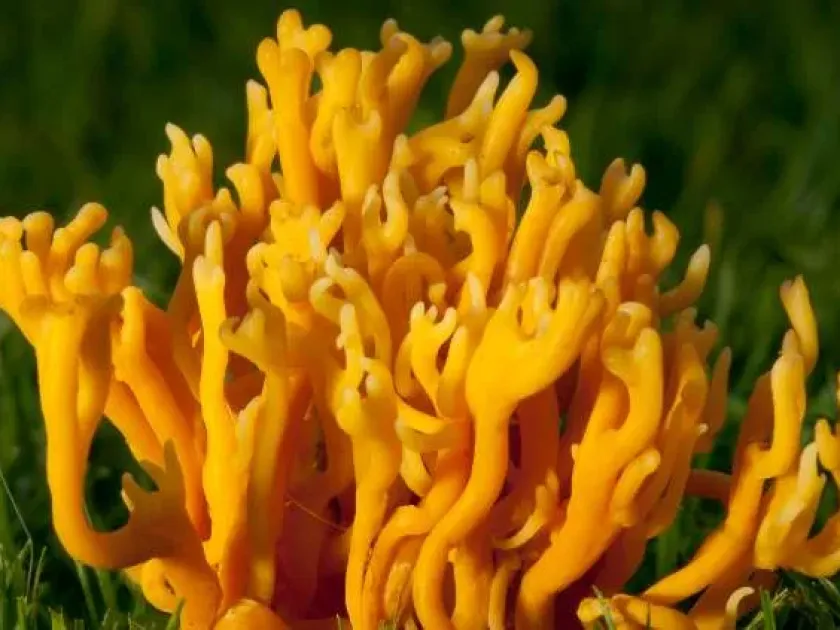
Clavulinopsis corniculata, commonly known as the meadow coral, belongs to the Clavariaceae family. Its fruit bodies feature a distinct branched shape that resembles coral or horns.
The coloration of the fungus is typically bright yellow or orange, making it easily distinguishable in its natural habitat. The height of the fruit bodies usually ranges from 3 to 8 centimeters.
The texture of the fungus is brittle and smooth. It typically grows in moist soil, mossy areas, or places with decaying plant matter, rather than on living tissues.
It does not cause any specific disease symptoms on plants. You will not observe necrosis, chlorosis, or wilting associated with the presence of this organism.
These fungi grow in small, loose clusters and never form mats that would indicate an aggressive colonization of plants or crop pathogens.
Pathogen
It is crucial to clarify that Clavulinopsis corniculata is not a plant pathogen. It is a saprotrophic fungus that feeds on dead organic matter.
Biologically, it functions as a soil decomposer. It plays a beneficial role by breaking down vegetable debris and returning essential nutrients back into the soil cycle.
The fungus lacks the specialized mechanisms required to invade living plant tissue. Its mycelium is restricted to the upper soil layers and organic detritus.
From an agronomic perspective, this organism is harmless to crops. It does not require any form of intervention or chemical management to control its presence.
Therefore, it is misidentified if labeled as a "disease". It is simply a natural and beneficial component of the soil ecosystem's microbiota.
Conditions for development
The development of this fungus is highly dependent on humidity. It thrives in damp environments, particularly in areas with consistent soil moisture and organic content.
Moderate temperatures are ideal for the production of fruit bodies. During hot and arid summer conditions, the development of the fungus typically ceases.
It prefers soils that are rich in organic matter, which provide the necessary carbon sources for its metabolism. It is sensitive to soil compaction and intensive tillage.
In agricultural settings, you might find it in orchards or unmanaged corners of a farm where plant mulch accumulates and keeps the soil surface moist.
Reproduction occurs through spores dispersed by air currents or splashing rain, allowing the fungus to colonize new, favorable patches of damp ground.
Why it matters
Clavulinopsis corniculata poses zero threat to agriculture. It does not compete with crops for nutrients and does not secrete any phytotoxic compounds.
There are no recorded cases of economic loss attributed to this species. It is a harmless visitor to the garden or field, reflecting high organic activity in the soil.
Its presence is actually a positive sign of a healthy, bioactive soil, which is an important aspect of sustainable farming and long-term soil fertility.
Because it is not a pathogen, it does not inflict damage like root rot or leaf spots. It lives entirely independently of the health of the surrounding crops.
In conclusion, the fungus provides ecological services by improving soil quality, making it a "friend" rather than a foe for the gardener or farmer.
Protection
No protection or management measures are required for this species, as it is not a pest or a disease. Any effort to eradicate it is completely unnecessary.
If you prefer to reduce its visibility, simply ensure proper soil aeration and moderate watering practices to avoid excessive moisture at the soil surface.
Applying fungicides is strongly discouraged, as these chemicals would disrupt the beneficial soil microbiome and have no effect on protecting crops from this fungus.
Standard agronomic practices, such as removing excess debris if it interferes with work or maintaining good drainage, are sufficient to manage any moist site.
Recognize that Clavulinopsis corniculata is part of the biodiversity that supports a healthy ecosystem and should be treated as a harmless inhabitant.
Discussion
No discussions yet — be the first.