
Sorghum ergot
Claviceps africana
Description
Symptoms
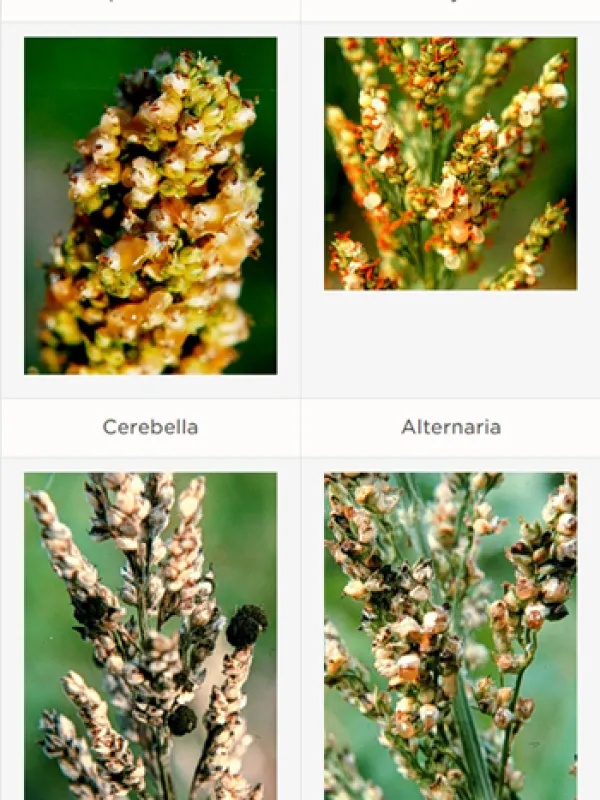
The most distinctive symptom of sorghum ergot is the presence of honeydew droplets exuding from the infected florets during the flowering stage of the sorghum plant.
As the honeydew dries or attracts secondary colonizers, such as sooty molds, the sorghum heads develop a black, dirty appearance. This mold growth often masks the primary fungal infection until the head is closely inspected.
Inside the individual florets, the grain is replaced by the fungal tissue of the pathogen. These structures, known as sphacelia, appear as cream or beige-colored growths protruding from the glumes.
In severely infected heads, the grain is entirely absent or severely shriveled, significantly reducing the overall density and weight of the sorghum panicle.
Early identification is often difficult, as the symptoms only manifest clearly once the honeydew production commences, coinciding with the window of peak flowering.
Pathogen
The causative agent of this disease is the ascomycete fungus Claviceps africana, which belongs to the Clavicipitaceae family. It is an obligate parasite specifically targeting the ovaries of sorghum flowers.
The fungus reproduces by producing conidia, which aggregate into a sticky, sugary exudate known as honeydew. Unlike other ergot species, Claviceps africana primarily develops spherical structures called sphacelia within the floret rather than large, hard sclerotia.
The pathogen spreads through the dispersal of conidia by wind, rain splashes, and insects. It is capable of rapid secondary cycles of infection as long as susceptible host tissue is available and environmental conditions are optimal.
Survival occurs through the colonization of plant debris and the soil, although the rapid and continuous production of conidia makes the secondary infection cycle the most dangerous factor during the growing season.
Research indicates that Claviceps africana is highly responsive to climatic variations, with its geographic range expanding due to increasing global temperatures and shifting weather patterns.
Conditions for development
Environmental conditions are the primary drivers of sorghum ergot epidemics. Specifically, cool to moderate temperatures (15–20°C) combined with high humidity are optimal for spore germination and infection.
Prolonged periods of overcast, damp weather or frequent rainfall during the flowering period provide the necessary conditions for the honeydew to be distributed and for the fungi to penetrate the stigma.
Insect activity, particularly by bees and other flower-visiting insects, significantly increases the spread of the disease by carrying conidia between flowering sorghum heads.
Stress factors that prolong the flowering period, such as drought or nutritional imbalances, can exacerbate the susceptibility of the crop, as the duration of the infection window is extended.
Lack of crop rotation and the presence of volunteer sorghum in nearby fields maintain a high inoculum pressure, making it easier for the pathogen to establish itself when conditions turn favorable.
Why it matters
The economic impact of sorghum ergot is primarily due to direct yield loss, as the fungus prevents grain development. In extreme outbreaks, losses can exceed 50-80% of the harvest.
The quality of the harvested grain is significantly compromised. The presence of honeydew creates harvesting difficulties by clogging machinery and increasing the moisture content of the grain, which leads to storage issues.
Grain contaminated with fungal toxins (alkaloids) produced by Claviceps africana is hazardous to livestock. Feeding such grain can result in ergotism, a serious medical condition in animals.
Producers face significant costs related to the cleaning and sorting of affected batches, often requiring industrial-scale processing to remove the infected light-weight fungal bodies.
Regulatory constraints on the export and trade of contaminated sorghum often lead to total financial losses for shipments that do not meet strict food safety and feed quality standards.
Protection
The most effective strategy is the use of resistant or tolerant sorghum hybrids. Breeding programs are continuously working to improve the genetic resistance of varieties against this pathogen.
Implementing a robust crop rotation plan, where sorghum is not planted in the same field for at least 2-3 years, is essential to reduce the local population of the fungus.
Field hygiene is critical; this involves deep-plowing plant debris after harvest and actively managing volunteer sorghum plants that could serve as early-season bridges for the infection.
Adjusting the planting schedule to ensure that the critical flowering stage avoids the historical periods of cool, wet weather can significantly mitigate the risks of infection.
While chemical control with fungicides is an option, it is often challenging to implement due to the asynchronous flowering of the crop, making it largely limited to high-value seed production fields.
Discussion
No discussions yet — be the first.