
Spinach cladosporiosis
Cladosporium variabile
Description
Symptoms
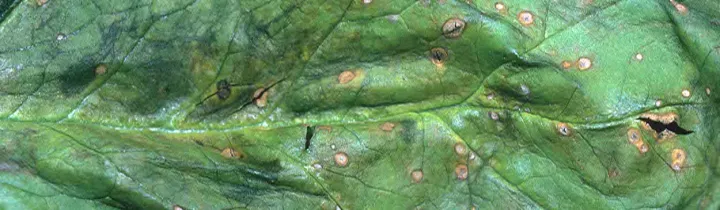
Initial symptoms include small, pale yellow or chlorotic spots on the leaves, which expand and darken into brown or necrotic lesions over time.
A distinct velvety, olive-to-black fungal mat forms on the underside of the leaf, directly beneath the necrotic spots, indicating active sporulation.
As the disease progresses, infected leaves become brittle, curl, and eventually die, often starting from the oldest, bottom leaves of the spinach rosette.
In severe infections, the lesions merge, covering most of the leaf surface, which renders the plant unmarketable and causes significant growth stunting.
High humidity promotes the decay of infected areas, often leading to secondary soft rot infections that produce a foul odor and lead to rapid tissue breakdown.
Pathogen
The disease is caused by the fungus Cladosporium variabile. It is a resilient pathogen capable of surviving for long periods in soil and on crop debris as mycelium or spores.
The fungal life cycle involves the production of conidia, which are easily dispersed by wind, splashing rain, or overhead irrigation systems throughout the field.
Seed transmission is a recognized pathway for initial infection, making the quality and health of seeds a critical factor in managing the disease from the start.
Once the spores land on susceptible leaf tissue, they germinate under favorable moisture conditions and penetrate the leaf epidermis, beginning the colonization process.
Laboratory identification reveals olive-brown sporulation, which is the key microbiological feature used to distinguish this fungus from other leaf-spotting pathogens.
Conditions for development
Cladosporium variabile thrives in warm, humid conditions, with the optimal temperature range for infection falling between 18 and 25 degrees Celsius.
Prolonged leaf wetness caused by frequent rain, dew, or poor airflow is the most critical environmental factor for the development and spread of the pathogen.
High-density planting prevents adequate air circulation, creating a trapped humid microclimate within the spinach canopy that accelerates infection rates.
In greenhouses and high tunnels, inadequate ventilation is the primary cause of outbreaks, as stagnant air allows spores to land and germinate on the crop.
Periods of overcast weather with moderate temperatures provide the stability required for the fungus to complete its life cycle and produce new inoculum.
Why it matters
The primary impact of spinach cladosporiosis is the total loss of marketability for leafy greens, as the leaf spotting makes them visually unacceptable for consumers.
Yield reduction is significant, as the destruction of photosynthetic leaf tissue severely restricts the plant's ability to grow and accumulate biomass.
Infected batches have a much shorter shelf life, as damaged tissue is prone to secondary colonization by bacteria, causing rapid deterioration during storage and shipping.
Continuous cropping without proper field rotation allows the pathogen population to build up in the soil, leading to recurring outbreaks in subsequent seasons.
For large-scale producers, managing this disease requires increased expenditure on fungicide treatments, which complicates the production schedule of this short-season crop.
Protection
Effective management begins with strict crop rotation, ensuring that spinach or other host crops are not planted in the same field for at least three seasons.
Using certified, disease-free seed and selecting resistant or tolerant spinach varieties is the most reliable method for long-term disease suppression.
Cultural practices are essential: maintain proper row spacing to ensure ventilation, remove and destroy plant debris, and control weeds that host the fungus.
In greenhouses, ensure proper humidity control through ventilation and avoid overhead irrigation to keep the leaf surface dry as much as possible.
When necessary, apply registered fungicides according to the label, paying strict attention to the pre-harvest interval (PHI) due to the fast growth cycle of spinach.
Discussion
No discussions yet — be the first.