
Carnation leaf spot
Cladosporium echinulatum
Description
Symptoms
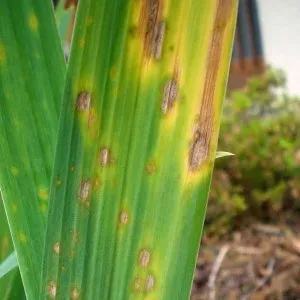
The first symptoms are small, diffuse pale green or light yellow spots appearing on leaves and stems. Over time, these spots expand and take on a distinct appearance.
A gray or olive-black velvety coating, consisting of fungal conidia, develops in the center of the infected areas. This is the primary diagnostic sign used to distinguish this disease from other leaf spots.
As the disease progresses, the spots merge, covering significant portions of the leaf blade. This leads to premature yellowing, wilting, and leaf drop, which significantly damages the appearance of the carnation.
On stems, the infection manifests as elongated, sunken spots that can encircle the shoot. In severe cases, this disrupts nutrient transport and leads to the deformation of the top parts of the plant.
Flower buds can also be affected by severe infections, leading to poor development or death before they even have a chance to bloom.
Pathogen
The causative agent of the disease is the pathogenic fungus Cladosporium echinulatum, which belongs to the imperfect fungi group. This parasite specifically targets plants of the Caryophyllaceae family, leading to characteristic leaf spot symptoms.
The fungus survives in the soil, on plant debris, and on infected seeds for long periods. Spores are disseminated by wind currents, water droplets during irrigation or rainfall, and through contaminated gardening tools.
Mycelium penetrates plant tissues through stomata or minor epidermal wounds. Once inside, the fungus grows in the intercellular space, gradually breaking down the host tissue structure.
Reproduction occurs via the formation of conidia on specialized conidiophores that protrude on the leaf surface. This rapid spore production allows the fungus to spread across healthy plants under suitable conditions.
The fungus is biologically adapted to high humidity, making carnations particularly susceptible in greenhouses or during periods of prolonged wet weather.
Conditions for development
Carnation leaf spot develops most actively in high humidity conditions exceeding 70-80%. In greenhouses, poor air circulation and stagnant moisture contribute to the rapid spread of the disease.
The optimal temperature range for spore germination is between +18°C and +24°C. Under these conditions, the fungal life cycle is accelerated, which can quickly lead to an outbreak.
Dense planting creates conditions where moisture evaporates slowly from leaf surfaces, creating a favorable microclimate for fungal spore germination and penetration.
Overhead irrigation acts as a major spreader for the infection, as water droplets physically carry spores from one leaf or plant to another within the plot.
Failing to practice crop rotation and repeatedly planting carnations in the same location causes the infection to build up significantly in the soil.
Why it matters
The primary harm is the total loss of the commercial value of the ornamental crop, which is particularly critical for cut-flower production and landscaping.
Severe infection leads to general plant exhaustion. Because of impaired photosynthesis, the growth rate drops, and the quality and quantity of flowering stems are significantly reduced.
In nurseries, the disease can cause mass mortality of young seedlings and cuttings, resulting in substantial financial losses for flower growers.
Plants weakened by the fungus are more susceptible to secondary pathogens and pests, complicating the overall management and recovery of the plant population.
Accumulated spore pressure in the soil makes it difficult to grow carnation-related crops in the same area for several seasons without intensive decontamination.
Protection
An essential step in management is ensuring good aeration and practicing careful irrigation, preferably using drip methods, to keep the foliage dry.
Sanitary pruning and the immediate removal of infected leaves and shoots are crucial for reducing the primary inoculum source in the flower bed.
The use of systemic and contact fungicides is a primary method of control. It is recommended to rotate fungicides with different modes of action to prevent the development of fungal resistance.
Choosing resistant cultivars and maintaining adequate spacing between plants can help minimize the risk of infection. Always source clean, certified propagation material.
- Maintain proper greenhouse ventilation.
- Avoid overcrowding in planting beds.
- Remove weeds that may harbor the fungus.
- Apply preventative fungicide sprays in high-risk seasons.
Discussion
No discussions yet — be the first.