
Mulberry popcorn disease
Ciboria carunculoides
Description
Symptoms
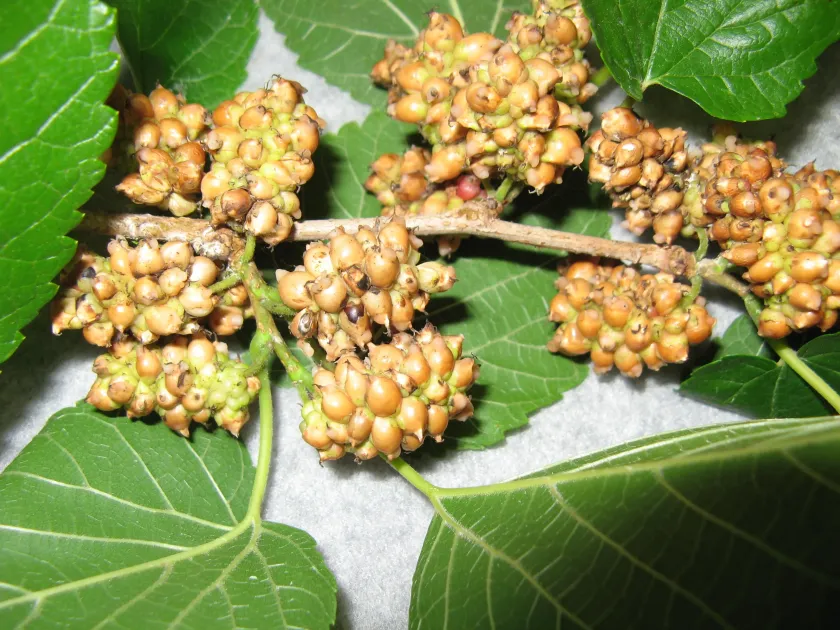
The primary symptom is the transformation of developing fruits into hypertrophied, hardened, and deformed structures that resemble small, gnarled popcorns.
Affected fruit clusters exhibit a whitish or grayish dusty appearance due to the extensive mycelial growth and sporulation of the fungus on the surface.
As the season progresses, the infected fruit becomes rigid and leathery, eventually turning into a dark brown or black, hardened sclerotium that lacks any typical fruit juice or flesh.
Unlike healthy berries that turn dark and juicy at maturity, the diseased fruit remains firm, hard, and unusable, often shriveling into a compact, mummy-like structure.
Severe infections can cause a significant percentage of the crop to be replaced by these mummified structures, giving the entire tree an abnormal, diseased appearance.
Pathogen
The causal agent of this disease is the ascomycete fungus Ciboria carunculoides, which belongs to the Sclerotiniaceae family. It is a highly specialized pathogen that exclusively targets the generative organs of mulberry trees.
The lifecycle of the fungus is strictly synchronized with the phenology of the host. The pathogen overwinters as sclerotia, which are formed from the mummified, distorted fruit that drops to the ground or remains in the canopy.
In the spring, during the blooming period of the mulberry tree, the sclerotia produce apothecia — small, cup-shaped fruiting bodies. These discharge ascospores that are dispersed by wind and insects onto the receptive stigmas of the flowers.
Infection occurs as the fungus colonizes the developing ovary. The mycelium grows rapidly inside the floral tissues, effectively preventing the development of a normal fruit.
The fungus is well-adapted to the host's reproductive cycle, ensuring that the infection window aligns perfectly with the flowering stage, which is critical for its survival and dispersal.
Conditions for development
High humidity and frequent rainfall during the flowering season are the most critical factors favoring the spread of mulberry popcorn disease.
Moisture on the floral parts provides the necessary conditions for the ascospores to germinate and penetrate the susceptible tissues of the young ovary.
Temperature plays a vital role, with moderate spring temperatures (typically 15–22°C) facilitating the emergence of apothecia from the overwintering sclerotia in the soil.
Poor airflow within the tree canopy, often caused by lack of pruning or dense planting, keeps the tree parts damp for longer periods, thus increasing infection risk.
The presence of overwintered mummified fruits from previous years directly beneath the trees serves as a primary source of inoculum for the new growing season.
Why it matters
The disease causes major economic loss by destroying the fruit crop, rendering the berries entirely inedible and unfit for market or processing purposes.
Repeated yearly infections can weaken the tree's physiological health, potentially impacting its overall vigor and long-term ability to produce a healthy harvest.
In nurseries, the disease is particularly harmful because it prevents the production of viable seeds and ruins the aesthetic and commercial quality of the plant stock.
The rapid spread of the fungus during favorable weather can lead to near-total crop failure, creating a significant impact on small orchards and mulberry production.
Mummified fruit can harbor the pathogen for extended periods, making it difficult to eradicate the disease once it has become established in a plantation.
Protection
The most effective sanitation practice involves the rigorous collection and destruction of all mummified, distorted fruits before they fall to the ground.
Deep plowing or tilling the soil under the canopy during the winter months can bury the sclerotia, preventing the fruiting bodies (apothecia) from reaching the surface in spring.
Regular pruning of the canopy is essential to improve light penetration and air circulation, which helps keep the floral parts dry and less susceptible to infection.
Fungicide applications, if timed precisely with the early flowering stage and the emergence of apothecia, can help reduce the incidence of the disease in commercial orchards.
Implementing proper spacing between trees and maintaining orchard hygiene are fundamental practices for preventing the buildup of Ciboria carunculoides in the environment.
Discussion
No discussions yet — be the first.