
Eucalyptus chrysoporthe canker
Chrysoporthe puriensis
Description
Symptoms
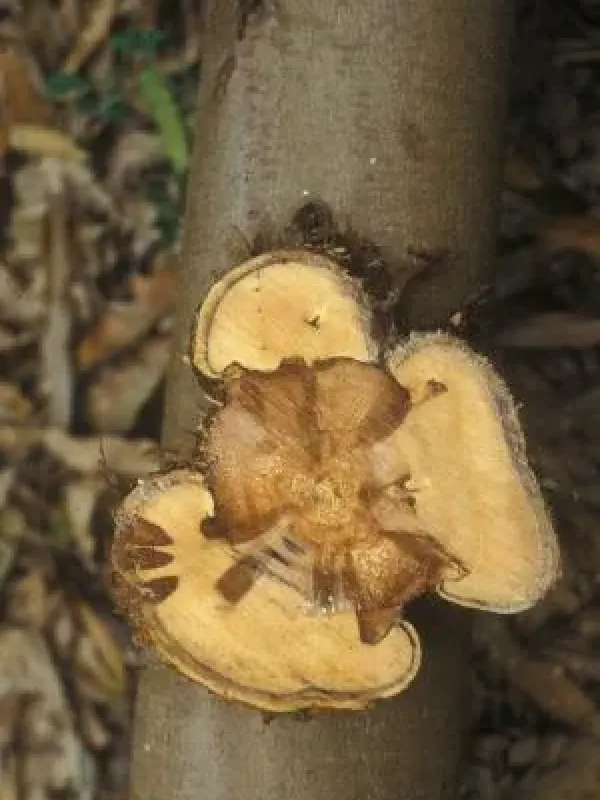
The main symptom of infection is the appearance of characteristic cankers on the trunks and branches of the eucalyptus. The bark in the affected areas often darkens and sinks.
When removing the bark layer, necrosis of the cambium is observed, appearing as a reddish-brown or black discoloration. Frequently, gum exudation occurs from the bark cracks.
Externally, the tree begins to show signs of chlorosis and crown dieback. Gradually, the leaves turn yellow, fall off, and the top of the tree starts to die.
On the surface of the dead bark, small dark fungal fruiting bodies can be observed. They protrude through the epidermis, signaling active sporulation.
- presence of open cankers on the trunk;
- darkening of the bark tissue;
- dieback of apical shoots;
- exudation of gum (kino);
- premature leaf drop.
Pathogen
The causal agent of the disease is the fungus Chrysoporthe puriensis, which belongs to the order Diaporthales. This is a highly specialized pathogen that primarily targets the bark and cambium tissues of woody species.
This fungus is an ascomycete capable of forming fruiting bodies, known as perithecia, which are embedded in the substrate. Spores are primarily dispersed by wind and rain splashes.
In the fungus's life cycle, its ability to survive in dead wood or plant debris is crucial. This allows the infection to persist in plantations for extended periods.
The genetic diversity of the pathogen determines its aggressiveness in various ecological conditions. Studies indicate the high adaptability of Chrysoporthe to climate change.
The fungal mycelium actively penetrates the phloem of the tree, disrupting the transport of nutrients. This leads to gradual exhaustion and the subsequent death of the host plant.
Conditions for development
The disease develops most actively in regions with high humidity and high air temperatures. Tropical and subtropical climates are ideal for mycelial growth.
Weakened trees experiencing stress from drought or poor soil conditions are the first to be infected. Poor forestry management practices increase susceptibility.
Mechanical damage to the trunk caused by animals or insect pests creates entry points for the infection to penetrate into the tree tissues.
Dense planting facilitates the rapid spread of spores from tree to tree. Poor air circulation within the stand creates a favorable microclimate for the fungus.
Seasonal temperature fluctuations also affect the intensity of sporulation. The most dangerous period is considered to be the phase of active eucalyptus vegetation.
Why it matters
The main danger lies in the damage to the cambium, which makes normal nutrient transport impossible. This eventually leads to the rapid death of even large specimens.
The infection causes significant economic losses for eucalyptus plantations used in the pulp and paper or timber industries, as wood quality is degraded.
Canker lesions deform the trunk, rendering it unsuitable for high-quality timber production. Losses can account for significant percentages of the total stand volume.
The spread of the disease in forest areas disrupts the ecological balance and reduces the species diversity of eucalyptus forests, making restoration difficult.
The pathogen can spread across vast territories, potentially reaching epiphytotic levels in the absence of proper phytosanitary control by forestry services.
Protection
The primary method of control is the use of Chrysoporthe-resistant species and clones of eucalyptus. Breeding programs are essential for plantation safety.
It is important to conduct regular sanitary thinning and removal of infected trees. This lowers the infection pressure in the area and prevents mass sporulation.
Minimizing mechanical damage to trunks during forestry operations is vital. Healthy bark acts as a natural barrier against fungal pathogens.
The use of fungicides is limited by the scale of plantations but is acceptable in nurseries to protect young seedlings from primary infection.
Maintaining optimal stand density allows for better ventilation, which lowers air humidity and inhibits the development of pathogenic microflora.
Discussion
No discussions yet — be the first.