
Spruce cone rust
Chrysomyxa pirolata
Description
Symptoms
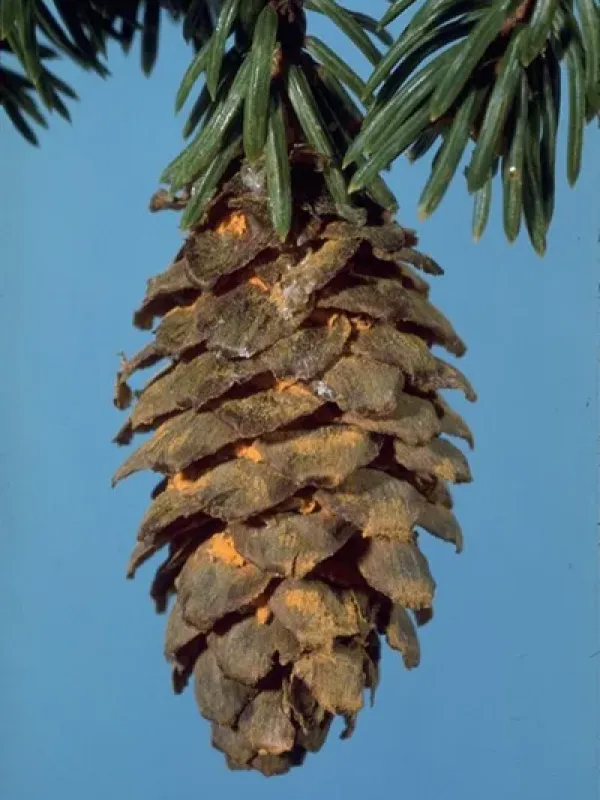
The most visible symptoms appear in mid-summer when bright orange, powdery aecia erupt through the surface of the infected spruce cone scales.
Infected cones often show clear signs of deformity, including stunted growth, twisting, or premature opening, which distinguishes them from healthy ones.
As the aecia mature, they rupture the epidermis, releasing mass quantities of orange-colored spores that cover the outer surface of the cone.
Internally, the cone tissues undergo necrosis, and the seeds fail to develop properly, leading to the complete failure of the reproductive function of the cone.
By late summer, the affected cones often wither or fall to the ground, appearing as dried-out, hollow structures covered with residual spore dust.
Pathogen
The spruce cone rust is caused by the heteroecious rust fungus Chrysomyxa pirolata, which requires two distinct hosts to complete its complex biological cycle.
The fungus overwinters primarily as mycelium in the leaves of wintergreen plants (Pyrola species) and Orthilia secunda, which act as perennial reservoirs for the pathogen.
In spring, aeciospores are produced on the leaves of these hosts and are dispersed by wind to infect the young, developing female cones of spruce trees.
Once established on the spruce cone, the fungus penetrates the cone scales and begins to colonize the reproductive tissues, eventually forming aecia.
The entire infectious cycle is perfectly synchronized with the phenology of the spruce, limiting the infection period to the time when cones are in their most receptive state.
Conditions for development
Cool, damp weather during the spruce flowering season is highly favorable for the germination of spores and the successful infection of cone scales.
The presence of abundant wintergreen populations near spruce stands creates a constant threat and a localized source of primary inoculum.
High tree density in plantations or dense natural stands that restrict air movement creates humid microclimates that promote fungal colonization.
Environmental conditions that extend the period of high humidity in spring significantly increase the severity of the outbreak in a given year.
Regional distribution of the pathogen is closely tied to the overlapping ranges of spruce trees and the herbaceous hosts required for the fungus's survival.
Why it matters
The primary economic impact of spruce cone rust is the significant reduction in seed yield, which is critical for reforestation and nursery programs.
The disease effectively sterilizes the cones, meaning that seeds are either non-existent or of very low viability, failing to germinate even if harvested.
In seed orchards, the disease can wipe out nearly the entire seasonal crop, causing major losses for forestry businesses dependent on high-quality seeds.
Infected trees face long-term reproductive setbacks, and the overall vigor of the forest stand can be compromised due to the inability to regenerate naturally.
Secondary issues, such as increased susceptibility to cone insects and other opportunistic pathogens, further exacerbate the damage caused by the rust fungus.
Protection
The most effective management practice involves removing or suppressing wintergreen plants in the vicinity of spruce seed orchards to eliminate the primary host.
Strict monitoring of plantations during the early cone development phase allows for the early detection and removal of infected cones to reduce the spore load.
In high-value seed orchards, chemical protection with appropriate fungicides can be used during the pollination window to prevent initial infections.
Strategic site selection for new spruce orchards should prioritize areas where populations of the alternate host are sparse or absent.
Silvicultural practices like thinning help improve air circulation, thereby reducing the localized humidity that favors the development of the rust fungus.
Discussion
No discussions yet — be the first.