
Spruce needle rust
Chrysomyxa ledicola
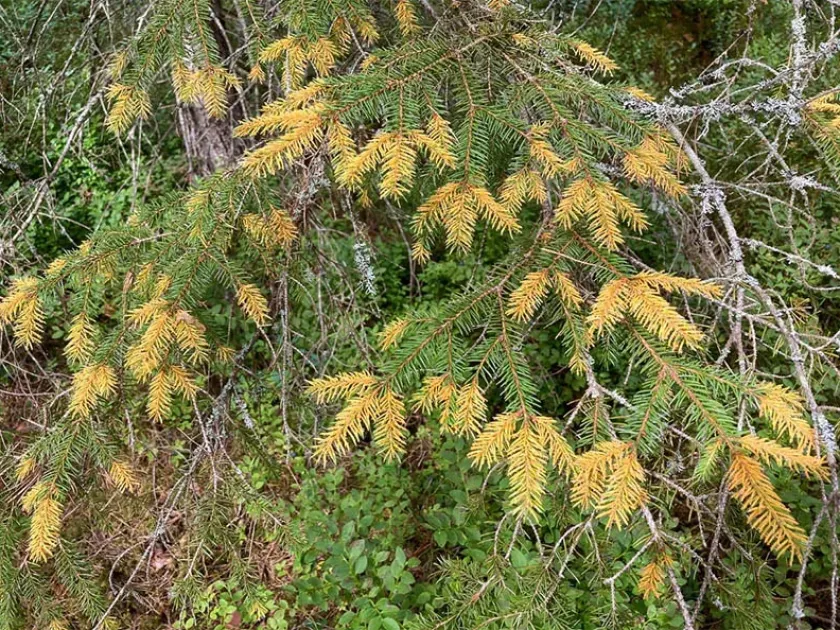
Description
Symptoms
The first visual signs appear in early summer, when bright orange or yellow pustules, known as aecia, emerge on the previous year's needles and eventually on the current year's growth.
Affected needles gradually turn yellow, lose their natural luster and healthy green color, becoming chlorotic. Over time, premature drying and heavy needle drop are observed.
During the mass sporulation phase, the spruce canopy may appear dusted with a bright yellow powder consisting of millions of aeciospores. This is the most diagnostic symptom of the disease.
In later stages, rows of spore-bearing structures can be seen breaking through the epidermis along the underside or the midrib of the needle. Damaged branches often look stunted and lose their aesthetic value.
The presence of Labrador tea (Ledum) in the immediate vicinity is a strong indicator of high risk for spruce infection by this specific rust pathogen.
Pathogen
The disease is caused by the heteroeic rust fungus Chrysomyxa ledicola. Its life cycle involves two different hosts: the intermediate host, Labrador tea (Ledum palustre), and the primary host, various species of spruce.
On spruce needles, the fungus produces aeciospores that are wind-dispersed over long distances. The infection targets young needles, entering through the stomata, making spruce the primary site for disease outbreaks in forests and nurseries.
The fungus overwinters primarily in the tissues of the Labrador tea plant as mycelium, ensuring the renewal of the cycle every year. In the spring, spores produced on the Labrador tea re-infect the spruce needles.
The disease is classified as a rust, characterized by the formation of distinctive bright orange or yellowish blisters or pustules. The fungus mycelium grows actively within the intercellular spaces of the needle tissue.
The pathogen's biology is tightly synchronized with the host plant's phenology, with peak infection periods typically coinciding with the rapid development of new spruce shoots in spring and early summer.
Conditions for development
Development of the disease is favored by moist, cool weather during spring and early summer. High air humidity and the presence of moisture on needles are essential for spore germination.
Dense spruce plantings, where air circulation is restricted, create an ideal microclimate for rapid disease spread. Poor ventilation significantly exacerbates the severity of the infection.
The dispersal of the pathogen is accelerated by windy conditions, which carry spores from infected Labrador tea patches to healthy spruce trees at significant distances.
Weakened trees, suffering from nutrient deficiencies or environmental stress (drought or waterlogging), are much more susceptible to infection by Chrysomyxa ledicola.
Temperatures ranging from +15°C to +22°C are optimal for the development of the fungal mycelium, making this temperature range critical for the health of conifer stands.
Why it matters
The primary damage caused by spruce needle rust is premature and massive needle drop, which drastically reduces the photosynthetic capacity of the tree and slows its overall growth.
Repeated annual infection leads to the exhaustion of the plant, suppressed shoot growth, and reduced resilience against frost and other environmental stressors.
Severe infections ruin the visual appeal of the trees, which is particularly critical in urban parks, home gardens, and landscape designs where spruce is used for its beauty.
In nurseries, the disease can lead to the total loss of young seedlings or the degradation of their commercial value, causing significant economic losses for growers.
Chronic infestation without proper management often invites secondary pests like bark beetles, which may eventually kill the tree.
Protection
The primary cultural control method is the removal and destruction (burning) of all Labrador tea plants within a radius of at least 250–500 meters from spruce plantations to break the fungal life cycle.
Regular sanitation is essential: prune and destroy fallen needles and heavily infected branches that may harbor fungal spores until the following season.
Chemical control includes spraying with copper-based fungicides (Bordeaux mixture, copper oxychloride) during the period of active shoot growth in the spring.
Systemic fungicides from the triazole class are effective, as they inhibit mycelial growth within plant tissues and prevent further infection throughout the growing season.
- Ensure proper spacing between spruce trees during planting.
- Apply balanced phosphorus-potassium fertilizers to improve tree immunity.
- Prune and thin the canopy to improve ventilation and reduce humidity.
- Keep the area beneath the trees clean of weeds and fallen debris.
Discussion
No discussions yet — be the first.