
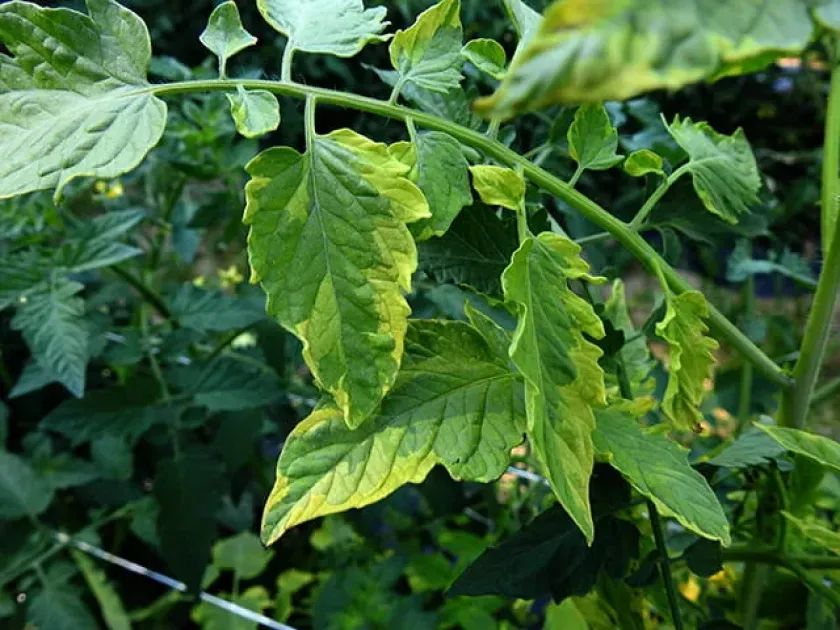
Description
Symptoms
The primary sign of a plant chimera is the presence of tissues with different genetic constitutions within a single individual, causing mosaic patterns.
Variegation is the most common visual indicator, where leaf sectors lack chlorophyll, resulting in yellow, white, or pale green discoloration.
In grapevines, chimeras often manifest as distinct sectors of different berry skin colors or variegated shoots, which are frequently misidentified as viral infections.
Unlike infectious diseases, the boundaries between normal and mutant tissues in chimeras are usually sharp and follow cellular lineage patterns.
The plant may exhibit these features throughout its life, but because it is a somatic mutation, the traits are not typically passed on through seeds.
Pathogen
Plant chimeras are not a disease in the conventional sense because there is no biological pathogen such as a virus, bacteria, or fungus involved.
The condition is caused by spontaneous genetic mutations occurring in meristematic cells, which dictate the development of new plant tissues.
This falls under the category of somatic mutations, where a genetic change occurs during the vegetative growth phase of the plant.
Such mutations may be induced by environmental stressors like radiation, extreme temperatures, or chemicals that disrupt DNA replication in the apical meristem.
A chimera is simply a biological state where two or more genetically distinct populations of cells coexist within the same organism.
Conditions for development
The development of chimeric tissues occurs during active cell division in the meristems, triggered by random errors in DNA synthesis or mitosis.
In vineyards, temperature fluctuations during bud differentiation are often cited as a contributing factor to the manifestation of chimeric sectors.
The spread of the trait within the plant occurs purely vegetatively: as the mutant cell divides, it creates a lineage of altered cells forming a visible sector.
These traits cannot be transmitted to neighboring plants via contact, grafting, or insect vectors, as it is an internal genetic development.
Environmental conditions do not "cause" the disease, but extreme stress may increase the frequency of spontaneous mutations in plant tissues.
Why it matters
In most cases, plant chimeras do not pose a survival risk to the plant unless the mutation affects critical physiological functions.
The main drawback is reduced photosynthetic efficiency, as tissues lacking chlorophyll do not contribute energy to the plant's metabolism.
Severe chimeric manifestations can lead to stunted growth or decreased overall productivity due to a reduction in assimilating leaf area.
For viticulture, chimeras are often considered undesirable as they may affect berry quality, appearance, or the vigor of specific shoots.
Sometimes, chimeric tissues may exhibit lower cold hardiness or stress tolerance compared to the healthy sectors of the plant.
Protection
Since chimerism is not an infectious disease, the use of fungicides, bactericides, or antivirals is entirely ineffective and unnecessary.
The primary method of management is cultural control: selective pruning of branches or shoots that show prominent or undesirable chimeric sectors.
When selecting planting material, it is crucial to avoid propagating shoots that exhibit variegation to maintain the consistency of the variety.
Prevention involves maintaining optimal growing conditions to minimize physiological stress on meristematic tissues during the growing season.
- Regular monitoring of the canopy.
- Pruning out abnormal chimeric growths.
- Sourcing healthy, certified propagation material.
Pathogens and affected parts
Affects crops · 1
Discussion
No discussions yet — be the first.