
Zinnia cercospora leaf spot
Cercospora zinniae
Description
Symptoms
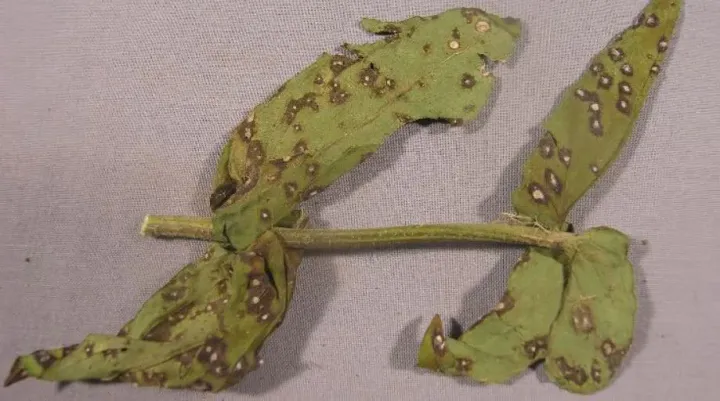
The first symptoms appear as small, circular or irregular reddish-brown spots on the leaves. These spots gradually enlarge and develop a grayish center.
A distinctive dark border often develops around the lesions. When humidity is high, the center of the spot becomes covered with a grayish fuzzy fungal growth.
As the infection progresses, lesions can merge, causing the affected leaves to turn yellow, wither, and drop prematurely.
Lesions can also form on stems, potentially causing cankers that disrupt the plant's vascular system and weaken its overall structure.
- Necrotic spots on leaves and petioles.
- Premature defoliation starting from the base of the plant.
- Stunting of the overall plant growth and bloom size.
Pathogen
The causative agent of this disease is the fungus Cercospora zinniae. It is a specialized pathogen that primarily targets plants within the Asteraceae family.
The fungus survives the winter primarily in plant debris left in the soil. As temperatures rise in spring, the fungal spores are spread by wind, rain splashes, and irrigation water.
The mycelium enters the plant tissue through stomata. Once inside, it begins to colonize the leaf, forming conidiophores that release secondary spores for further spread.
The lifecycle is completed quickly under favorable conditions, allowing for multiple infection cycles within a single growing season.
Seed-borne transmission is also possible, emphasizing the importance of selecting high-quality, treated seed material for planting.
Conditions for development
Development of the disease is highly favored by warm, humid weather conditions. High humidity levels are essential for the spores to germinate.
Temperatures ranging from 22°C to 28°C provide the ideal environment for the fungus to reproduce and spread rapidly through a garden bed.
Poor air circulation, often caused by overcrowding the plants, leads to moisture accumulation on leaf surfaces, creating a perfect incubation site.
Overhead irrigation, especially in the evening, keeps foliage wet for too long, significantly increasing the risk of a severe outbreak.
Shaded or poorly ventilated areas in the garden are much more prone to suffering from Cercospora leaf spot compared to open, sunny areas.
Why it matters
Cercospora leaf spot drastically reduces the aesthetic value of zinnias, making them unsightly for garden displays or commercial cut flower use.
The loss of foliage directly impacts the plant's ability to photosynthesize, which leads to fewer flowers and reduced plant vigor.
Severe infections can cause the plants to die back prematurely, cutting the flowering season short for the gardener or grower.
The buildup of the pathogen in the soil can result in recurring outbreaks, complicating the cultivation of zinnias in the same location year after year.
Losses in commercial operations can be significant due to the rejection of infected crops that no longer meet quality standards.
Protection
Sanitation is the first line of defense; always remove and destroy all infected plant debris at the end of the season to reduce inoculum levels.
Implementing a proper crop rotation plan helps break the disease cycle and prevents the pathogen from becoming established in the soil.
If an infection is detected, apply fungicides containing copper or specific systemic anti-fungal agents to protect healthy foliage and stop the spread.
Optimize spacing between plants to ensure good airflow and always water at the base of the plant rather than wetting the leaves.
Choose Zinnia varieties known for their increased disease resistance and maintain overall plant health through balanced fertilization and proper sunlight exposure.
Discussion
No discussions yet — be the first.