
Cercospora leaf spot of clover
Cercospora zebrina
Description
Symptoms
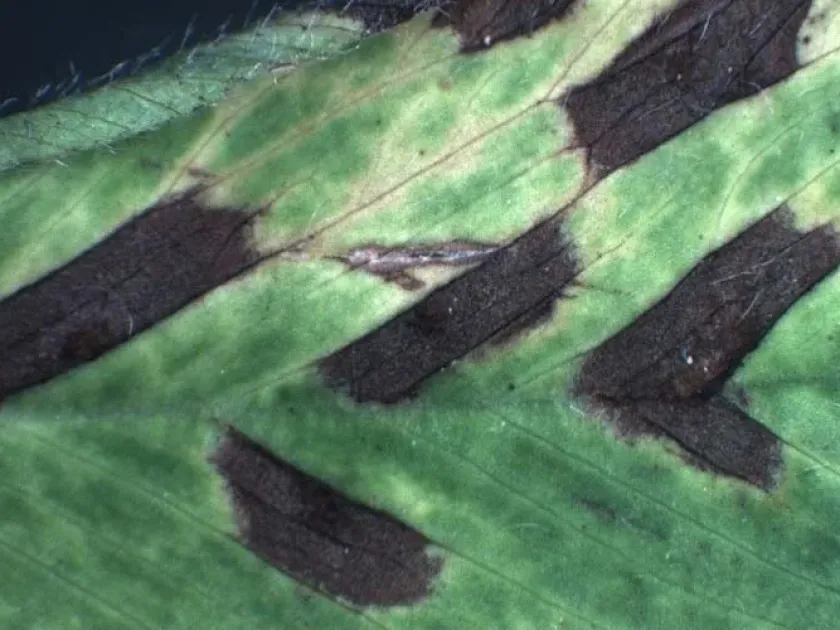
Initial symptoms present as small, light-gray or brown spots on the leaf surface. These spots are often circular or irregular in shape and are typically surrounded by a dark brown or black margin.
A diagnostic feature is the appearance of an olive-gray mold on the underside of the leaf within the spot area. This represents the fungal sporulation, which becomes particularly prominent under high humidity conditions.
As the disease progresses, these lesions expand and coalesce, causing the leaf tissue to turn yellow (chlorosis) and eventually die (necrosis). In severe cases, the entire leaf may shrivel and fall off prematurely.
Lesions can also appear on stems and petioles as elongated, sunken lesions. Such damage to the vascular structures can impede nutrient and water transport, further weakening the plant's overall vigor.
In mature clover stands, the lower leaves are usually the first to show symptoms, as the dense canopy maintains a humid microclimate that is ideal for the rapid proliferation of the fungal pathogen.
Pathogen
The causative agent of this disease is the fungus Cercospora zebrina, an anamorphic member of the Hyphomycetes class. It is a highly specialized pathogen that primarily targets clover and related legume species.
The fungus overwinters as mycelium within infected plant debris remaining in the field after harvest. In the spring, conidia are produced, which serve as the primary inoculum for the infection of new, developing clover foliage.
Dissemination of the spores occurs through wind, rain splashes, and physical contact with farm equipment. This cycle allows for rapid secondary infections, particularly during warm and humid weather, leading to widespread outbreaks.
This pathogen possesses significant evolutionary adaptation, allowing it to survive in the soil for extended periods. Its ability to remain viable until plant residues are completely decomposed makes sanitation a primary concern.
The biological mechanisms of Cercospora zebrina involve colonizing the intercellular spaces of the leaf, eventually erupting through the stomata to produce clusters of conidiophores, which gives the lesion its characteristic appearance.
Conditions for development
Development of Cercospora leaf spot is favored by high humidity (above 80%) and warm temperatures ranging between 20°C and 25°C. These environmental triggers are essential for the germination and penetration of the spores.
Dense clover stands provide a microclimate that prevents airflow and keeps the leaf surface moist for long periods. This environment is highly conducive to infection, as spores require free water or high humidity to germinate.
Nutritional imbalances, particularly high nitrogen paired with low potassium, can make the plants more susceptible. Proper fertilization helps maintain the plant's natural defense barriers against fungal penetration.
Failure to implement crop rotation creates an environment where inoculum builds up annually. Growing clover consecutively on the same plot significantly increases the severity of the disease in subsequent seasons.
Extended periods of rain or heavy dew allow the fungus to complete its life cycle more rapidly. In such conditions, the incubation period is significantly reduced, leading to rapid spread throughout the field.
Why it matters
The disease causes a substantial reduction in the overall yield of green fodder and hay. Premature defoliation leads to a loss of the most nutritious part of the plant, significantly lowering the total biomass.
The nutritional quality of the forage is diminished, as infected leaves have lower protein, sugar, and vitamin levels. This can negatively impact livestock growth rates and overall animal productivity.
Plants affected by severe infections exhibit reduced winter hardiness. The loss of leaf area prevents the plant from accumulating sufficient carbohydrate reserves in the root system, leading to stand thinning or death.
In seed-producing fields, the disease results in poor seed filling, leading to smaller, lighter, and less viable seeds. This poses a major economic risk for commercial seed production operations.
Increased susceptibility to secondary pathogens and weed competition is another consequence. As the clover stand thins, weeds readily colonize the open areas, further reducing the productivity of the crop.
Protection
Implementing a proper crop rotation plan is the most effective long-term management strategy. A break of at least 3 to 4 years between clover crops allows soil-borne inoculum levels to decline significantly.
Tillage practices that promote the burial and decomposition of infected crop residues can drastically reduce the amount of primary inoculum. Burning or deep plowing helps eliminate the overwintering mycelium.
Proper nutrient management, ensuring adequate potassium and phosphorus levels, enhances the plant's resilience. Robust plants are more capable of resisting the initial infection and recover better from damage.
Choosing resistant or tolerant clover varieties is a vital preventative measure. Plant breeders have developed cultivars that demonstrate better performance under high disease pressure.
Fungicide applications may be necessary in high-value seed stands or extreme outbreak scenarios. These should be applied according to local regulations, ensuring that all safety intervals are strictly observed.
Discussion
No discussions yet — be the first.