
Gray leaf spot
Cercospora zeae-maydis
Description
Symptoms
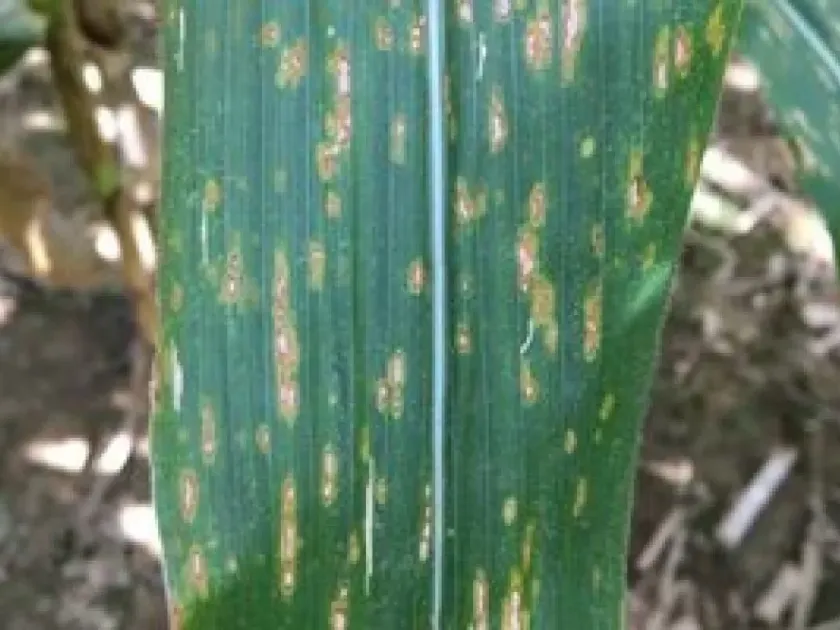
Early symptoms typically appear on the lower leaves of the corn plant. Initially, these manifest as small, chlorotic, oval-shaped lesions that eventually elongate.
The lesions develop a characteristic rectangular or blocky shape, restricted by leaf veins. They turn a gray to tan color, which is a key diagnostic feature for this fungal infection.
Under conditions of high humidity, a gray, velvet-like fungal growth may be visible on the underside of the leaf within the lesions, which consists of spores produced by the fungus.
As the disease progresses, these lesions merge together, leading to large areas of necrotic tissue. The leaves eventually become dry and brittle, giving the canopy a scorched appearance.
The disease moves upward from the lower canopy towards the ears, significantly reducing the leaf area available for grain fill, which leads to lower kernel weight.
Pathogen
The disease is caused by the fungus Cercospora zeae-maydis. This pathogen specifically targets the leaf tissue of maize plants throughout the vegetative growth period.
The fungus survives primarily on infected crop residue left on the soil surface. After the harvest, it overwinters in corn stalks and leaf debris, serving as the inoculum for the next crop.
Its life cycle involves the production of conidia, which are disseminated by wind and splashing rain to healthy leaves, starting new cycles of infection throughout the summer.
The fungal mycelium penetrates the leaf surface and colonizes the host tissue, releasing toxins that disrupt chlorophyll and impede the process of photosynthesis within the leaf.
Classified as a foliar spot disease, it has the potential to spread rapidly under favorable climatic conditions, causing severe damage to the photosynthetic capacity of the plant.
Conditions for development
The disease thrives in warm and humid weather conditions. Prolonged periods of high relative humidity (above 80%) are essential for spore germination and infection establishment.
The optimal temperature range for the pathogen is between 25 and 30 degrees Celsius. Within this thermal range, the fungus achieves maximum growth and colonization rates.
Dense crop canopies create a microclimate with reduced air movement, allowing moisture to persist on the leaves for extended periods, which favors the spread of the fungus.
Conservation tillage practices, such as No-Till, play a significant role in disease development, as they keep infected residue on the soil surface, providing an ideal substrate for the fungus.
Continuous corn cropping creates a high inoculum load in the field. Repeated cultivation of maize in the same area annually significantly increases the probability of severe outbreaks.
Why it matters
The primary damage is caused by the substantial loss of photosynthetic leaf area. This limits the energy available to the plant for proper grain development and dry matter accumulation.
Yield losses can range from 30% to 50% in severe cases, especially in regions with consistent high humidity, leading to smaller kernels and lower overall grain quality.
Premature leaf death often compromises stalk integrity. This increases the risk of lodging, which makes mechanical harvesting difficult and leads to significant field losses during the autumn.
Infection on the husk can increase the incidence of ear rots, which lowers the quality of the harvested grain and poses challenges for long-term storage and marketability.
Plants affected by the disease are significantly weakened, making them more vulnerable to secondary pests and various stalk rot pathogens, thus compounding the overall yield loss.
Protection
Crop rotation is one of the most effective management practices. Planting non-host crops allows for the natural decomposition of infected residue, thereby reducing the inoculum potential.
Tillage methods that bury crop debris can help reduce the initial source of infection, as the fungus breaks down much faster when in direct contact with soil microorganisms.
The selection of resistant or tolerant corn hybrids is critical. Breeders have developed varieties that show strong performance and resistance to leaf spot diseases in various environments.
Fungicide application during the rapid growth phase is a proven way to manage the disease. It is recommended to monitor fields and spray when symptoms begin to appear on the lower-to-middle leaves.
- Application of systemic fungicides like strobilurins or triazoles.
- Scouting fields regularly during the V8-VT growth stages.
- Managing plant density to ensure adequate air circulation within the canopy.
Discussion
No discussions yet — be the first.