
Sesame cercospora leaf spot
Cercospora sesami
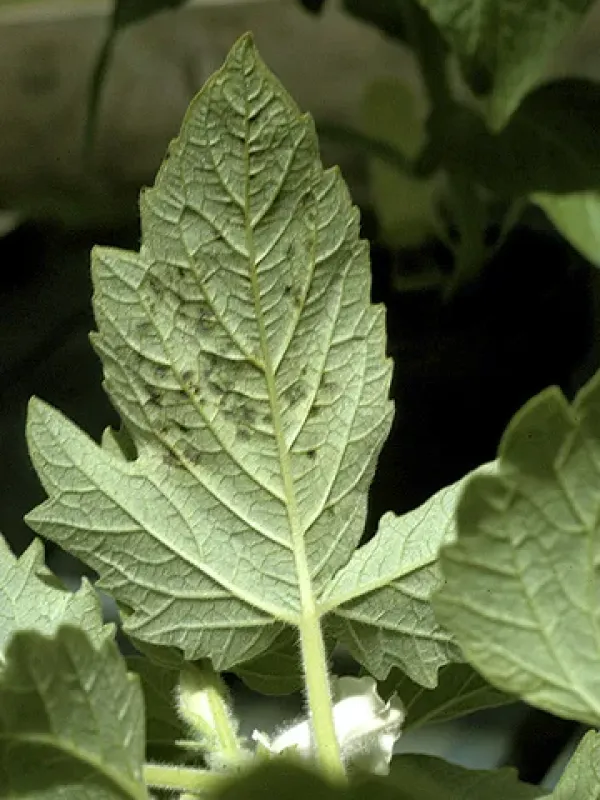
Description
Symptoms
The first symptoms of Cercospora leaf spot appear as small brown or grayish circular to irregular spots on the leaves of sesame plants.
These spots gradually expand and may merge, often surrounded by a chlorotic or yellowish halo that indicates tissue necrosis and stress.
Under humid conditions, a characteristic dark gray to olive-colored mold appears on the underside of the leaves, corresponding to the fungal sporulation.
As the infection progresses, affected leaves dry out, wither, and drop prematurely, leaving the stems exposed and reducing the photosynthetic surface.
The fungus can also infect stems and capsules, creating elongated dark lesions that can lead to pod deformation and poor seed development.
Pathogen
The disease is caused by the fungus Cercospora sesami, which is a specialized parasite affecting sesame plants in various climatic regions.
The pathogen survives primarily in crop debris left in the field from previous seasons, serving as the main source of primary inoculum.
Conidia (spores) are produced in the fungal lesions and are efficiently disseminated by wind, rain splashes, and contact with farm machinery.
Once they land on a susceptible host, the spores germinate and enter the plant tissues through stomata or mechanical wounds, initiating the infection.
The life cycle of the pathogen is relatively short, allowing for multiple infection cycles throughout the growing season if the environment remains favorable.
Conditions for development
High humidity and moderate to warm temperatures are the primary environmental drivers for the development and spread of Cercospora sesami.
Frequent rainfall or overhead irrigation provides the necessary water film on leaf surfaces for spore germination and infection establishment.
The disease is most prevalent in areas with high humidity and temperatures ranging from +25°C to +30°C, typical for tropical and subtropical cultivation.
Dense planting patterns reduce air circulation within the canopy, creating a moist microclimate that facilitates rapid fungal growth and disease progression.
Poor field hygiene and continuous cropping of sesame provide a constant supply of inoculum, making fields highly susceptible to severe outbreaks.
Why it matters
Sesame cercospora leaf spot causes significant yield losses by drastically reducing the functional photosynthetic leaf area of the crop.
Defoliation caused by the fungus limits the plant's ability to fill the capsules, leading to smaller seeds and lower oil content in the final harvest.
In addition to quantitative losses, the quality of the sesame seeds is compromised, often resulting in lower market value and poor storage characteristics.
Severely infected plants are weaker, making them more susceptible to opportunistic pathogens and secondary pest attacks during the growth cycle.
Without intervention, major epidemics can result in yield reductions exceeding 40-50% in vulnerable varieties, impacting farm profitability.
Protection
Effective management of Cercospora leaf spot requires an integrated approach combining cultural practices and targeted chemical control.
Implementing a crop rotation system with non-host plants for at least three to four years is essential to reduce the soil-borne inoculum level.
Deep plowing after harvest helps bury crop residues, accelerating their decomposition and minimizing the survival of the fungus in the soil.
Fungicide applications, particularly those containing copper or triazole compounds, are effective when applied at the onset of initial symptoms.
- Use of disease-free, high-quality treated seeds.
- Maintenance of adequate plant spacing for airflow.
- Regular field scouting to detect early infection.
- Effective weed control to reduce humidity around the crop.
Discussion
No discussions yet — be the first.