
Cercospora leaf spot of raffia
Cercospora raphiae
Description
Symptoms
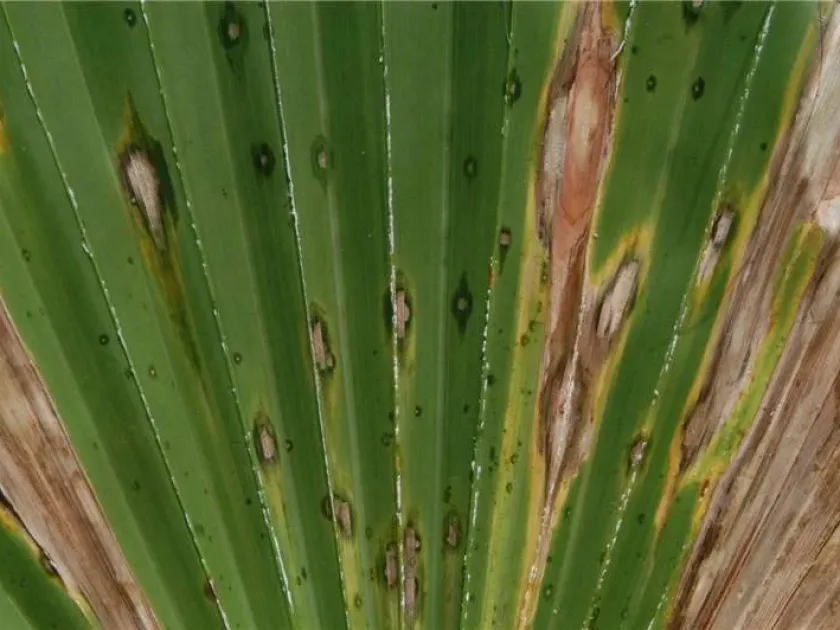
The initial symptoms appear as small, circular, or irregular chlorotic spots on the fronds of raffia palms, gradually increasing in size over time.
The center of these lesions often turns greyish or light brown and dries out, creating a characteristic necrotic dead zone on the leaf blade.
A distinct dark or reddish-brown border often surrounds the lesions, separating the infected dead tissue from the healthy green leaf area.
During periods of high humidity, olive-grey fungal mycelium and spores develop on the underside of the leaves, visible to the naked eye.
As the infection progresses, multiple spots coalesce, leading to extensive necrosis, yellowing, and eventually premature abscission of the foliage.
Pathogen
The disease is caused by Cercospora raphiae, a fungal pathogen belonging to the class Deuteromycetes that thrives on tropical palm species.
The fungus produces conidia, which are the primary reproductive structures responsible for the secondary spread of the disease within a population.
The pathogen survives the off-season or unfavorable environmental conditions as mycelium or spores on fallen leaves and woody debris on the soil surface.
Upon germination, the fungus penetrates the leaf epidermis using specialized structures, establishing a parasitic relationship with the host tissue.
The pathogen's life cycle is closely synchronized with the moisture availability and temperature fluctuations characteristic of tropical environments.
Conditions for development
The development of Cercospora leaf spot is strongly favored by high temperatures, specifically those ranging between 22°C and 28°C.
High relative humidity and persistent dew or fog are essential requirements for the germination of fungal spores on the leaf surface.
Poor aeration within the palm canopy, caused by overcrowding or lack of proper spacing, promotes a moist microclimate ideal for infection.
Plants subjected to environmental stress, poor nutrition, or existing physical injuries are significantly more susceptible to successful colonization by the fungus.
Frequent rainfall events play a crucial role in splashing spores from infected debris onto lower foliage, initiating new infection cycles.
Why it matters
The primary impact of the disease is the reduction of the functional photosynthetic area, which directly impairs the plant's overall metabolic capacity.
For raffia palm plantations, the damage leads to a decrease in biomass production and lower quality of the valuable fiber harvested from the leaves.
Stunting of growth is commonly observed in seedlings and young trees, significantly increasing the time required for them to reach maturity.
Severe infestations result in extensive defoliation, leaving the palm vulnerable to secondary infections and reducing its overall lifespan.
The economic impact includes the costs of nursery management, lost yield, and the ongoing investment in chemical or cultural control measures.
Protection
Effective management begins with strict sanitation, including the regular removal and safe destruction of all infected fronds and debris.
Spacing plants correctly ensures proper airflow and light penetration, which helps keep the foliage dry and inhibits fungal spore germination.
Chemical control involving copper-based fungicides or systemic chemical treatments should be applied at the first signs of the disease.
- Monitoring nursery stock for early detection.
- Applying balanced fertilizer to enhance host resistance.
- Pruning damaged leaves to reduce the pathogen load.
Maintaining optimal drainage and avoiding excessive overhead irrigation are vital components of an integrated disease management strategy.
Discussion
No discussions yet — be the first.