
Cercospora leaf spot of alfalfa
Cercospora medicaginis
Description
Symptoms
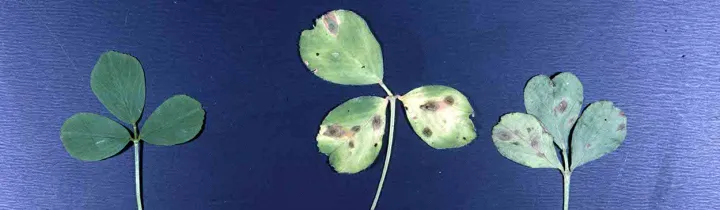
Symptoms initially appear as small, circular spots on leaflets, which gradually darken to a deep brown or black color as the fungus matures.
A distinctive feature is the presence of an olive-gray mat on the underside of the leaf spots, consisting of the fungus's conidiophores and spores.
As the infection progresses, individual spots often merge, covering large areas of the leaf surface and causing chlorosis in the surrounding tissues.
Severe infections frequently cause lower leaves to turn yellow and drop prematurely, leading to significant defoliation of the alfalfa stand.
Stems are occasionally affected, showing elongated lesions that may weaken the structural integrity of the plant under certain conditions.
Pathogen
The disease is caused by the fungus Cercospora medicaginis, which belongs to the hyphomycetes group and specifically targets legumes.
The pathogen overwinters on crop debris, fallen leaves, and within the soil profile, serving as a primary source of inoculum for the next season.
During the growing season, the fungus spreads via conidia that are disseminated by wind, rain splashes, and farm machinery moving through the fields.
It predominantly infects leaves, although petioles and stems can also be colonized under favorable conditions for the fungus.
The biological cycle of the fungus is highly dependent on the host plant's maturity and environmental conditions, often peaking during humid summer months.
Conditions for development
Cercospora leaf spot flourishes in environments characterized by high relative humidity and moderate temperatures throughout the growing period.
Frequent rainfall, heavy morning dews, and persistent foggy conditions facilitate the germination of conidia and accelerate the infection process.
Dense, poorly ventilated stands provide an ideal microclimate for the disease to spread rapidly from the lower leaves to the upper foliage.
Alfalfa plants under nutrient stress or physical damage are generally more susceptible to colonization by Cercospora medicaginis.
The disease is most prevalent in mid-to-late summer when the combination of warmth and moisture promotes continuous fungal sporulation.
Why it matters
The primary impact of the disease is a reduction in leaf area, which leads to lower biomass yields and poor quality of the harvested hay.
Defoliation significantly lowers the protein and nutritional content of the forage, reducing its overall value for livestock feed.
Infected plants exhibit reduced energy storage in the root system, which compromises their overwintering ability and general persistence.
Long-term consequences include an increased rate of stand thinning and the potential need for premature field renovation or reseeding.
Farmers face economic losses not only from reduced volume but also from the increased management costs associated with mitigating the disease.
Protection
Crop rotation is an essential management practice that helps break the disease cycle by reducing the density of fungal spores in the field.
Early harvesting of the alfalfa crop is a critical strategy to remove infected foliage before secondary cycles of sporulation occur.
Selecting and planting resistant alfalfa varieties remains the most effective long-term solution for minimizing the impact of leaf spot diseases.
Effective weed control and the removal of volunteer alfalfa plants help reduce the local infection pressure within the farm environment.
- Maintaining soil fertility to support plant vigor.
- Ensuring adequate field drainage to reduce humidity.
- Monitoring fields for early signs of lesions.
Discussion
No discussions yet — be the first.