
Coffee cercospora leaf spot
Cercospora coffeicola
Description
Symptoms
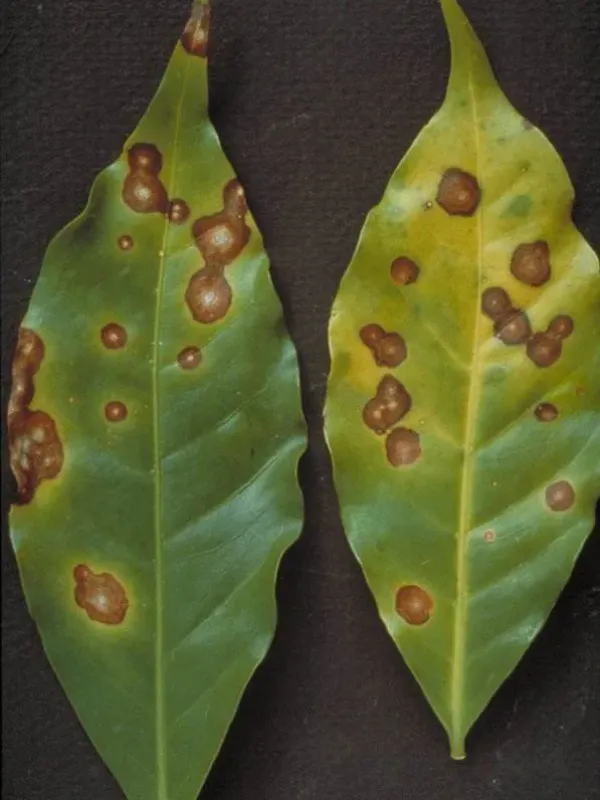
The primary symptom on leaves is the presence of circular or oval spots with reddish-brown centers and lighter, halo-like margins. This appearance often earns the disease the nickname "brown eye spot" in many regions.
On coffee cherries, the infection manifests as dark, sunken lesions. As the disease progresses, these berries turn dark prematurely and may drop from the tree before reaching full maturity, significantly reducing the potential yield.
Severe infection on foliage causes widespread chlorosis and premature leaf drop. This massive loss of leaves undermines the tree’s photosynthetic capacity, leading to significant physiological stress and stunted growth.
Under high humidity conditions, a grey to olive-colored velvety layer appears on the surface of the lesions. This layer consists of the fungus's reproductive structures, signaling an active stage of spore dispersal.
In cases of chronic infestation, branch dieback may occur. The tree appears weakened, with sparse foliage and poor berry development, which indicates that the plant's energy reserves have been depleted by the pathogen.
Pathogen
The disease is caused by the fungus Cercospora coffeicola, an imperfect fungus classified within the Deuteromycetes. It is a highly specialized pathogen that targets the foliage and fruits of coffee plants globally, particularly in tropical regions.
The fungus survives in infected plant debris, fallen leaves, and mummified berries left on the branches or the ground. These act as primary inoculum sources for the next infection cycle, releasing conidia that spread easily in the environment.
The life cycle of the pathogen is highly dependent on humidity. Rain splashes and dew droplets are the primary mechanisms for spore dissemination, facilitating the entry of the fungus into the plant's tissues through stomata or mechanical injuries.
Once inside, the fungus secretes cercosporin, a potent toxin that damages cell membranes. This leads to the characteristic necrosis observed as leaf spots and fruit lesions, which are the hallmark symptoms of the disease.
While it affects various species of Coffea, Arabica coffee is particularly susceptible. The pathogen is widespread in most coffee-growing countries and poses a chronic threat to production efficiency and bean quality.
Conditions for development
Optimal development of Cercospora coffeicola occurs under conditions of high relative humidity (above 80%) and moderate temperatures ranging from 20°C to 25°C. These conditions are standard in many coffee-growing areas.
Poor orchard management, particularly lack of pruning, leads to dense canopy structures. This limits airflow and maintains a microclimate where moisture persists for extended periods, providing a perfect environment for fungal colonization.
Nutritional status plays a critical role in susceptibility. Trees experiencing deficiencies in nitrogen, potassium, or magnesium exhibit lower resistance to fungal invasion compared to well-nourished plants.
Mechanical injuries on leaves or fruit, caused by insects, improper handling, or heavy rain, create entry points for the pathogen. These injuries allow the fungus to bypass the plant's natural surface defenses.
Accumulation of inoculum is a key factor. Leaving diseased berries on the ground or failing to clear debris from the field ensures that the fungal population remains high, leading to recurring infections year after year.
Why it matters
The economic impact of cercospora is significant, mainly due to the direct loss of fruit yield and the deterioration of bean quality. Infected cherries produce lower-grade coffee, which fetches a lower price on the market.
The reduction in photosynthetic area due to premature leaf fall weakens the tree, resulting in decreased productivity for subsequent seasons. This often leads to a cycle of biennial bearing or even permanent tree decline.
Increased susceptibility to other pests and diseases is common in weakened trees. The stress caused by the fungus makes the plant more vulnerable to secondary infections, further complicating orchard management.
Management costs increase significantly due to the necessity of fungicide applications. For many smallholder farmers, this adds to the cost of production, reducing the overall profitability of the coffee farm.
In extreme cases, severe defoliation and branch dieback can lead to the death of young or poorly managed trees, necessitating costly replanting and long-term recovery periods for the farm.
Protection
The most effective strategy for managing cercospora is a combination of good cultural practices. Regular pruning is essential to improve airflow, reduce canopy density, and minimize the duration of leaf wetness.
Balanced fertilization programs should be implemented to ensure tree health. Strong, well-nourished trees are inherently more capable of resisting the pathogen's development and tolerating infections.
Chemical control focuses on the preventive use of copper-based fungicides. Timing is critical; applications should be carried out just before the rainy season or at the first sign of leaf spot development.
Sanitation measures, including the thorough removal of fallen berries and debris from the orchard floor, are crucial to reducing the primary inoculum level at the start of the growing season.
- Selection of resistant or tolerant coffee varieties.
- Regular monitoring of tree canopy for early symptoms.
- Sanitizing pruning equipment to prevent cross-contamination.
Discussion
No discussions yet — be the first.