
Cercospora leaf spot of chicory
Cercospora cichorii
Description
Symptoms
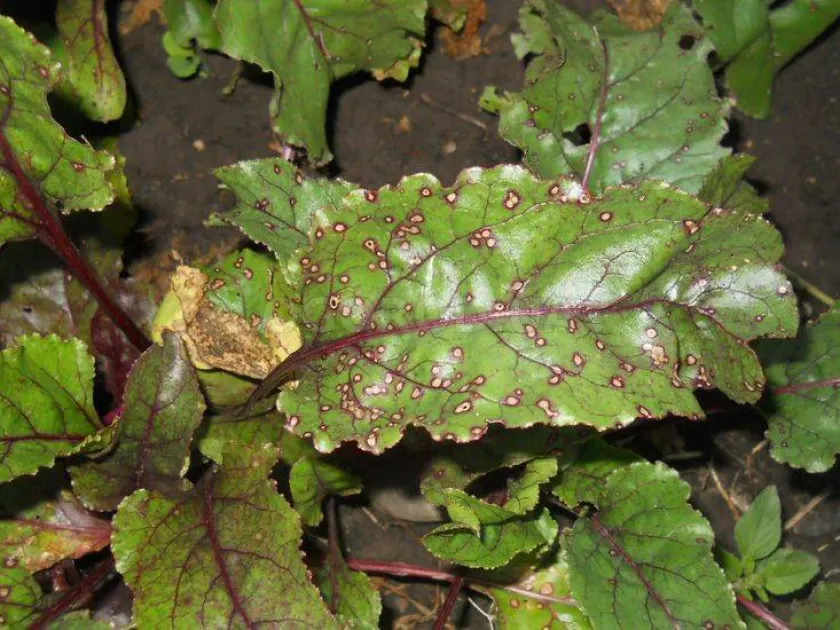
The initial symptoms are small, circular, brown to greyish spots that appear scattered across the surface of the affected leaves.
As the spots mature, they often develop a distinct dark border, and the center may become lighter, sometimes turning necrotic or brittle.
Under humid conditions, a characteristic greyish fungal mold, containing masses of conidia, appears in the center of the spots on the underside of leaves.
Severe infection leads to the coalescence of these spots, causing large areas of the leaf to wither and eventually fall off the plant.
The disease typically starts from the lower, older foliage and moves upward, often causing the plant to lose its photosynthetic capability prematurely.
Pathogen
The disease is caused by the fungus Cercospora cichorii, which is a common pathogen attacking the foliage of chicory plants globally.
The fungus survives primarily as mycelium in crop debris left on the field after harvest or through infected seeds introduced into the soil.
Conidia produced by the fungus are easily dispersed by wind, splashing rain, or human activities during agricultural operations within the field.
Upon landing on a leaf, the spores germinate under favorable conditions and penetrate the plant tissues, starting the colonization process.
The life cycle is polycyclic, meaning the fungus can produce multiple generations of spores within a single growing season if moisture is present.
Conditions for development
High humidity and frequent rainfall are the most critical factors for the rapid development and spread of Cercospora leaf spot.
The fungus thrives in warm temperatures, with the optimal range for infection being between 20°C and 25°C (68-77°F).
Dense planting patterns that restrict airflow create a humid microclimate within the crop canopy, which is highly conducive to fungal sporulation.
Morning dew or prolonged wetness on the leaves provides the necessary moisture for the conidia to germinate and penetrate the host tissue.
Fields with poor drainage or those located in low-lying areas often suffer more significantly due to the sustained high moisture levels.
Why it matters
The primary damage is the reduction of the green leaf area, which significantly impacts the plant's ability to synthesize carbohydrates.
This results in reduced root development and lower overall quality of the chicory, particularly regarding the concentration of inulin in the roots.
Crop yields can be substantially reduced if the infection reaches the stage of severe defoliation during the active root-filling period.
The loss of foliage leaves the plant more susceptible to other pathogens, potentially leading to secondary decay of the roots in storage.
Economic losses are compounded by the increased costs of fungicide applications required to contain the disease during outbreaks.
Protection
The fundamental control strategy is crop rotation, ensuring that chicory is not planted in the same field for at least 3 years to break the infection cycle.
Post-harvest management should include the removal or deep burial of plant residues to reduce the initial inoculum load in the field.
Using certified, disease-free seed and selecting resistant or tolerant varieties can significantly reduce the pressure of the initial infection.
If environmental conditions favor disease development, timely application of systemic or contact fungicides is necessary to protect the foliage.
- Improving soil drainage to prevent excessive surface moisture.
- Maintaining optimal plant spacing to promote canopy ventilation.
- Regular weeding to remove alternative hosts that may harbor the fungus.
Discussion
No discussions yet — be the first.