
Cercospora leaf spot of pepper
Cercospora capsici
Description
Symptoms
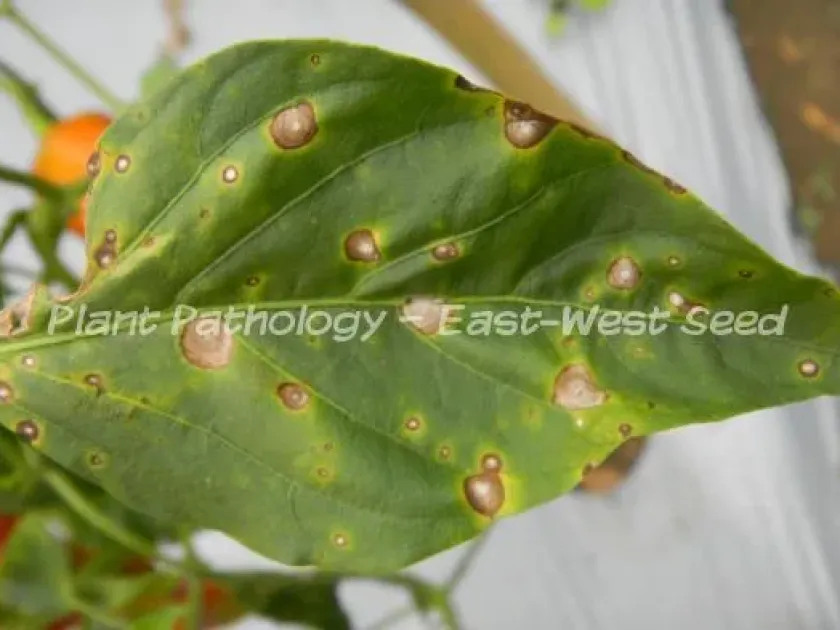
The first symptoms appear as small, circular or angular spots on the leaves. As the lesions mature, they typically develop a light gray or tan center surrounded by a dark brown border.
Under humid conditions, a grayish, fuzzy growth can be observed on the underside of these spots, which represents the fungal spore mass being released into the air.
Severe infection leads to widespread yellowing (chlorosis) of the foliage. Eventually, affected leaves drop prematurely, causing significant defoliation of the pepper plant.
In some cases, the fungus may also attack the petioles and stems, hindering the translocation of nutrients to the fruits, which stunts their growth.
The decline in leaf area directly impairs the plant's ability to photosynthesize, leading to a visible weakening of the entire plant structure.
Pathogen
The causal agent of this disease is the fungus Cercospora capsici. It is a specialized pathogen that primarily targets plants within the Capsicum genus, including various types of peppers.
As a fungal pathogen, it survives by overwintering on infested plant debris, in the soil, and can also be seed-borne, making it difficult to eradicate once established in a field.
The fungus develops mycelium within the leaf tissues, eventually forming fruiting structures known as conidiophores. These produce conidia, which serve as the primary inoculum for spreading the infection to healthy leaves.
The pathogen is highly adapted to humid environments, allowing it to complete its life cycle rapidly when conditions are suitable for fungal growth.
Because the disease can affect various weed species in the Solanaceae family, these weeds often serve as unintended reservoirs for the fungus during the off-season.
Conditions for development
High humidity and warm temperatures are the primary environmental drivers for the development of Cercospora leaf spot. Frequent rainfall or heavy overhead irrigation significantly favors disease spread.
The optimal temperature range for the development of the fungus is between 25°C and 30°C (77°F to 86°F), during which the infection spreads most rapidly.
Poor air circulation in greenhouses or overcrowded plant density creates a microclimate with high moisture, which is ideal for spore germination and infection.
Free water or dew on the leaf surface is essential for the conidia to germinate and penetrate the leaf epidermis, initiating the disease process.
Improper field management, such as failing to manage canopy density, creates stagnant air conditions that facilitate the quick transition from a few spots to a full-scale outbreak.
Why it matters
The primary harm is the significant reduction in yield caused by early leaf drop. Without sufficient foliage, the plant cannot properly develop its fruits.
Reduced leaf canopy also exposes the developing peppers to intense sunlight, which can lead to sunscald, further decreasing the marketability of the produce.
Infected plants are weakened and become more susceptible to secondary infections from other pathogens, including opportunistic bacteria or rot-causing fungi.
Economic losses arise not only from reduced total yield but also from lower product quality and the high costs associated with repeated fungicide applications.
In severe cases of early infection, the plant may fail to set fruit entirely, leading to a total loss of the crop in heavily affected areas of the field.
Protection
Effective management begins with rigorous sanitation, including the removal and destruction of infected plant residues to reduce the amount of inoculum for the next season.
Utilizing high-quality, disease-free seed is a crucial preventative step. Additionally, crop rotation with non-host plants for at least two to three years helps break the disease cycle.
Chemical control involving copper-based fungicides or systemic options is often necessary in commercial production. Regular monitoring allows for early detection and targeted treatments.
- Practice proper plant spacing to improve airflow within the canopy.
- Use drip irrigation instead of overhead systems to keep foliage dry.
- Control Solanaceous weeds in and around the growing area.
- Implement preventative fungicide spraying if weather conditions are conducive to the disease.
- Ensure proper sterilization of agricultural tools used in the garden.
By combining cultural practices with appropriate chemical interventions, growers can successfully suppress the development and spread of Cercospora leaf spot in pepper crops.
Discussion
No discussions yet — be the first.