
Cercospora leaf spot of amaryllis
Cercospora amaryllidis
Description
Symptoms
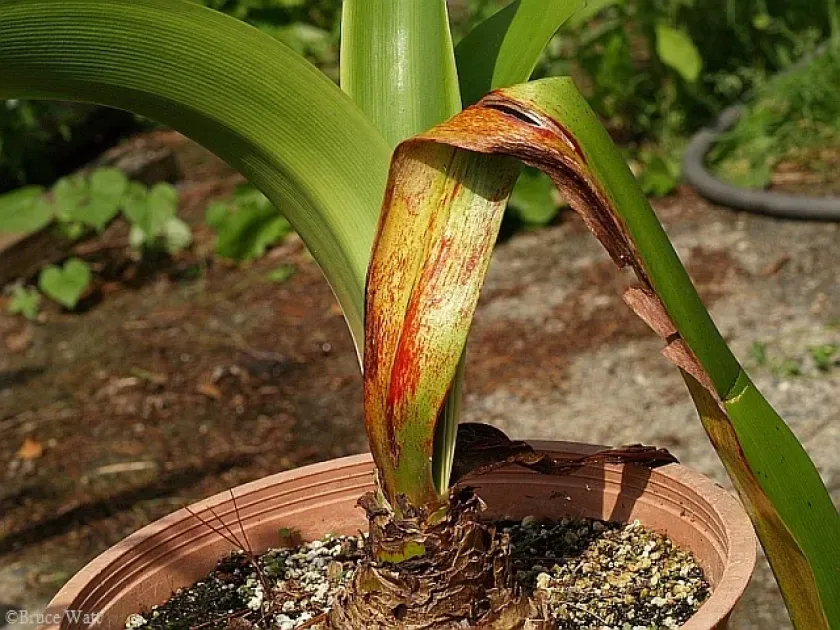
The primary symptom of the disease is the appearance of small, circular or irregular spots on the leaves. As the infection progresses, these spots expand, often turning reddish-brown or dark brown, sometimes surrounded by a distinct yellowish chlorotic halo.
In high-humidity conditions, the center of the spots produces a gray or olive-colored fungal growth. This is the sporulation of the pathogen, which serves as an inoculum source for spreading the infection to healthy tissues and neighboring plants.
As the infection advances, the lesions coalesce, covering large parts of the foliage. This massive tissue destruction leads to leaf curling, premature drying, and eventually the death of the entire leaf, starting from the tips downward.
The fungal attack can also spread to the flower stalks, causing localized necrosis. This weakens the structural integrity of the bloom stem, which may result in drooping or complete failure of the plant to produce high-quality flowers.
Early identification of these symptoms is essential, as the fungus hides within the leaf tissue. Observing the lower surface of leaves often reveals the most active fungal growth before the damage becomes severe and visible on the upper surface.
Pathogen
The disease is caused by the fungus Cercospora amaryllidis. It is a specialized pathogen that specifically targets members of the Amaryllidaceae family, disrupting their metabolic processes and causing chronic weakening of the plants.
Conditions for development
The fungus thrives in warm, humid environments where there is limited air circulation. Periods of prolonged leaf wetness or poor ventilation in greenhouses and indoor settings are primary drivers for rapid fungal outbreaks.
Why it matters
The major impact is the significant reduction in photosynthetic capacity, which starves the bulb. If the foliage is destroyed prematurely, the plant fails to store enough energy, leading to stunted growth and poor or non-existent flowering in subsequent cycles.
Protection
Effective control requires the removal and destruction of all infected plant debris. Application of copper-based fungicides or systemic chemical treatments is recommended. Cultural practices such as avoiding overhead watering and improving air circulation are crucial for prevention.
Discussion
No discussions yet — be the first.