
Ceratorhiza
Ceratorhiza
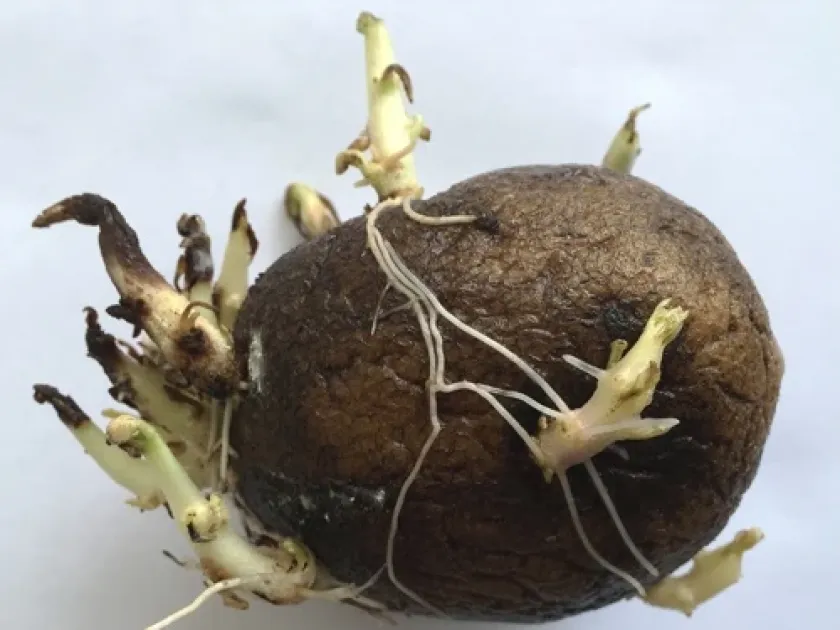
Description
Symptoms
Symptoms often begin with pre-emergence damping-off, where seeds or sprouts die before reaching the soil surface. This leads to gaps in the crop rows and reduced overall plant density.
On the roots and lower stems, characteristic dark, reddish-brown to black necrotic lesions appear. These lesions are often sunken and can girdle the stem, restricting water and nutrient uptake.
Affected plants frequently exhibit chlorosis and stunted growth compared to healthy plants. In advanced stages, the roots appear brown, brittle, and significantly reduced in mass.
Under humid conditions, a sparse, web-like mycelial growth may be visible on the stem base near the soil line. This is a crucial diagnostic indicator during periods of high humidity.
Uneven patches of withered or dying plants in the field are a typical visual manifestation of a Ceratorhiza infestation, often following the distribution patterns of the fungus in the soil.
Pathogen
The disease is caused by fungi of the genus Ceratorhiza, which are closely related to the Rhizoctonia group. These fungi are soil-borne pathogens characterized by the formation of persistent sclerotia and hyphae capable of surviving in the soil for several years.
Ceratorhiza species are necrotrophic pathogens, meaning they kill host cells to derive nutrients. Their biological cycle is primarily vegetative, and they lack complex sexual reproduction mechanisms in most field conditions.
The fungus colonizes the rhizosphere of various plants, utilizing plant exudates to trigger the germination of its resting structures. Once attached, it produces enzymes that degrade cell walls.
The pathogen is highly adaptable and can survive on a wide range of organic debris, making it a persistent threat in agricultural environments with high levels of crop residues.
Molecular identification is often required to distinguish Ceratorhiza from other related soil fungi, as the microscopic appearance of the mycelium is often common across the Rhizoctonia complex.
Conditions for development
The disease thrives in moist soil conditions, with temperatures ranging from 15°C to 22°C. These conditions facilitate the rapid colonization of roots by the fungal hyphae.
Poorly drained, compacted, and heavy clay soils create an environment that favors the pathogen by maintaining high moisture levels and limiting the aerobic conditions required by the plant roots.
Excessive organic matter that is not fully decomposed can act as a bridge for the fungus, allowing it to maintain a high population density before attacking the susceptible crop.
Acidic soil environments often reduce the efficacy of beneficial soil microorganisms that might naturally compete with or parasitize the Ceratorhiza fungi, leading to higher disease incidence.
Cultural practices that move contaminated soil, such as moving machinery between infected and healthy fields without cleaning, are the primary vectors for spreading the pathogen.
Why it matters
The primary damage is a significant loss in stand density, which directly impacts potential yield. If the crop survives, the root damage leads to reduced physiological function and poor plant vigor.
Economic losses are compounded by the reduction in produce quality, particularly in root crops where lesions decrease marketability and make them prone to decay during storage.
The pathogen severely limits the ability of the crop to withstand abiotic stress, such as drought or nutrient deficiencies, because the compromised root system cannot perform adequately.
Infection by Ceratorhiza also predisposes plants to secondary infections by other soil bacteria and fungi, causing a complex rot that can destroy the harvest even after initial establishment.
Infested fields remain a long-term problem for growers, requiring expensive management strategies to suppress the pathogen population to levels that allow for sustainable crop production.
Protection
Crop rotation is the foundation of management, involving the use of non-host crops to starve the fungus. A period of 3-4 years is generally recommended to reduce the inoculum load.
Chemical seed treatments using broad-spectrum fungicides are essential to protect the vulnerable germinating seed and the young root system from initial infection.
Tillage practices that incorporate crop residues into the soil and improve drainage are critical for reducing the survival sites of the fungus and promoting healthy root development.
Optimizing soil nutrient levels, particularly ensuring adequate potassium, can help reinforce plant tissues and improve the overall tolerance of the crop to the pathogen.
- Application of biological control agents like Trichoderma species.
- Liming of soils to correct acidity and improve microbial balance.
- Sanitation of agricultural equipment between field operations.
- Selecting cultivars with verified tolerance or resistance to root pathogens.
Discussion
No discussions yet — be the first.