
Ceratocystis wilt of hardwoods
Ceratocystis neglecta
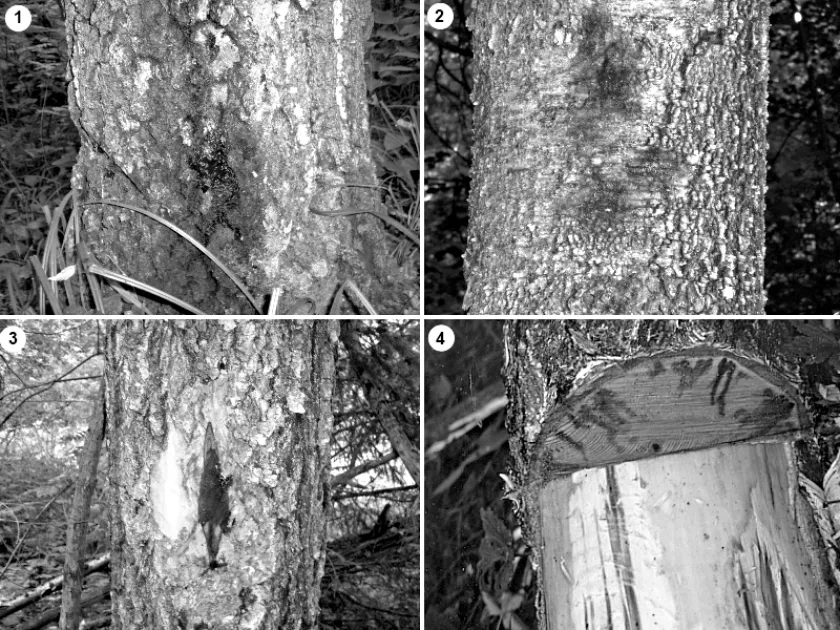
Description
Symptoms
Initial symptoms are often visible in the canopy, where leaves turn yellow, wilt prematurely, and remain attached to the branches for an extended period.
Under the bark, localized necrosis becomes apparent, manifesting as brownish or dark streaks in the sapwood, which indicates the internal spread of the fungal mycelium.
Sometimes, distinct cankers or depressions develop on the stem, occasionally accompanied by sap flow or gumming as the tree attempts to compartmentalize the infection.
Internally, the infected wood shows characteristic vascular staining or discoloration, which is a direct consequence of the fungal colonization of the conductive tissues.
As the disease advances, affected trees exhibit crown dieback, with the upper branches losing foliage and dying, creating a classic «stag-head» appearance in mature trees.
Pathogen
The causative agent of Ceratocystis wilt in hardwood species is the ascomycete fungus Ceratocystis neglecta. It is a vascular pathogen that colonizes the xylem of the host tree.
The fungus invades the tree through wounds in the bark, eventually obstructing the plant's water-conducting vessels, which leads to wilting and eventual tissue death.
Its life cycle involves both conidial and ascosporic stages, allowing the pathogen to persist in the environment and adapt to various host conditions.
Transmission occurs primarily through the activity of wood-boring insects, which carry spores from infected trees to healthy ones during their feeding processes.
The fungus produces extracellular enzymes that break down wood tissue, allowing it to penetrate deeper into the tree's vascular system as the infection progresses.
Conditions for development
Optimal conditions for fungal development include high humidity and moderate temperatures, which facilitate spore germination and infection establishment at wound sites.
Mechanical injuries to the trunk, often resulting from logging, storms, or wildlife, are primary entry points for Ceratocystis neglecta spores.
Trees stressed by drought, nutrient deficiencies, or other environmental factors are significantly more susceptible to successful fungal colonization.
High populations of wood-boring insects act as vectors, drastically increasing the rate of disease transmission within a forest stand during the growing season.
Dense forest stands with poor airflow and high levels of debris create a microclimate that promotes the survival and accumulation of fungal inoculum.
Why it matters
The primary impact of the disease is the gradual decline and premature death of hardwood trees, leading to the fragmentation and loss of forest canopy cover.
Timber quality is severely degraded due to the fungal decay, rendering the wood unsuitable for commercial use and causing significant economic losses.
Infected trees lose their vigor and become attractive to secondary pests, further accelerating the mortality rate within the affected forest areas.
The ecological damage includes the loss of habitat and biodiversity, as the disease can affect large cohorts of specific hardwood species over relatively short periods.
Management of the disease requires intensive resources, as affected trees must be handled carefully to prevent the spread of the pathogen to neighboring healthy trees.
Protection
Sanitation is the most effective management strategy, requiring the prompt removal and disposal of infected trees to eliminate the source of fungal spores.
Minimizing damage to the trunks of healthy trees during forest operations is essential to prevent creating entry points for the pathogen.
Applying fungicidal wound paints or protective dressings to accidental injuries on high-value trees can help block the entry of fungal spores.
Integrated pest management focusing on controlling wood-boring insects can reduce the incidence of the disease by limiting the primary vectors of infection.
Regular monitoring of forest health and early detection of symptoms are critical for containing outbreaks and preventing the disease from reaching an epidemic scale.
Discussion
No discussions yet — be the first.