
Ceratocystis wilt of ohia
Ceratocystis huliohia
Description
Symptoms
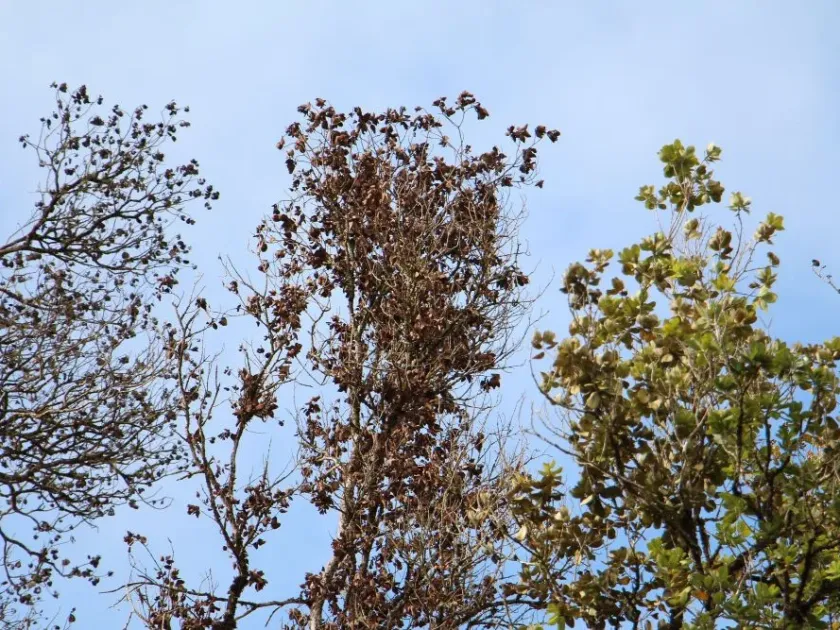
The first symptoms include the sudden yellowing or browning of leaves on individual branches or across the entire crown. The progression of the disease is exceptionally rapid.
A diagnostic sign is the presence of dark, often olive or brownish, radial streaks in the sapwood. These streaks become visible when the outer bark is removed.
Infected trees quickly lose their photosynthetic capacity, leading to the drying of leaves. However, these dead leaves often remain attached to the branches for several months.
As the pathogen advances, the entire crown dies, and the tree becomes brittle and prone to breakage. Wilt of ohia is characterized by a systemic decline of all plant life functions.
- Rapid chlorosis and necrosis of foliage.
- Internal dark staining of the sapwood.
- Dieback of major branches.
- Complete crown death within a few weeks.
Pathogen
The causal agent of this severe disease is the ascomycete fungus Ceratocystis huliohia. It is a microscopic pathogen that targets the vascular system of trees.
The disease is classified as a vascular wilt. The fungus invades the xylem tissues, multiplies, and produces spores that clog the vessels, disrupting the flow of water and nutrients throughout the tree.
This species is part of a complex of pathogens responsible for the mass mortality of ohia forests in Hawaii. It has shown a high level of virulence against susceptible native tree species.
The spread of fungal spores occurs primarily through wind, water, and the movement of contaminated wood or soil. Human activity often facilitates the transport of the pathogen to unaffected areas.
The biology of Ceratocystis huliohia allows it to remain viable in dead wood for extended periods, making infected forest sites persistent reservoirs of the disease.
Conditions for development
Favorable conditions for the development of the pathogen include high humidity and moist soil. The tropical environment provides optimal conditions for the proliferation of the fungus.
Wounds on the tree trunk caused by feral pigs, insects, or mechanical damage serve as entry points for the infection. Spores easily enter the vascular system through fresh injuries.
High tree density in ohia forests facilitates the rapid movement of spores from infected trees to healthy neighbors, accelerating the rate of infection.
Seasonal rainfall events wash spores into the soil, where they can be transported by water runoff or by machinery moving through the forest floor.
The temperature range typical of ohia habitats is ideal for the metabolism of Ceratocystis huliohia, supporting sustained mycelial growth and spore production.
Why it matters
The impact of this disease is critical, as it has resulted in the loss of millions of endemic trees, leading to significant structural changes in forest ecosystems.
The disease causes widespread tree mortality, which negatively affects local biodiversity. The loss of ohia threatens many endemic species that rely on these trees for habitat.
Degradation of forest cover disrupts the watershed function, as ohia forests are essential for moisture retention and maintaining water supplies on the islands.
The economic losses are substantial, involving the degradation of natural resources and the high costs associated with government-led quarantine and management programs.
The risk of extinction for certain ohia populations poses a major challenge to conservationists and forest managers who are working to protect genetic diversity.
Protection
The primary control measure is the enforcement of strict quarantine protocols. It is prohibited to transport wood, bark, or soil from infected areas to healthy forest lands.
Sanitation is critical; all tools, footwear, and vehicles must be thoroughly cleaned when moving between sites to prevent the transport of fungal spores on contaminated surfaces.
Management includes excluding feral animals from forest areas, as their foraging habits cause trunk damage, which significantly increases the risk of infection.
Sanitary harvesting and the safe disposal of infected trees are practiced in localized outbreaks to reduce the overall spore load in the immediate environment.
Ongoing research focuses on identifying disease-resistant ohia genotypes for restoration efforts in areas heavily impacted by the disease.
Discussion
No discussions yet — be the first.