
Description
Symptoms
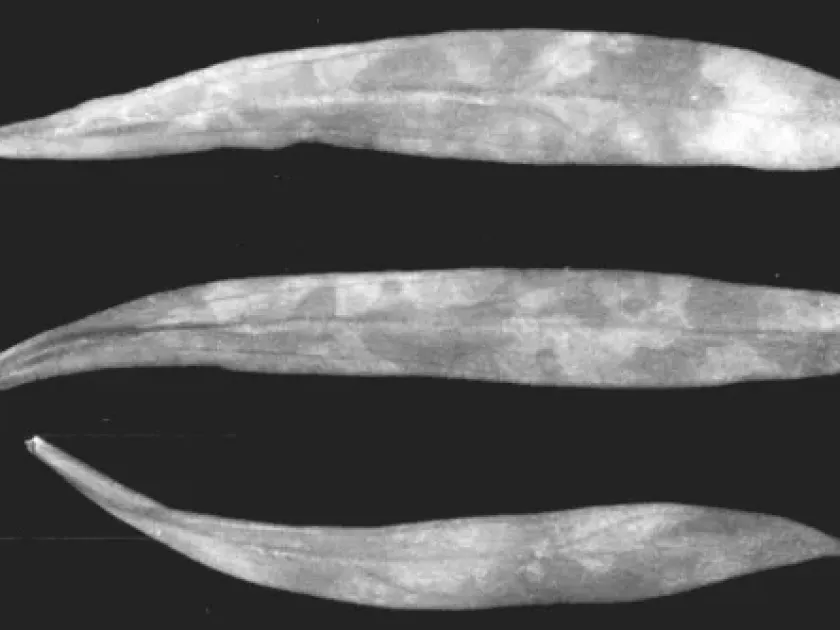
The most distinctive symptom is the appearance of etched rings, concentric circles, or irregular light-colored lines on the leaves, which gives the disease its specific name.
As the infection progresses, stems may show similar etched, brownish, or chlorotic streaks. These lesions often cause the stems to become brittle, deformed, and structurally weakened.
Infected plants typically exhibit stunted growth, with shortened internodes and a generally reduced vigor compared to healthy, virus-free carnation plants.
Flower quality is severely impacted. Blooms may be smaller, exhibit color breaking, or show petal deformities, rendering the flowers unsuitable for commercial floral markets.
Some carnation varieties may remain asymptomatic or show only mild symptoms, acting as symptomless carriers that can accidentally introduce the virus into clean stocks.
Pathogen
Carnation etched ring is a viral disease caused by the Carnation etched ring virus (CERV), which is a member of the Caulimoviridae family. This virus specifically targets members of the Dianthus genus.
The virus is systemic, meaning it colonizes the entire plant, including the vascular tissues, stems, and leaves. This systemic nature makes it difficult to eliminate once a plant becomes infected.
Primary transmission occurs through vegetative propagation. If cuttings are taken from an infected mother plant, the new plant will also be infected, facilitating the spread of the disease throughout the nursery.
In the field or greenhouse, the virus is spread by insect vectors, particularly mealybugs. These insects acquire the virus while feeding on infected sap and transmit it to healthy plants during subsequent feeding.
Mechanical transmission is another significant pathway. Pruning tools, knives, and even hands can carry viral particles from an infected plant to a healthy one if hygiene protocols are not strictly followed.
Conditions for development
High-density planting in greenhouses creates an ideal environment for the rapid spread of the disease, as insects can easily move between closely spaced plants.
Warm temperatures within the greenhouse favor the metabolic activity of both the host plant and the insect vectors, leading to faster viral multiplication and insect reproduction cycles.
Poor sanitation and lack of proper pest control measures for mealybugs allow the virus to establish itself within the greenhouse environment rapidly.
High humidity and poor air circulation often lead to weakened plant health, which may increase susceptibility to secondary physiological stress and make the plants more attractive to insect vectors.
The absence of strict quarantine procedures when introducing new plant material into a facility is the most common cause of initial infection outbreaks.
Why it matters
The primary economic impact is the loss of commercial value due to flower deformation and poor aesthetics, leading to significant waste for floriculture operations.
Viral infection disrupts normal plant physiology, causing decreased growth rates, reduced flower yield, and a shorter productive lifespan for the mother plants.
Plants infected with CERV are often more susceptible to secondary infections from fungi and bacteria, further complicating disease management and increasing costs.
Because the virus is systemic and persistent, it causes the gradual degradation of valuable cultivars, eventually forcing growers to discard entire infected blocks or mother stock populations.
Managing the disease requires substantial investment in labor for monitoring, pest control, and rigorous sanitation, which increases the total cost of production per flower.
Protection
The only truly effective method for controlling Carnation etched ring is the use of virus-free, tissue-cultured (meristem-derived) planting material verified by indexing.
Regular inspection and rouging (the immediate removal and destruction) of any plants showing suspected symptoms are essential to limit the spread of the virus within a nursery.
Rigorous control of insect vectors, especially mealybugs, using systemic insecticides and biological control agents is critical to maintaining a low-virus environment.
Sterilization of all cutting tools (using bleach or alcohol solutions) between plants is mandatory to prevent mechanical transmission during pruning and harvesting operations.
Establishing isolation zones for new plant arrivals and maintaining strict personal and tool hygiene can significantly reduce the risk of accidental viral introduction.
Pathogens and affected parts
Affects crops · 1
Discussion
No discussions yet — be the first.